
Launching an online store is just the beginning of your ecommerce journey. To turn a good idea into a thriving business, you need the right digital ecosystem. The days of simply selling products are over; today’s customers demand personalized experiences, seamless service, and lightning-fast fulfillment.
And so, we’ve compiled a list of the top ecommerce tools for growing businesses, startups, entrepreneurs, and business leaders looking to grow fast. These ecommerce platforms stack up against each other and we review the key capabilities, features, benefits, and costs — and you get to choose which one is right for you. Let’s find out.
Why ecommerce tools are key for small business growth
Small-to-midsize businesses (SMBs) are the lifeblood of the global economy, and their success is increasingly tied to digital proficiency. Modern SMBs need integrated digital tools like a customer relationship management (CRM) platform to compete with large retailers, manage growing complexity, and deliver personalized customer experiences that build lasting loyalty.
According to the State of Commerce Report, ecommerce is on its way to delivering the majority of sales revenue across most industries. What’s more, 53% of customers prefer to engage digitally. This immense scale means every small business must adapt its digital strategy to capture its share of the market. Choosing the right software stack is no longer optional: it’s the primary driver of digital transformation.
This list breaks down the top ecommerce tools for small business, categorized by their core function, to help you build a strong, scalable online operation.
Top 5 ecommerce tools for small business
These platforms offer capabilities ranging from secure payment processing to advanced workflow automation. Here’s the list:
1. Salesforce
What is it? A unified CRM tool and commerce platform for growing businesses. If you’re ready to move out of spreadsheets and unify your commerce data while keeping everything in one place, Starter and Pro Suite are for you.
Who it’s for: Growing small businesses, startups, or mid-market companies ready to scale and needing unified CRM capabilities across sales, marketing, service, and commerce.
Benefits for SMBs:
- These suites provide a unified, scalable platform with automation and comprehensive business growth beyond the essential needs.
- Advanced sales, service, and marketing automation, strong reporting and analytics, commerce capabilities (as an add-on), and team collaboration via Slack integration.
Cost: Free for 30 days, then $25 per month, offering tiered monthly subscription plans.
How it scales business: (1-10): 10
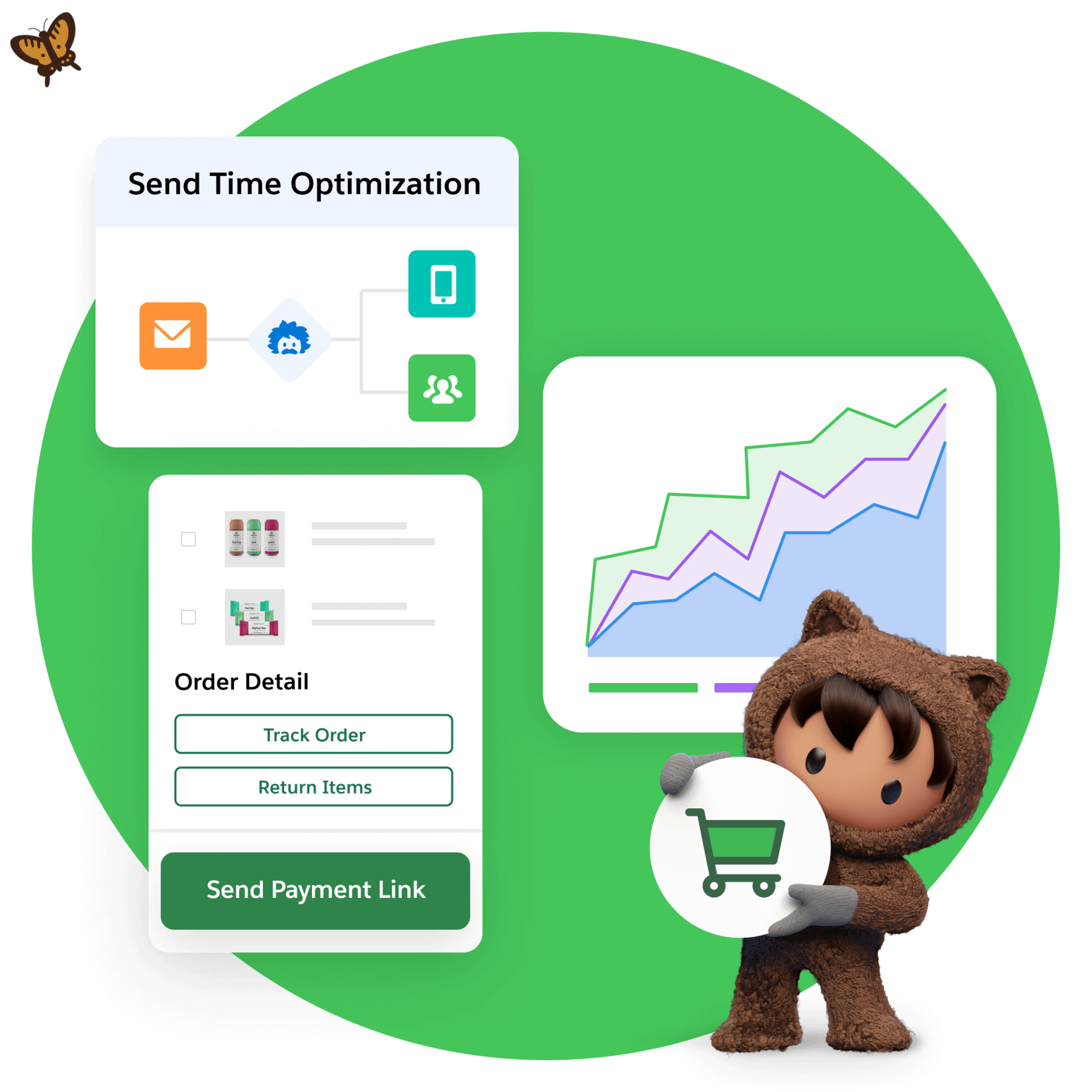
Commerce starts with Salesforce Suites
Sell more using a commerce-ready CRM with integrated tools for every sale.
2. Shopify
What is it? Store builder and ecommerce platform for growing businesses
Who it’s for: Beginners, direct-to-consumer (DTC) brands, and businesses focused on ease of use and quick setup.
Benefits for SMBs:
- Shopify offers a low barrier to entry, an extensive app store for added functionality, and integrated payment processing (Shopify Payments) to simplify sales.
- Its features include an online store builder (Themes), a mobile app for management, abandoned cart recovery, a point-of-sale (POS) system, and built-in SEO tools.
Cost: Starting at $25 per month, they offer tiered monthly subscription plans.
3. WooCommerce
What is it? Open-source ecommerce plugin that lets you turn any WordPress site into a commerce website
Who it’s for: Businesses already using or preferring WordPress, or those who need maximum customization control and data ownership.
Benefits for SMBs:
- This free open-source platform (requires hosting) is highly flexible and supported by a massive community and extension ecosystem.
- Features include deep WordPress integration, unlimited products, a customizable checkout process, geolocation support, and hundreds of extensions and plugins.
Cost: The platform is free, but it requires paid hosting, a domain, and potential paid extensions and developers.
How it scales business: (1-10): 5
4. Mailchimp
What is it? Marketing automation
Who it’s for: Small businesses needing comprehensive email campaign tools and marketing automation to nurture leads and convert customers.
Benefits for SMBs:
- Mailchimp provides a user-friendly interface, strong segmentation tools to target messages, and a generous free tier for very small lists.
- Core features are a drag-and-drop email builder, audience segmentation, abandoned cart automations, a landing page builder, and A/B testing for a variety of components, including subject lines.
Cost: $19 per month tiered paid plans based on contact list size.
How it scales business: (1-10): 7
5. Squarespace
What is it? Design-focused ecommerce platform and website builder
Who it’s for: Beginners, creatives, and design-focused brands where visual presentation is paramount.
Benefits for SMBs:
- Squarespace focuses on user-friendliness, offering drag-and-drop website builders paired with aesthetic, modern templates and built-in marketing tools, making it ideal for a strong visual brand.
- Features include award-winning website design templates, built-in SEO and analytics, email campaigns and social tools, portfolio and blog integration, and integrated POS and scheduling.
Cost: $27 per month (billed annually), with higher tiers for advanced features.
How it scales business: (1-10): 7
Try Salesforce for free.
See how growing businesses are using Salesforce Suites to scale fast. No credit card required, no software to install.
It all starts with Starter Suite.
Thank you!
Try for freeChoosing the right ecommerce tools for your business
Selecting the right ecommerce tools for small business is less about finding the so-called best, and more about finding the best fit for your business stage and specific needs. Here are the critical considerations when choosing your commerce tool:
Integration: Will the tools you choose talk to each other? For instance, does your ecommerce platform easily connect with your accounting software or your email platform? A lack of seamless integration will force manual data entry, which wastes time and introduces errors. Tools like Salesforce Suites offer data unification by design, providing a unified ecosystem from the start.
Scalability: Do the tools grow with you? A platform like Shopify or a solution like Commerce Cloud can easily handle your first 10 orders or your first 10,000. Choosing a scalable solution now prevents the painful, expensive process of migrating platforms later.
Budget: Balance cost with capability. Platforms like WooCommerce are free but require a paid host; dedicated platforms like Shopify and Squarespace offer simplicity for a monthly fee. Consider tools with free tiers for non-core functions until you generate enough revenue to justify the upgrade.
Specific business needs: Do you have a physical commerce store? Do you rely heavily on content and a unique brand experience? Are you focused on B2B or high-touch customer relationships? These questions and more will help you decide which CRM is best suited to your business.
Get started with ecommerce today with Salesforce
Ultimately, a strong ecommerce tool is the foundation for future success. By investing in the right platform for your business, your team can compete in the massive global marketplace and stay focused on what matters: delivering a top-notch customer experience.
Start your journey with Salesforce. Already a customer? Activate Foundations to try out Agentforce today.
AI supported the writers and editors who created this article.
Frequently Asked Questions (FAQs)
A small business needs three types of ecommerce tools: an ecommerce platform (to build the store), marketing automation (for customer engagement like email), and financial and admin tools (for accounting and shipping).
The core budget for essential ecommerce tools (platform, payments, basic marketing) can range from $30 to $300+ per month, not including transaction fees or ad spend. Startups should prioritize platforms with free tiers or low-cost subscriptions, like the basic plans.
The best way to manage customer data is by using a unified, scalable CRM platform. Platforms like Salesforce Suites are designed to break down data silos, providing a single, comprehensive view of the customer across every touchpoint. This integration is crucial for delivering personalized experiences and achieving efficient, data-driven decision-making as the small business scales.
A hosted platform is an all-in-one, subscription-based service where the provider manages the server, security, and maintenance, offering ease of use. An open-source platform is free software that you install and manage yourself on your own web host.
A small business should consider transitioning when its current platform can no longer support its complexity or volume of business. Key indicators include: difficulty unifying customer data (leading to fragmented service), limits on sales volume or customization, or a lack of advanced features for sales, marketing, and service automation.