
Data security often feels like a moving target for a small and medium business (SMB) like yours that’s likely trying to scale online. We get it, you want your team to have the data they need to close deals, but you also worry about sensitive details falling into the wrong hands. This is your business on the line, your future. Your data needs to be safe.
When it involves your growth, the question of whether data sharing is safe becomes a top priority for startups and local shops alike. Data is everywhere, and unfortunately always vulnerable to an array of threats, so keeping it organized and safe is what we’re going to cover here today.
What is data sharing?
At its heart, data sharing is the process of making the same digital resources available to multiple users, applications, or departments within your company. For a small business, this often means connecting your sales, marketing, and service teams so they all see the same customer details in real time — while minimizing the threat of a data breach.
When you use a secure business platform, data sharing is safer because it happens in a controlled environment where you decide the rules. Instead of sending spreadsheets back and forth over a shared server, your team accesses a single source of truth that updates automatically as new information comes in. By using a secure customer relationship management (CRM) system, you can set up guardrails that protect your business while allowing your team to collaborate effectively.
This connectivity helps a startup stay organized as it scales from two people to twenty. By ensuring everyone has access to the right files at the right time, you reduce errors and help your team provide a more professional experience for your customers.
Understand how to make data sharing safe for your business
For many growing businesses, the fear of a data breach is a major hurdle when adopting new technology. However, data sharing is safe when you have the right infrastructure to manage how information moves between your different business units.
A modern platform ensures that your data sharing is safe by providing granular controls. For example, with Salesforce CRM, you can use the Security Health Check to identify and fix vulnerabilities in your settings with a single click.
According to our latest research, here are the latest data statistics:
- 51% of all organizations experienced an increase in cyber attacks in 2025 (Source: State of the Connected Customer Report).
- 80% of IT leaders report that their data security posture is improving due to advancements in AI and automation (Source: The 4th Edition State of IT Report).
- Companies with a high trust maturity score — meaning they prioritize data security and transparency — are 1.6 times more likely to report above-average revenue growth (Source: State of Data and Analytics Report Report).
Implement the ‘Principle of Least Privilege’
One of the best ways to ensure your information stays protected is by giving people only the access they need to do their jobs. The Principle of Least Privilege (PoLP) concept helps keep your business organized and prevents sensitive financial data from being seen by those who don’t require it for their daily tasks.
PoLP means giving any user accounts or processes only those privileges which are essentially vital to performing its intended functions.
- Permissions: Use permission sets to grant specific access to certain tools or records without changing a user profile.
- Hierarchy: Set up role hierarchies so that managers can see the work of their team while individual contributors only see their own accounts.
- Audit: Regularly audit your sharing rules to remove access for former employees or partners who no longer work with your company.
Share data with with AI models securely
As you look for ways to work faster, you might be exploring how to use artificial intelligence (AI) to summarize meetings or predict customer needs. Many owners worry that their private business information will be used to train public models, but Salesforce provides a secure way to use these tools.
The Trust Layer acts as a shield, ensuring that any information sent to a model is stripped of personal details and never stored by the provider. This means your data sharing is safe even when you’re using the most advanced automation tools available today.
By integrating these protections, startups can compete with much larger companies. You get the benefit of faster insights without sacrificing the privacy of your customer relationships or your proprietary business strategies.
Protect data with Agentforce 360
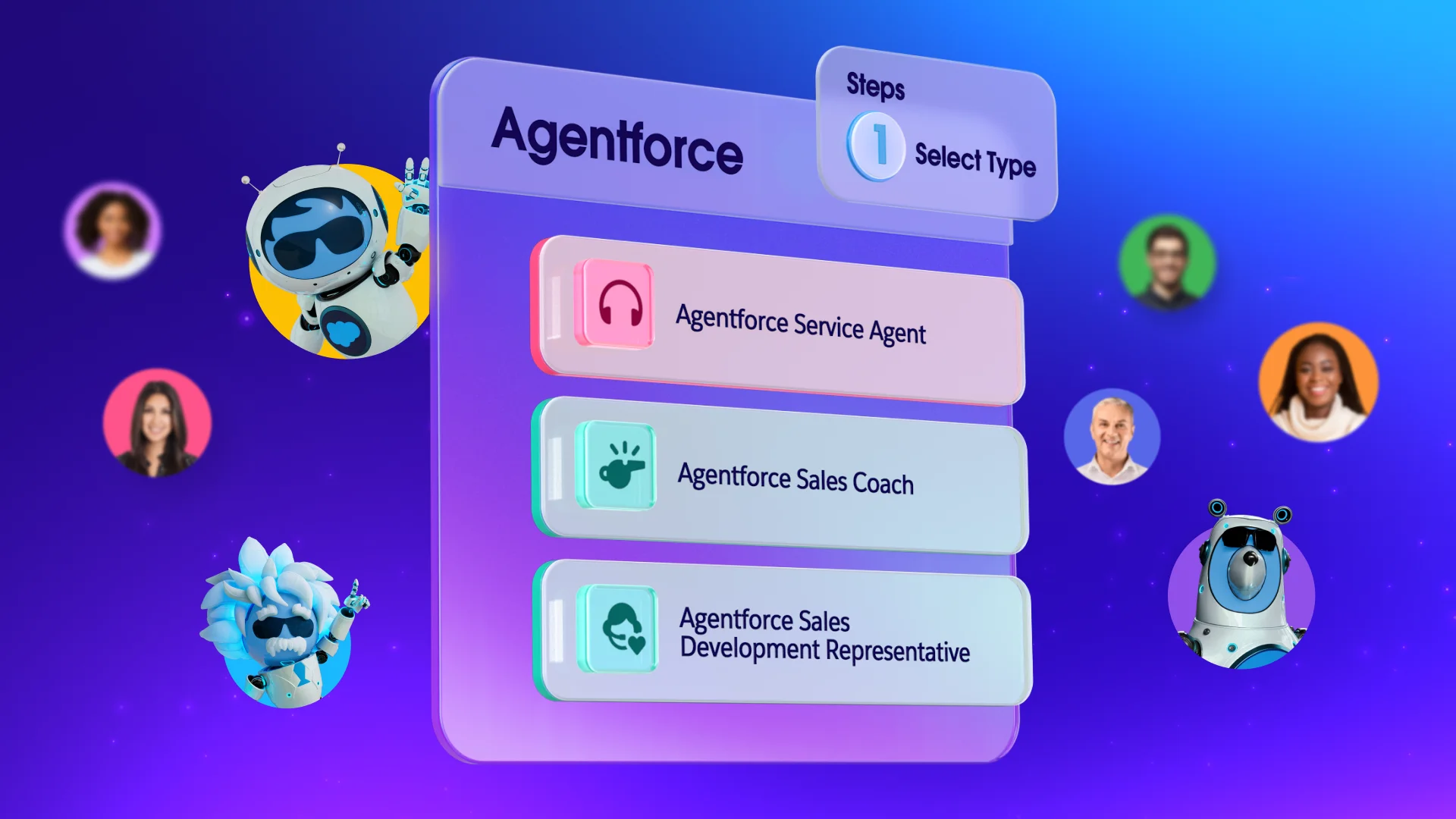
You can also extend protection by using Agentforce 360. These autonomous agents help your small business handle customer inquiries and sales tasks around the clock, while following your specific security rules.
Because Agentforce 360 is built directly on the platform, it inherits the same permissions you already set for your human employees. This ensures that an agent never shares information it isn’t supposed to, keeping your internal workflows organized and secure.
Using Agentforce 360 allows a small team to provide 24/7 service without needing to hire a massive support department. It’s a cost — effective way to scale while ensuring every interaction remains within the safety boundaries of your business.
Build a culture of security for your startup
Security isn’t just about the software you use — it’s also about the habits your team develops. Encourage your employees to use multifactor authentication (MFA) and to participate in regular training to help ensure that data sharing is secure across the whole company.
Startups often face higher risks because they’re growing quickly and may have less rigid processes. By setting clear policies on how to handle customer information, you create a professional environment that respects privacy and builds long — term customer loyalty.
Regularly audit your sharing settings to ensure your data as you add new partners or contractors. A quick check of your organization — wide defaults can prevent a simple mistake from becoming a larger security issue.
Get Salesforce free for 30 days.
No credit card required, no software to install.

Why data sharing is safe with the right tools
Choose a business data platform that prioritizes trust so you can focus on your customers rather than your server security. When your data is secure, you can connect your entire portfolio of tools to create a unified view of everyone you serve.
Here are a few common data sharing tools and methods:
- CRM: Centralized platforms, like Salesforce, manage customer data, enabling controlled sharing via roles, profiles, and permission sets.
- Application Programming Interfaces (APIs): Allow different applications to share data securely and programmatically.
- Data warehouses or lakes: Centralized repositories (like Snowflake) that allow departments to access aggregated data.
- Secure file transfer protocols (SFTP): Used for sharing large files securely between partners or clients.
- Cloud storage services: Platforms like Google Drive or your CRM tool, often with built-in access controls.
Ultimately, your success depends on the trust you build with your audience. Prove that data sharing is safe through your actions and your choice of technology to establish your business as a reliable and professional partner in your industry.
Get started with Salesforce Suites for free or activate Foundations to try out Agentforce 360 today.
AI supported the writers and editors who created this article.
How does Salesforce keep my customer information private?
Salesforce uses a multi — layered security approach, including encryption and strict access controls, to ensure your information is only accessible to authorized users. You can learn more about these protections in the Salesforce Security Best Practices guide.
What is the Salesforce Trust Layer?
The Trust Layer is a security framework that prevents your sensitive data from being stored or used to train external models when you use automated features. This ensures that your business secrets and customer details remain entirely within your control.
Can I control what my employees see in the system?
Yes, you can use role hierarchies and permission sets to define exactly what records and fields each person on your team can view or edit. This granular control is essential for maintaining privacy as your SMB grows and hires more people.
Is it safe to use automated agents for customer service?
Using Agentforce 360 is safe because the agents follow the same security protocols and permissions that you have already established for your organization. They act as an extension of your team while staying within the guardrails you define.
Why is multifactor authentication important for my startup?
Multifactor authentication adds a vital second layer of protection that prevents unauthorized access even if a password is stolen. You can verify your setup using the Salesforce Trust site to monitor system status and security.