



Some of today’s most successful brands started with shoestring marketing budgets and relied on smart strategies rather than spending big bucks. They focus on creativity, free tools, and making the most of low-cost digital resources to connect directly with their customers. That’s how they build their brands with loyal customers, and grow sustainably without heavy advertising expenses.
We’ll cover how to market and promote your online store for your small and medium-sized business (SMB) with the right tools and techniques on a tight budget. Throughout this article, we’ll refer to your ecommerce business using terms like digital store, website, online store, and digital storefront interchangeably. Let’s dive into how we can help you get more eyes on your products.
Why market your ecommerce store?
Even the best products in the world need visibility to sell. Marketing is the next natural step after launching your store, and it doesn’t have to be expensive. Your focus should be to share a brand that customers know, trust, and choose over competitors. So, why not invest in smart marketing that pays dividends for months or years to come? Putting these smart marketing strategies in place will help you to:
- Build brand recognition and trust with both prospects and customers
- Create repeat customers who spend more over time
- Generate genuine word-of-mouth referrals (the cheapest marketing there is)
- Understand what your customers really want (and give it to them)
Make your digital store conversion-ready
All marketing efforts should bring traffic to your ecommerce store, and before spending money elsewhere, make sure it’s ready to convert visitors to customers.
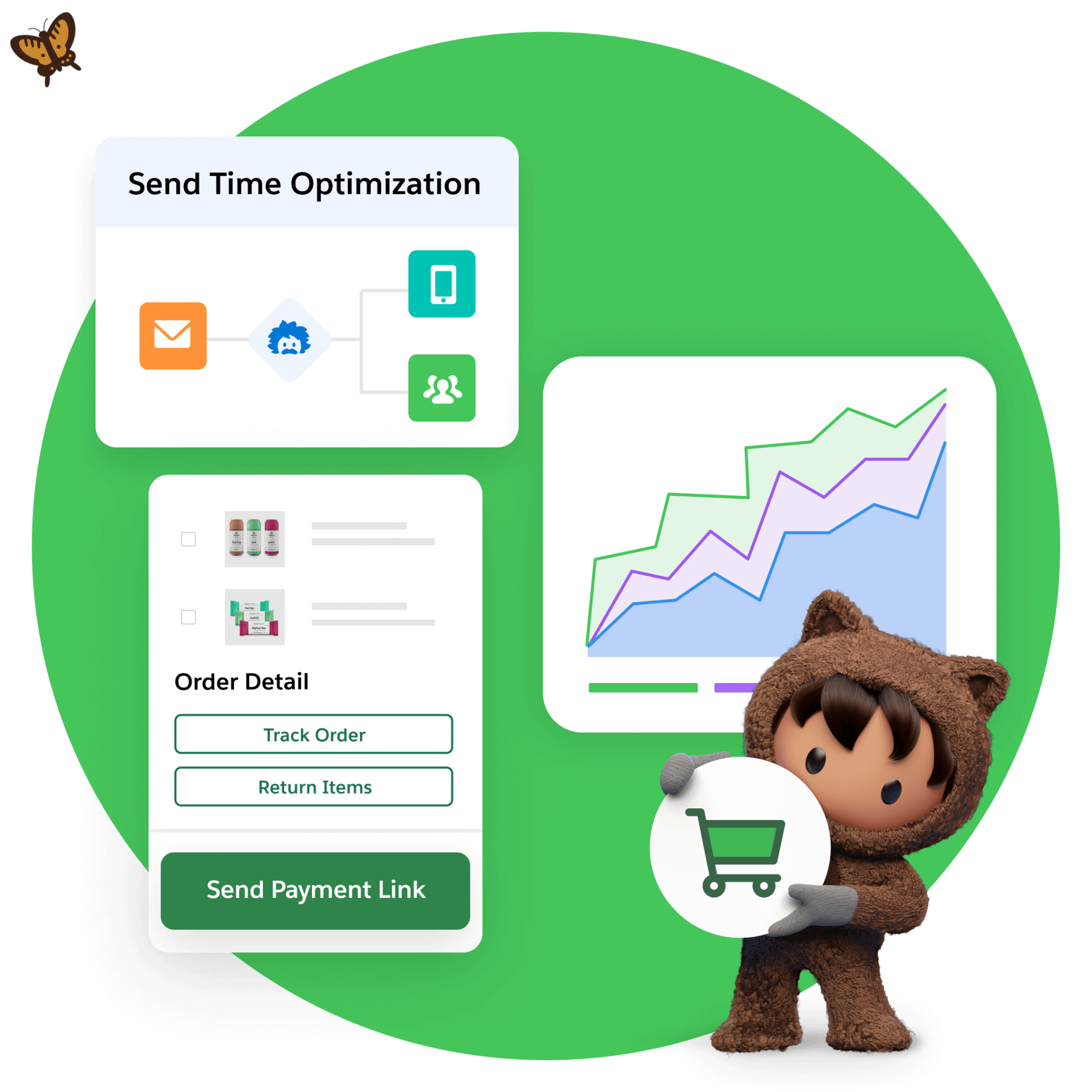
First, connect your digital storefront with a customer relationship management (CRM) tool if you haven’t done so already. Or better yet, start a commerce store inside your CRM with Salesforce.
Next, focus on storefront conversion optimization. This means using clear product descriptions, high-quality images (even smartphones can work with proper lighting), customer stories, and simple checkout processes. Many store owners overlook popups offering discounts, which can be set up with a connected CRM. These can recover 10-15% of abandoned visitors at minimal cost.
You can also consider implementing storefront chatbots to answer product questions. A personal touch like 24/7 support can significantly boost commerce conversion rates and customer satisfaction without requiring off-hour work.
Commerce starts with Salesforce Suites
Sell more using a commerce-ready CRM with integrated tools for every sale.
Use search engine optimization (SEO) basics
Search engine optimization (SEO) is one of the highest return on investment (ROI) marketing activities for budget-conscious businesses. Here are a few SEO basics for marketing your ecommerce store:
- Research keywords: Start with keyword research specific to your products. For example, “comfortable walking shoes for nurses” instead of “shoes.”
- Add SEO-friendly metadata: Optimize product titles (under 60 characters), descriptions, and meta descriptions (under 160 characters) with your target keywords.
- Create compelling CTAs: Focus on calls to action (CTAs) using marketing terms that indicate someone’s ready to buy, like “buy” or “get now”
Get your storefront share-worthy with social media
Marketing your store on social media is your best bet to kick off any product launch — because it’s free, making it perfect for budget-conscious businesses.
Create clickable business profiles
Set up professional social profiles on platforms where your customers spend time. For most ecommerce businesses, this includes Facebook, Instagram, TikTok, and Pinterest. Business to business (B2B) companies should prioritize LinkedIn and additional communities to network products and services. Here are a few profile tips:
- Use high-quality visuals that represent your brand, being consistent across all channels
- Craft an engaging brand description that highlights your store
- Add terms that help attract your target audience
- Include a clear CTA, such as “Check out my online store”
Quick tips to reach more people on social feeds
Here are a few quick tips you can use to market your ecommerce store on social media:
- Schedule out your social posts with tools like Buffer or Hootsuite
- Post at least three to five times per week, to keep social algorithms tuned in to you
- Use Hashtagify or Tagsfinder to find relevant hashtags
- Share behind-the-scenes or unboxing content (people love this)
- Repost customer photos with their permission
- Respond to comments and messages promptly
Market in relevant groups and communities
Join Facebook groups, LinkedIn communities, and Reddit forums to connect with your audience. Focus on adding value, not just promoting your products. Answer questions, share expertise, and build relationships.
People share content when they find it helpful. Share useful content and insights related to your industry. Position yourself as a knowledgeable resource, and people will be interested in your products. Follow the 80/20 rule: Share 80% helpful content and 20% subtle promotion of your products or services.
Pro Tip: You can join the Trailhead community and share your products or updates there.
The marketing CRM for small business is here.
Automate your marketing campaigns with a connected tool built for growing businesses.

Promote your ecommerce shop through clickable content
Once you’ve established a baseline online, it’s time to post some content. Content marketing involves two parts: creating content and promoting content. Let’s see how to do both in the easiest way.
Use artificial intelligence (AI) tools to generate ideas
Writer’s block? Use free AI tools like WriterAI or Gemini to brainstorm content ideas, create outlines, and edit your drafts. These tools can help you generate months of content ideas in a single session.
Use AI to create first drafts. Then, edit and personalize them with your brand voice and expertise. Always add unique insights before publishing AI content. Generate content variations for different platforms. Use AI to adapt blog posts for LinkedIn articles, Twitter threads, or Instagram captions.
Create a blog
Writing a blog is a great way to promote your online store, especially for SMBs starting out. By creating informative content, you can attract prospects, build traffic to your store, and get your brand on the map. A well-crafted blog can showcase your products, share behind-the-scenes insights, and provide valuable information to your target audience.
Offer a content swap
Guest-posting on relevant blogs exposes your ecommerce site to new audiences and builds valuable backlinks for SEO. Focus on providing genuinely helpful content rather than promotional pieces.
Pitch story ideas to local media, podcasts (find on Podchaser), or online publication platforms (like Medium or Smart Blogger). Participate in collaborative communities (like eCommerceFuel and Reddit forum), online summits, virtual events, or collaborative content projects in your industry. It requires time investment rather than monetary cost but provides significant exposure.
Grow Your Small Business With AI Agents
Learn how autonomous artificial intelligence (AI) can scale your small business for efficient growth with this free e-book.
Thank you for downloading the free e-book "Grow Your Small Business With AI Agents"
Here's your free e-book!Collaborate and cross-promote
Strategic partnerships multiply your website’s reach without increasing your budget. And that’s why rather than walking the path alone, try to join hands with others on the same path.
Partner with influencers
Find businesses that serve the same people as you but don’t compete with you. For example, a handmade jewelry business might partner with a boutique clothing store. Go beyond typical partner partnerships and explore storefront swaps, where you feature each other’s product on your ecommerce sites. You can also offer bundled product discounts that combine items from both brands, or refer customers to each other.
Pro tip: Try to work with micro-influencers (1,000-10,000 followers) in your niche. They often have higher engagement rates than macro-influencers and may accept product trades instead of cash payments.
Sell on online marketplaces and communities
Sell your products directly on online marketplaces like Etsy (for handmade or vintage), Amazon (for massive reach), eBay (unique or hard-to-find products), and Facebook Marketplace (for local and national reach), or industry-specific platforms. Note: These platforms aren’t free.
Share product updates or helpful tips in relevant online communities other than social media. This is where your audience spends their time. Join discussions without being overly promotional to contribute genuinely. Keep your store top-of-mind between purchases by sending updates, product launches, or special offers to your email subscribers.
Grow your ambitions with the #1 AI CRM.
See what’s possible with the AI-powered CRM suite for growing teams.
Market your online store like the big dogs
You’ve learned how to market your online store with little to no money. Are you ready to get started? You now have the tips, tools, and training to get more eyes on your products — and we’re here to help you every step of the way.
Some marketing features to look out for in the Suites:
- Email Builder Lite is now the default for branded email content creation across all editions with ready-to-use layouts, custom templates, email previews, and a streamlined authoring experience — making it easier for SMBs and generalists to launch campaigns without complexity.
- Marketing App in Free Suite includes access to email marketing to engage leads from day one — with simple single-email campaigns, up to 100 marketing email sends per month, and expanded capabilities unlocked upon upgrade.
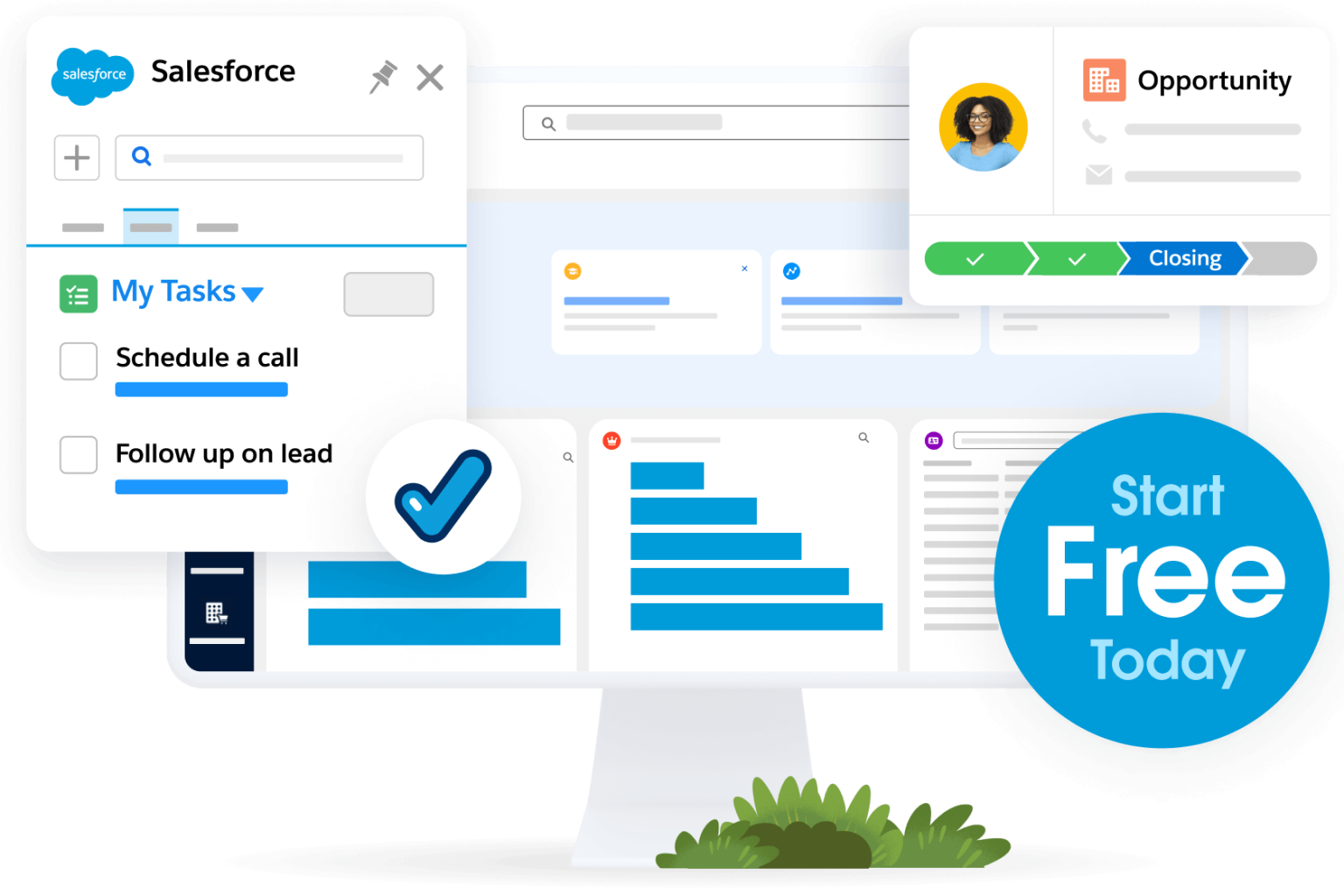
Start your journey with a Salesforce. Already a customer? Activate Foundations and try out Agentforce today.
AI supported the writers and editors who created this article.
Frequently Asked Questions (FAQs)
Marketing helps your store gain visibility, build brand trust, attract repeat customers, and generate word-of-mouth referrals. Without marketing, even the best products won’t sell because customers won’t find them.
Focus on fast loading times, mobile-friendly design, clear product descriptions, high-quality images, customer reviews, and a simple checkout process. Maintain and regularly check your website to remove unnecessary plugins or errors that might hinder your sales.
Create consistent business profiles on key platforms like Facebook, Instagram, TikTok, and Pinterest. Post regularly with a mix of content types, engage with followers by responding promptly, join relevant groups, and provide valuable, mostly non-promotional content following the 80/20 rule.
Start a blog with helpful, SEO-optimized content posted weekly. Repurpose blog posts for social media and email marketing. Use free AI tools like WriterAI and Gemini to brainstorm ideas, create drafts, and adapt content for different platforms, while always personalizing to reflect your brand’s voice.
Partner with other SMBs and micro-influencers for cross-promotion. List products on free online marketplaces like Etsy and Amazon to tap built-in traffic. Invest time in SEO basics by researching keywords, optimizing product titles and descriptions, and regularly auditing site performance to improve search visibility.