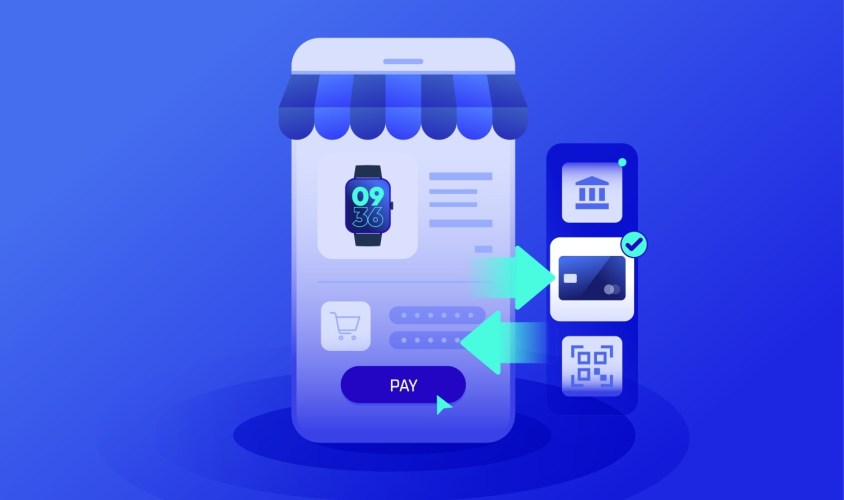


Running a revenue hub used to mean long hours managing product listings, chasing down abandoned carts, and trying to respond to every question before they bounced. Today, things look a lot different. Artificial intelligence (AI) agents are stepping in as tireless digital teammates — handling the repetitive stuff so you can focus on building the business you set out to build.
Commerce is shifting fast, and the small and medium businesses (SMBs) that are leaning into AI-powered tools right now are the ones seeing stronger revenue growth. In fact, three out of four SMBs are already investing in AI, according to the latest Small and Medium Business Trends Report. Whether you’re just launching your first storefront or scaling an established shop, AI can help you compete smarter, not just harder. Let’s dig in.
What AI is doing for commerce businesses
Commerce is evolving, along with everything else in business. Shopping AI agents aren’t just chatbots with a fancy new name. They’re autonomous tools that can understand customer intent, analyze browsing behavior, and take action — all in real time. Think of them as the always-on retail assistant your budget never quite allowed for.
For your revenue hub, that might look like a retail AI agent that greets shoppers, helps them find exactly what they’re looking for, and nudges them toward complementary products. Or one that monitors your inventory and automatically flags — or even creates — promotions to move slow-selling stock. The best part? These agents work around the clock, even when you’re not.
How to grow your revenue hub with AI-powered shopping
One of the highest-impact ways to use a commerce AI agent is through guided shopping. Instead of asking customers to navigate complicated product filters and multi-step checkouts, a guided shopping agent meets them where they are. They describe what they need in plain language, and the agent handles discovery, comparison, and purchase completion.
Not sure where to start? Try Trailhead, Salesforce’s free online learning platform. Agentforce for Guided Shopping can help make this possible on your storefront — no complex integrations required. It uses your store’s live data to chat with shoppers, giving them the same personal, helpful experience they’d get if they walked right into your shop. Here’s what that can mean for your business:
- Higher conversion rates: Shoppers who get personalized guidance are less likely to experience decision fatigue and abandon their carts.
- Bigger average order values: Agents can suggest complementary items at just the right moment, increasing the likelihood of add-ons.
- Fewer support tickets: When an agent can answer order questions and guide returns, your team spends less time in the inbox.
- Round-the-clock coverage: Customers shop at midnight. Your agent is ready when you’re not.
FREE WEBINAR
Measuring AI’s Impact:
5 Tips to Prove Business Value

Automate your ecommerce ops
Growing your revenue hub isn’t just about the front-end customer experience — it’s also about what happens behind the scenes. Commerce AI agents can take on a surprising amount of the operational work that tends to pile up as your business scales.
With agentic commerce tools, a merchant can deploy an agent to identify excess inventory through unified data, then automatically build a targeted promotion for the right customer segment — no manual reporting or campaign setup needed. Agents can also automate email sends throughout the buyer journey, simplify order routing, and keep your marketing, sales, and service data in sync across a single platform.
For lean teams, AI tools like employee agents are now available in modern customer relationship management (CRM) systems. Employee AI agents are internal and can assist you with drafting emails, organizing your data, and connecting your team.
Build your own AI commerce strategy
You don’t need a massive IT team or an unlimited budget to start using AI. The goal is to focus on where AI can make the biggest impact — creating a better experience for your customers and saving you time on the busy work. Here is how you can approach it:
1. Start with the guided shopping experience
The biggest win for most stores is simplifying how people shop. Instead of forcing customers to dig through complicated filters, look for AI tools that can act as a digital store assistant. The goal is to let shoppers describe what they need in plain English — like “I’m looking for a gift for a runner under $50” — and have the AI handle the discovery and recommendations. This reduces the fatigue of searching and helps customers find what they actually want faster.
2. Automate the busy work
As your business grows, the operational tasks (managing stock, scheduling sales, handling email follow-ups) pile up. Use AI to handle the repetitive stuff. Look for tools that can:
- Flag inventory needs: Automatically identify slow-moving products and suggest a promotion to move them.
- Trigger timely communications: Set up AI-driven emails that reach customers at the moment of purchase or cart abandonment.
3. Make your ecommerce data work together
The “magic” happens when your AI knows your customer’s history. An effective AI strategy connects your storefront to your other business data — like past purchases, customer support issues, and marketing engagement. When your AI agent has this full picture, it stops being a generic chatbot and starts providing genuinely personal recommendations and support.
4. Start small and scale big
You don’t need to automate everything at once. Begin with a single, clear goal — like a guided shopping assistant or an inventory-tracking tool—and see how it performs. Most modern AI platforms are built to grow with you, allowing you to plug in more capabilities as you get comfortable. Use free online learning resources to build your own skills as you go; the best way to get ahead is to learn the tools hands-on while you build.
Commerce starts with Salesforce Suites
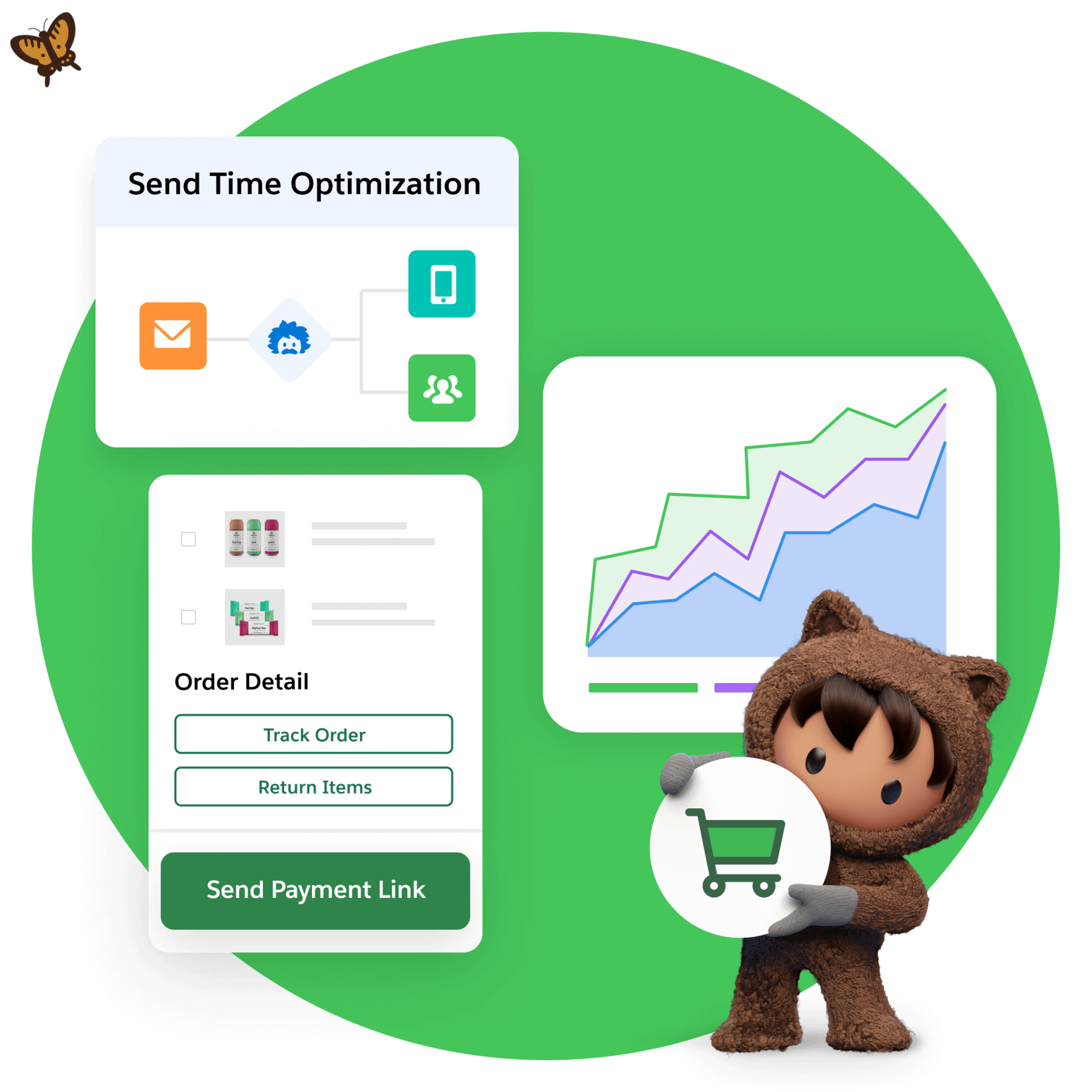
Sell more using a commerce-ready CRM with integrated tools for every sale.
Start growing your revenue hub with AI today
The shift to AI-powered commerce isn’t coming — it’s already here. Businesses that embrace that shift now will be better positioned to capture those buyers wherever they discover your store. And with the right tools, it’s easier now more than ever.
Ready to grow your revenue hub with AI? Get started with Salesforce for free or activate Foundations to try out Agentforce today.
AI supported the writers and editors who created this article.
What is a commerce AI agent?
A commerce AI agent is an autonomous software tool that can interact with shoppers, answer questions, recommend products, and handle tasks like order management or promotions — all without constant human input. Unlike basic chatbots, commerce AI agents can understand natural language, draw on your store’s real-time data, and take action on their own.
How can AI agents help grow my revenue hub?
AI agents can help grow your revenue hub by delivering personalized shopping experiences that increase conversions, automating repetitive tasks like email follow-ups and inventory promotions, and providing round-the-clock customer service that keeps shoppers engaged even when your team is offline.
Do I need technical expertise to set up a commerce AI agent?
Not necessarily. Platforms like Salesforce are designed so that small business owners can configure agents using natural language instructions — no coding required. Tools like Trailhead’s Agentforce for Guided Shopping module walk you through setup step by step, and Starter Suite includes built-in guidance to get you up and running fast.
What’s the difference between an AI agent and a regular chatbot?
Traditional chatbots follow scripted rules and can only respond to a limited set of inputs. AI agents are far more capable — they can interpret complex, open-ended questions, pull from live data, make decisions, and complete multi-step tasks autonomously. For commerce, that means an agent can actually guide a customer through a purchase, not just answer FAQs.
Is Salesforce right for my small business if I’m just starting out?
Yes — Salesforce offers options specifically built for businesses at every stage. Starter Suite gives you an affordable entry point with commerce, CRM, and AI tools in one place. If you want to explore what AI agents can do before committing, you can read more about what Agentforce means for small businesses and try it out through Foundations.