




Every time you pick the corner coffee shop over a Starbucks, you’re helping a small business owner’s dream stay alive. It’s even right to say you’re supporting local jobs and adding flavor (literally) to your community. Those everyday choices you make have ripple effects that keep neighborhoods thriving and give bold business ideas the chance to grow.
Showing support doesn’t always mean spending more money or going out of your way. Often, it’s the simple gestures that matter most, from leaving a review to sharing a post online. In this blog, we’ll walk you through simple, meaningful actions you can take to support small and medium businesses (SMBs) and startups. By the end, you’ll see how easy it is to turn everyday support into long-term growth for the businesses you believe in.
1. Make shopping local your first choice
Big chains are everywhere, and yes, they’re convenient. But when you choose to shop at a local store, you’re putting money back into your community. In fact, about 68 dollars out of every 100 you spend at a local business stays right in your town or neighborhood, shaping jobs, schools, parks, and more. Every purchase is a small vote of confidence that says you believe in what they’re doing.
Local shopping feels different, too. You get to know the owners and hear their stories. You even find items you won’t see in the same old chain aisles. It’s more personal and, honestly, more rewarding. Even switching a few of your regular buys to local spots can make a big impact.
This doesn’t have to stop at home, either. When you travel, skip the usual multinational chain restaurants and stores and seek out local ones instead. You can try the neighborhood restaurant or book a local tour. It’s a simple way to put money directly into the hands of entrepreneurs wherever you go, helping their communities thrive while you get a more authentic experience.
Start with Small Business Basics



2. Join small business loyalty programs
Small businesses love loyal customers. When you sign up for their rewards or loyalty programs, you’re showing them you’ll come back. That matters a lot because steady customers help them plan inventory and keep the lights on. Your repeat visits are worth more to them than one-off sales.
And the beauty is, these programs often give you perks that actually make sense. Maybe a free coffee, or maybe a discount on your next order. Sometimes it’s early access to a sale. It’s simple, but it makes you feel like a valued customer. And if you share the program with a friend, that’s another potential new customer walking through their door. Here are a few recommendations for getting started:
- Look for punch cards or points programs at your favorite local businesses.
- Ask if the business has an app or email list for rewards and updates.
- Actually use the rewards, so the business sees it working.
- Share good deals on social with your circle to help spread the word.
3. Offer your skills and mentorship to SMBs
Not every way of supporting an SMB involves spending money. Sometimes, what founders really need is someone who’s been there, done that, and can save them from a few rookie mistakes. If you’ve got experience in marketing, finance, or just how to build a team without burning out, that’s the kind of guidance that saves people months of trial and error. You can even recommend a few online courses, too.
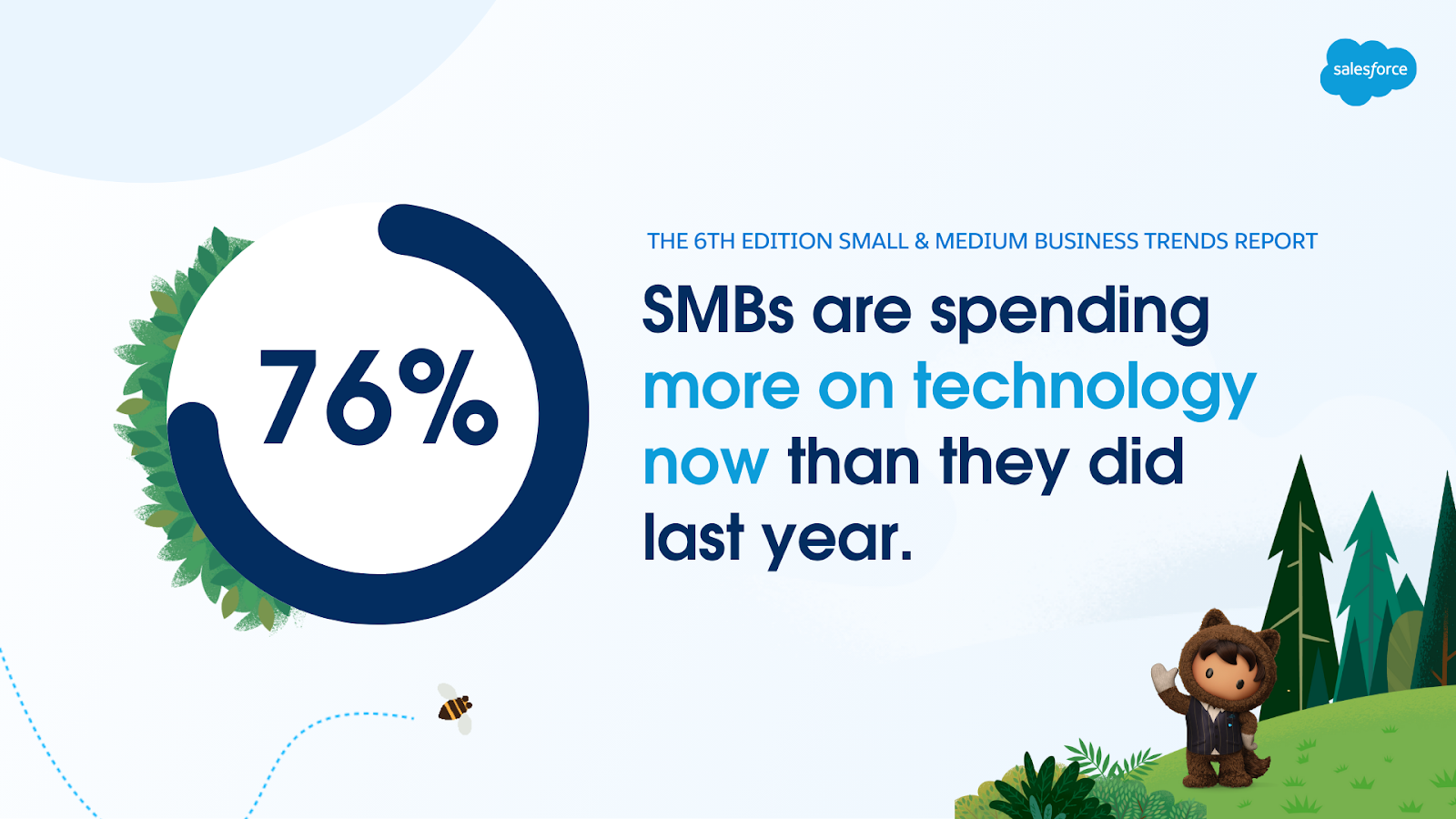
Tech guidance is another big one. According to the Small and Medium Business Trends Report, 76% of SMBs are spending more on technology now than they did last year, and only 5% are cutting back. That tells you founders know they can’t run on scattered spreadsheets and disconnected tools forever. The difficult part is taking the leap. It feels big, so a lot of SMBs just keep patching things together until the gaps start to show.
You can step in here and point them toward better options. For example, using customer relationship management (CRM) is a simple upgrade to bring all your customer interactions and data into one place. Or take Slack: it cuts out the email chaos and makes it way easier for a team to actually collaborate and get things done in a productive way.
Little fixes like these sound simple, but they can save business owners hours of stress. And if you want to actually help people set this up or share what’s worked for you, the Trailblazer Community is a great spot to jump in and connect with people who are figuring it out as they go.




4. Follow and share small businesses on social media
If you’re already scrolling Instagram or TikTok (which you probably are), hitting the follow button on a small business takes two seconds. Liking their posts or leaving a quick comment costs you nothing, but it makes a huge difference for them. Every little interaction bumps their posts higher in the algorithm and gets more eyes on their work. That’s free marketing they can’t always afford to buy.
Your network trusts you more than an ad. When you share a product you like, people actually pay attention. You might introduce someone to their new favorite bakery or help a local maker land a new customer. Think of it as being the hype person for small businesses. It’s easy, it’s fun, and it gives SMB owners the kind of visibility they need to grow. Here are some quick social support ideas:
- Leave a comment with a simple emoji (even that helps boost reach).
- Share a product post in your story and tag the business.
- Post a photo of what you bought and mention them.
- Tag a friend who’d actually love what they sell.
- Save their posts so the algorithm knows they’re worth keeping around.
Pro tip: If you’re a small business yourself, use a marketing CRM to track tags, shares, and engagement so you know what’s working and where to double down.
The marketing CRM for small business is here.
Automate your marketing campaigns with a connected tool built for growing businesses.

5. Leave positive online reviews
Think about the last time you bought something new. Did you check the customer reviews first? Of course you did. A quick scroll through Google or Yelp usually makes or breaks the decision. In fact, according to a survey commissioned by Yelp, nearly nine out of ten shoppers trust reviews as much as personal recommendations. That’s why leaving a review for a small business is like handing them gold. And it only takes you a couple of minutes to write a few honest lines.
Reviews can be data points, too. Customers read it to decide if they should buy. Business owners read it to figure out how to get better. To create reviews, Google calculates review averages, and based on review recency and star rating, turns hundreds of opinions into quick takeaways, like “great food” or “slow service.” Artificial intelligence (AI) tools like ClientZen and LocalFalcon now read through reviews on Google and beyond, pulling out patterns and spotting pain points. So a single review from you can turn into insight that can change how a business runs tomorrow.
6. Recommend small businesses through word of mouth
As a form of advertising, word of mouth is undefeated. You can spend money on advertising ideas or stick posters on every wall in town, but when someone you know mentions a local shop they love, you pay attention. If you had a great experience with a small business, talk about it. Tell your friends, your coworkers, and your neighbors who always ask for recommendations.
You don’t have to wait for someone to ask for a recommendation either. Sites like Google Maps or Yelp let you recommend a place at any time. Even Facebook pages or Reddit posts can work if that’s where the business shows up. Some local directories and community platforms like Nextdoor also make it easy to share a quick shoutout. The point is, if you had a good experience, there’s no shortage of places to spread the word.
7. Partner with startups on projects
Startups are on a different growth trajectory than small businesses, but they need collaborators too. Partnering with one can be as simple as trying their product in your business or even just sharing resources. Unlike bigger companies, startups move fast. They listen and care about your input. In return, you get to try fresh ideas early or maybe even build a partnership that brings new people through your door. Here are a few ways you can partner with startups on projects:
- Co-develop products: Build a feature or service together that addresses a shared customer pain point.
- Joint marketing campaigns: Share audience reach with webinars, newsletters, or bundled offers.
- Pilot programs: Team up to test each other’s tools in real-world use cases and exchange feedback.
- Knowledge swaps: Trade expertise — a fintech helping with payments, a SaaS startup helping with business process automation (BPA).
- Community events: Host local meetups or virtual sessions to boost awareness and credibility.
The cheat sheet for winning at work


8. Get involved in communities that promote small business
You know what small businesses need more than anything? People to show up. And not just buying once and leaving, but actually showing up at the farmer’s market or the neighborhood fair. That’s where small businesses get seen and meet new customers. And honestly, it’s fun: You get free samples and quirky local finds. That kind of energy is something you’ll never get scrolling Amazon at midnight. Why wouldn’t you want to be part of that?
Luckily, you don’t have to look far to find these events. Local chambers of commerce, business associations, and even Facebook or Meetup groups are always posting about pop-ups, fairs, and school fundraisers. Showing up matters. You can help small businesses build brand awareness and create word-of-mouth buzz. And it makes your town feel alive instead of just being another place filled with the same old chain stores.
How Salesforce supports small businesses and startups
Small businesses and startups thrive when they have the right support system around them. Customers, communities, and partner ecosystems all play a part. Salesforce does too. Beyond offering tools for customer management, Salesforce has built programs and initiatives that give founders access to technology, funding, and opportunities to grow.
Here are a few ways Salesforce is helping new businesses build momentum and scale with confidence:
Salesforce Launchpad
Getting started is often the hardest part for startups. Salesforce Launchpad was created to make that journey easier and help startups grow faster. Eligible early-stage companies can access Starter Suite, an all-in-one CRM that brings sales, service, marketing, commerce, and productivity together, free for the first 12 months, as well as other exclusive offers on Salesforce solutions that scale with them as they grow.
In addition to Salesforce solutions tailored for startups of all stages of growth, Launchpad members get access to a startup community and exclusive events, hands-on AI and go-to-market guidance, and new distribution channels and partnership opportunities in the Salesforce ecosystem through AgentExchange.
Grow your startup faster with Salesforce Launchpad
Get tailored resources to build your GTM strategy and help your startup scale faster.



Salesforce Ventures
Startups need capital, networks, and guidance to take their business to the next stage. Salesforce Ventures provides all three. With more than $6 billion invested across 630 companies, it supports founders from seed through growth. The team backs companies for the long term, opening doors to mentorship and enterprise networks. Plus, it’s big on AI right now — doubling a $250 million fund into $500 million and beyond to fuel the next generation of intelligent startups.
Salesforce Partner Program
When startups are ready to build for the Salesforce ecosystem, the Partner Program gives them a powerful platform to do it. Joining as an independent software vendor (ISV) partner means getting access to AppExchange, a marketplace trusted by more than 150,000 customers. Startups also gain training, resources, and a community that helps them design and launch their solutions faster. It is an opportunity to become part of an ecosystem that accelerates growth.
Try Salesforce for free.
See how growing businesses are using Salesforce Suites to scale fast. No credit card required, no software to install.
It all starts with Starter Suite.
Thank you!
Try for freeStart your business journey with the right support
When you support a small business or startup, it keeps jobs flowing and communities buzzing. Sometimes it even means taking the leap yourself. If you’ve ever thought about starting a business, now’s the time. And yes, Salesforce makes that jump way less scary. You get tools to organize customers, support from communities, and programs like Launchpad to start with confidence.
So why not start strong? Begin your journey with the Starter Suite today. Looking for more customization? Explore Pro Suite. Already a Salesforce customer? Activate Foundations and try out Agentforce 360 today.
AI supported the writers and editors of this article.
Frequently Asked Questions (FAQs)
Supporting small businesses and startups keeps money circulating in local communities, creates jobs, and helps entrepreneurs bring new ideas to life. It also leads to more diverse products, services, and experiences compared to large corporations.
You can leave positive online reviews, follow and share their social media posts, recommend them to friends, or join loyalty programs. Even small gestures can go a long way in helping a business grow.
Yes. Many startups are moving away from spreadsheets and investing in tools like CRM for startups to stay organized and manage customers effectively. The right technology helps founders automate tasks to save time and reduce errors.
Online reviews build credibility and influence buying decisions. Positive reviews on platforms like Google, Yelp, or social media can boost visibility and attract new customers who trust feedback from other people.
You can shop local, attend community events, join initiatives that spotlight small businesses, or volunteer your professional skills. Every action helps small businesses thrive and strengthens the community as a whole.