What Does Salesforce Do?



Salesforce is the World’s #1 Agentic AI CRM. Explore the trusted platform behind Agentforce, Data 360, Customer 360, AIforce, and the agentic enterprise.
Salesforce is the world’s #1 Agentic AI CRM. It brings customer data, business applications, workflows, and AI agents together on one trusted platform, helping teams work smarter, make better decisions, and deliver hyper-personalised customer experiences at scale.
Learn how to build and use custom agents.
What makes Salesforce different from every other CRM with AI features? We’re the only company that owns the customer data, business logic, integration, and trust layers needed to run production-grade AI at an enterprise scale. By bringing your entire environment into one connected system, the Salesforce Platform grounds AI in the context, workflows, and guardrails that your business relies on every day.
This makes Agentforce – our AI agent platform – far more powerful than a standalone AI tool that’s only as useful as the prompt you provide. It can bring deep knowledge of your business to every decision, orchestrate action across connected apps, and give you the real-time intelligence and capacity to redefine how work happens in your organisation.
We call this the agentic enterprise: Agents coordinate action and automate the work that slows teams down. Humans get more time to focus on solving complex problems, innovating new solutions, and delivering memorable experiences. The result is a platform that grows with your ambitions, giving you the chance to turn your big ideas into better outcomes.
We’re only scratching the surface here. To see how Salesforce makes all of this possible, let’s explore the platform layer by layer.
Key takeaways
- The Salesforce Platform unites customer data, business applications, workflows, and AI agents on one trusted foundation
- Data 360 and MuleSoft turn scattered information into connected business contexts that teams and agents can use
- AIforce makes Salesforce capabilities available in interfaces such as Slack and Claude while preserving existing permissions and governance
- Agentforce lets organisations deploy ready-made agents or build their own to support employees, customers, and workflows
- Customer 360 puts trusted context to work across sales, service, marketing, commerce, and other business functions
What you’ll learn:
- How does Salesforce work?
- It starts with a trusted, sovereign foundation
- What is AIforce?
- What is Claudeforce?
- What is Slackforce?
- What is Agentforce?
- What is Customer 360?
- Salesforce for sales
- Salesforce for customer service
- Salesforce for marketing
- Salesforce for B2C and B2B shopping and commerce
- Salesforce for small business
- What is the ROI of Salesforce?
- See an example of Salesforce in action
- Bring your agentic enterprise to life
- FAQs
How does Salesforce work?
Salesforce works by creating a continuous loop between what your business knows and what it does. Customer signals from sales, service, marketing, and more flow into a shared data layer that informs the actions teams and agents take. Every action then flows back into that shared record to provide a richer understanding of what customers need next.
The exciting part is how the platform activates that unified data layer across your business. Rather than making teams scour through a static CRM record looking for the latest customer details, Salesforce surfaces insights where work already happens. This means teams get the insights they need to serve customers faster and more accurately. It also gives Salesforce AI agents the live context they rely on to reason, make decisions, and carry work forward.
Source: Salesforce
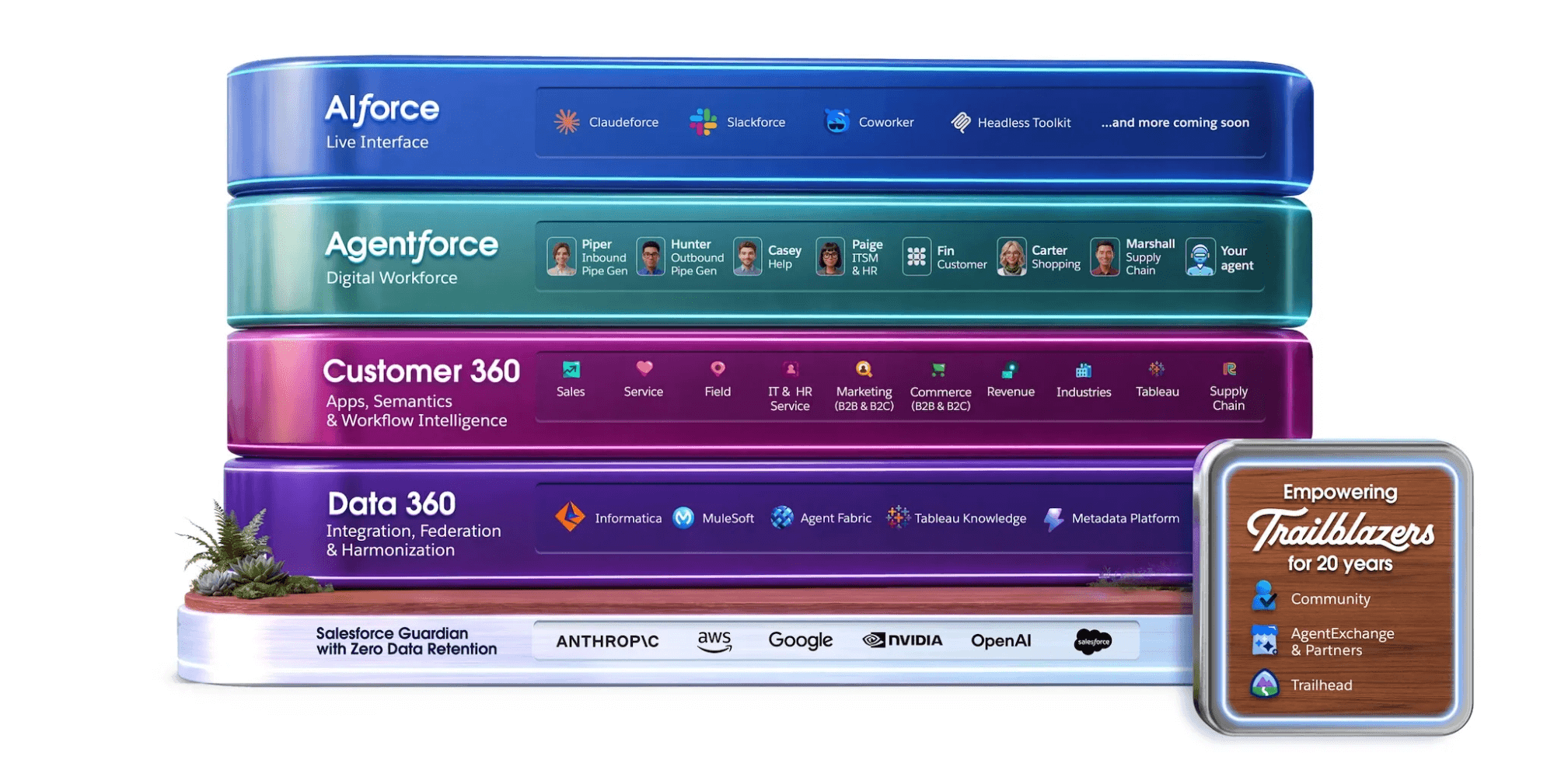
There are four connected layers that make this possible: AIforce, Agentforce, Customer 360, and Data 360. Each capability builds on the foundation beneath it, adding a new way to turn trusted context into action wherever work happens.
- AIforce makes Salesforce available wherever people and AI work. It lets you bring your data, workflows, business logic, and governance into any interface – including Slack, Claude, Teams, and Cursor – with no browser required.
- Agentforce is your endlessly scalable digital workforce. It gives businesses access to a portfolio of purpose-built agents that can automate work and take action across the business. Teams also get the tools to build, test, and deploy their own agents.
- Customer 360 is the application layer that powers work across sales, service, marketing, commerce, analytics and more. It gives every team and agent the apps, business logic, and workflows to turn trusted context into coordinated action.
- Data 360 connects your structured and unstructured data across Salesforce and external systems, with 200+ connectors, reusable APIs, and zero-copy connectivity. It then harmonises that information into shared context that fuels every other layer.
Salesforce Guardian weaves trust, security, privacy, compliance, and resilience through the entire Salesforce environment and every connected app, agent, and interface. That means the same protections and controls apply whether you’re working directly in Salesforce, asking Claude to act on customer data, or coordinating work through Slack.
It starts with a trusted, sovereign foundation
Everything in Salesforce is built on the same trusted foundation. Our data, integration, infrastructure, and governance layers work together to connect information from across your business while keeping you in control of where it lives and how it’s used.
- Connect anything, anywhere. Data 360 brings your data together wherever it lives. With a library of pre-built connectors and a Zero Copy Network of leading technology partners, it can activate context without duplicating it or moving it from its source.
- Unify the systems that don’t like to talk. MuleSoft, our integration platform, lets teams build reusable APIs to connect legacy tools and on-premises systems to Data 360, helping unlock context trapped in older tech and custom applications.
- Stay in control. Data 360’s built-in governance layer lets you apply policies, consent preferences, and compliance rules consistently across all of your ingested and zero-copy data. AI tagging also helps identify and protect sensitive information.
- Keep your data closer to home. Hyperforce supports Australian data residency, giving organisations a local foundation for innovation. It keeps customer data at rest in Australia without sacrificing the performance and scalability of our global platform.
- Scale AI without sacrificing control. Our AI Control Plane lets you see, manage, and control AI agents across the enterprise, manage identities, and enforce permissions and policies from one place.
The result is a goldmine of trusted insights that flow through Customer 360, Agentforce, and all of your integrated apps and interfaces. This gives Australian teams the live context to understand every customer, make informed decisions, and deliver connected experiences without compromising the security or sovereignty of their data.
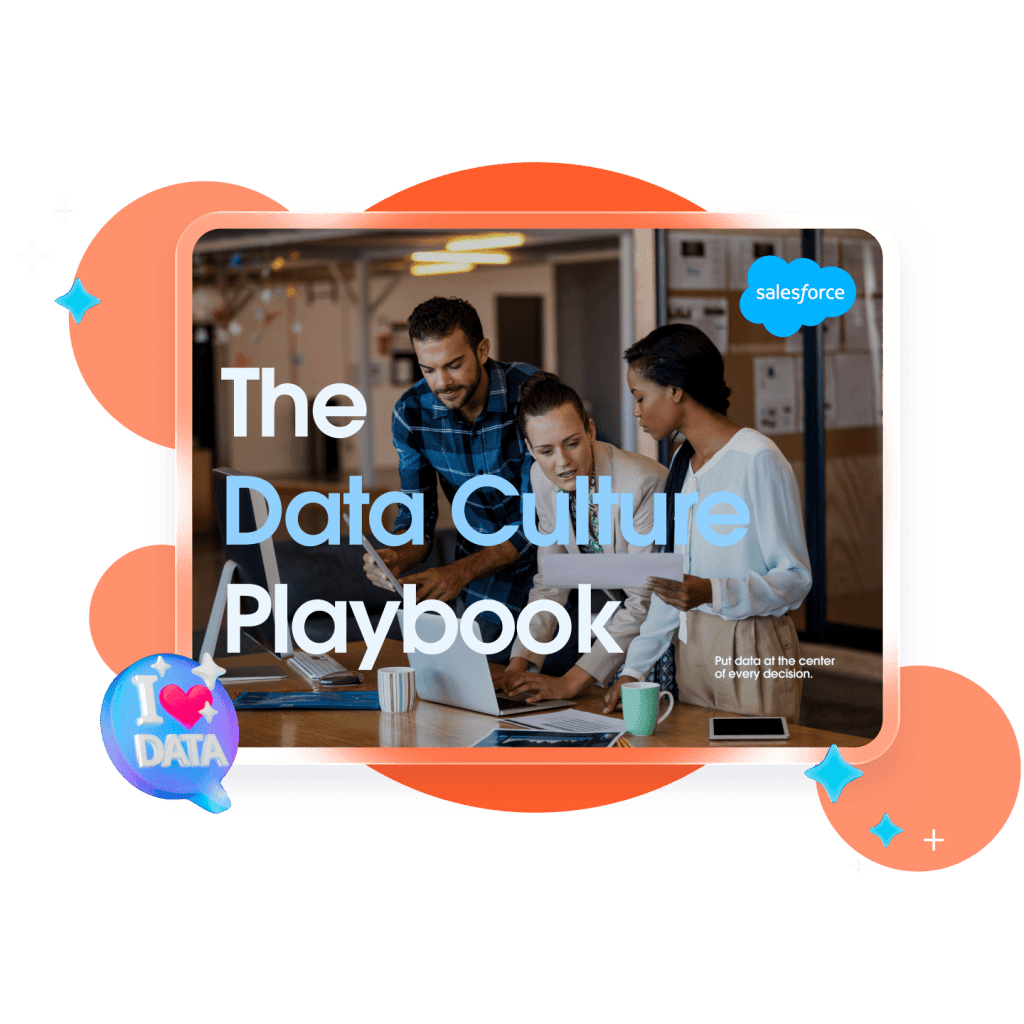
Put data at the centre of every decision.
Transform your company by infusing your data with AI and building a thriving data culture.
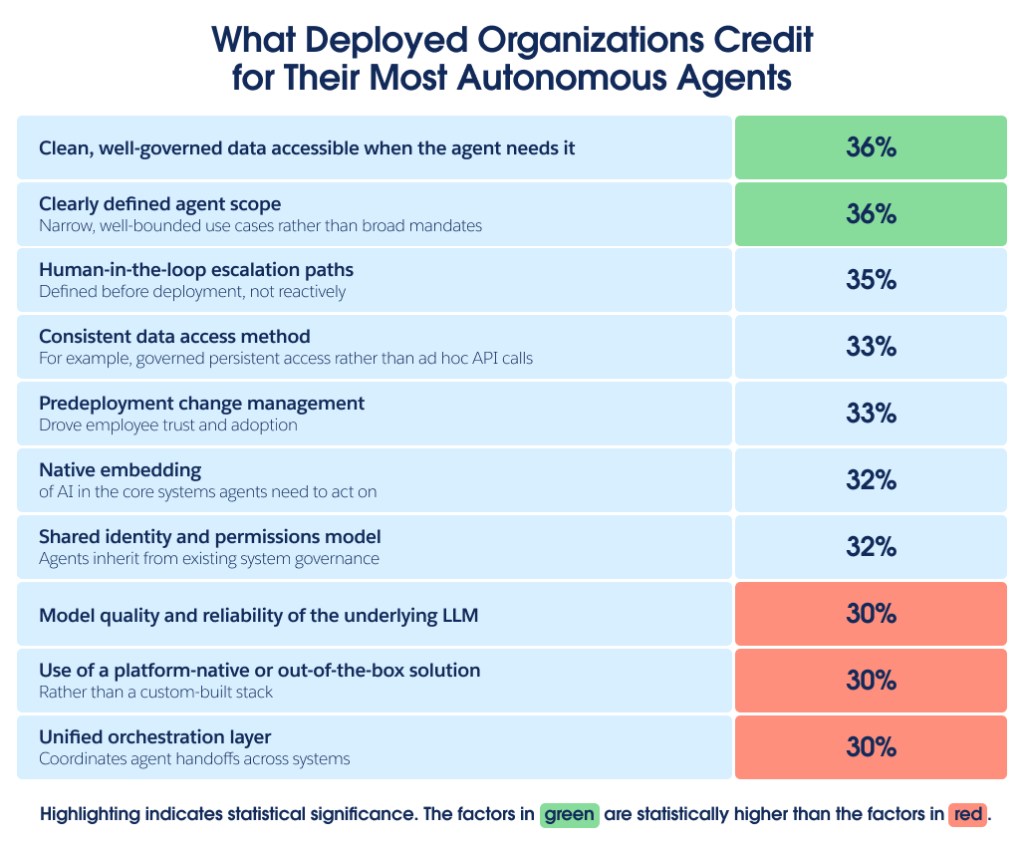
That foundation also gives AI agents the context they need to reason and take action reliably. Of the organisations we surveyed in our State of Agentic AI in the Enterprise report, 36% credited clean, well-governed, accessible data as the top reason for the success of their most autonomous agents.
Source: Salesforce, State of Agentic AI in the Enterprise report
What is AIforce?
AIforce is Salesforce’s live interface layer. It makes every capability your business already runs through Salesforce – data, apps, workflows, agents, and logic – available on the tools and interfaces where teams already work.
For most of Salesforce’s history, accessing context or running a capability meant opening the platform and seeking out the right information. AIforce rewrites that narrative. Using MCP servers, APIs, and developer tools, it can create secure connections between Salesforce and any other interface.
That means your agents and teams can draw on trusted business context, run workflows, and take action without leaving the place where work is already happening, whether that’s in Claude, Slack, Coworker, or your own custom apps. This completely changes how Salesforce can support your business. Teams can:
- Bring Salesforce directly into the flow of work. A service team can manage a case from Slack, a seller can review their pipeline from Claude, and a developer can work in Cursor without jumping through Salesforce whenever they need context.
- Create an interface for the moment. Ask Claude or Slackbot, “Which renewals should I prioritise today?” and these tools can use AIforce to bring up a live view of the relevant accounts and next-best actions, assembled from scratch in real time.
- Build once, deploy everywhere. With AIforce’s Headless Toolkit, teams can build an experience once, then bring it to Slack, web, mobile, and any other channel without starting again for each destination.
The best part is that Salesforce doesn’t leave its guardrails behind when it moves into a new interface. The same governance, permissions, identities, audit logs, sharing rules, and logic you enforce in Salesforce carry through into every interface. People and agents can only see what they’re allowed to see and take actions they’re authorised to take.
This lets every team work through the interface that suits them while giving IT one consistent way to maintain control. It’s freedom without the chaos.
What is Claudeforce?
Claudeforce is our partnership with Anthropic, created to bring Claude’s advanced reasoning together with the trusted data, applications, workflows, and governance that businesses run through Salesforce every day. It’s the beginning of a new era that will give people and agents more ways to think, build, and act with the full context of the business.
The first Claudeforce experience is Salesforce in Claude, which gives Claude a live understanding of your business in Salesforce while keeping your existing permissions in place. To kick things off, we’re returning to our roots with sales. Sellers can now try out 37 prebuilt skills that span the entire journey from prospecting to close. Highlights include:
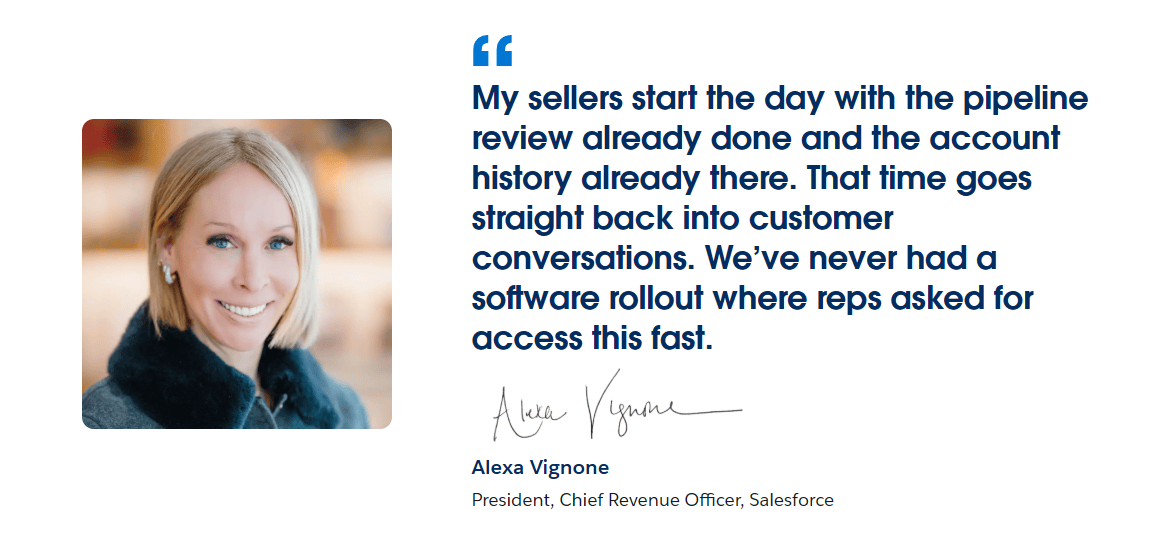
- Daily briefings and pipeline reviews. Ask Claude what changed overnight and get a clear list of priorities drafted up from your live pipeline.
- Deal strategies. Claude can analyse your conversations, emails, deal activity, and more to anticipate objections and build a path toward close for every lead.
- Call prep and follow-up. Sellers can request a brief before a meeting, then ask Claude to draft the follow-up, schedule the next call, and log the activity afterwards.
- CRM updates and workflow actions. Claude can update Salesforce records and launch workflows from a single conversation, all within existing permissions.
You’ll also find Claude in other parts of the Salesforce ecosystem. Over in Slack, Claude Tag works as an AI teammate that can follow discussions, keep projects moving, and work collaboratively with your team on shared tasks. Claude is also part of Slack Code, where engineering teams and agents can collaborate throughout the development process.
Source: Salesforce
What is Slackforce?
Slackforce is the collaborative layer of AIforce. It connects Slack conversations with live Salesforce data, apps, and agents, so teams can review information and complete workflows from the same collaboration tool they use every day.
Slackbot sits at the centre of that experience. It can find context in Salesforce and coordinate work across apps and agents all from a single conversation. You can ask it questions about customers, cases, or deals, update Salesforce records directly, or launch a workflow that escalates an urgent customer case to the right team.
Slackforce Surfaces takes that capability to the next level by turning the context behind that conversation into something the entire business can use. For instance, teams can:
- Turn a pipeline into an interactive deal map. For example, Slack can group opportunities by health or urgency.
- Track a campaign launch. Keep deadlines, owners, approvals, and results together, so marketing and leadership can follow progress from the same view.
- Create reports and forecasts. Ask Slackbot to turn your business metrics and latest analytics into a visual report or presentation.
As with every AIforce capability, Slack stays grounded in your Salesforce permissions, meaning users can only see information and build experiences from data they’re authorised to access.
What is Agentforce?
Agentforce is Salesforce’s AI agent platform and the digital workforce of the agentic enterprise. It gives you the tools to build, test, deploy, and govern trusted AI agents that work side by side with employees, take action across the business, deliver real-time intelligence to your teams, handle admin autonomously, and interact with customers across channels.
- Bring customer intelligence to every team. Whether it’s shaping your next campaign or prepping a sales rep before a call, Agentforce draws on live customer context to make every recommendation and decision more relevant and personal.
- Make every customer interaction count. When a customer tells Agentforce “I want to return my order”, it can compare their purchase and service history against your returns policy to give them a personalised outcome – no more dead-end chatbots.
- Orchestrate work across your ecosystem. Because Salesforce connects your entire business in one place, Agentforce can take action everywhere your team already works, from your Salesforce apps to your third-party systems.
- Governance, trust, and security are built in, not bolted on. Whenever an agent takes action or makes a decision, your rules and permissions inform every move because Agentforce is grounded in your business context.
- Keep ambitious work moving. Agents can pursue goals over days or weeks, remember their progress, and adjust their plans as circumstances change. When a decision needs your approval, they know exactly when to loop you back in.
Enable stellar service in the age of AI
You can scale your customer service with the power of generative AI on a unified foundation of trusted data. See how this technology improves efficiency and generates revenue from the contact centre to the field.
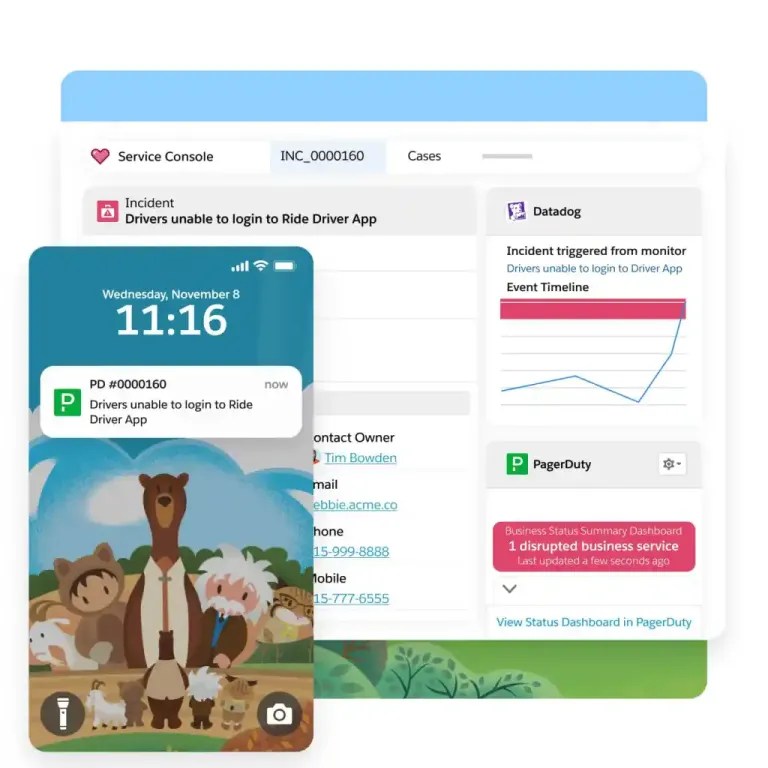
Agentforce is completely adaptable to your business’s needs and skill sets. Teams looking to achieve value faster can choose from our portfolio of job-ready agents, including Casey for customer service and {{ai.agent.outbound-sales}} for outbound sales. Each comes with prebuilt skills for its role and can be adapted to the way you work.
Source: Salesforce
When the job calls for customisation, Agentforce Builder lets teams describe what they want an agent to do in plain language, while Agentforce Script gives developers granular control over conditions, variables, loops, and transitions. Teams can then simulate conversations and refine the agent’s behaviour before putting it to work.
Agentforce is built to grow with your ambition. Get started with one core workflow, prove the value, and then expand from there – the sky’s the limit. To learn more, see how The Grout Guy used Agentforce to scale his small business from “one man in a van” to a national enterprise with more than 200 staff and a 40% YoY growth rate.
What is Customer 360?
Customer 360 is the collective name for all of the Salesforce capabilities teams use day to day. It covers sales, service, marketing, commerce, analytics, and more, plus all of our custom solutions for industries like finance, healthcare, and education.
Because every application shares the same data, business logic, and permissions, each team gets tools tailored to its role without becoming disconnected from the wider customer journey. Information you gather in one part of the business can inform what happens everywhere else, powering connected journeys and seamless agentic experiences.
Salesforce for sales
Sales is in our name. It’s how we got started in the CRM business, and we’ve never stopped finding new ways to help teams build stronger relationships with their customers.
Experience Salesforce with an interactive demo.
Get hands on with our products and explore real use cases and solutions built for agentic enterprises.
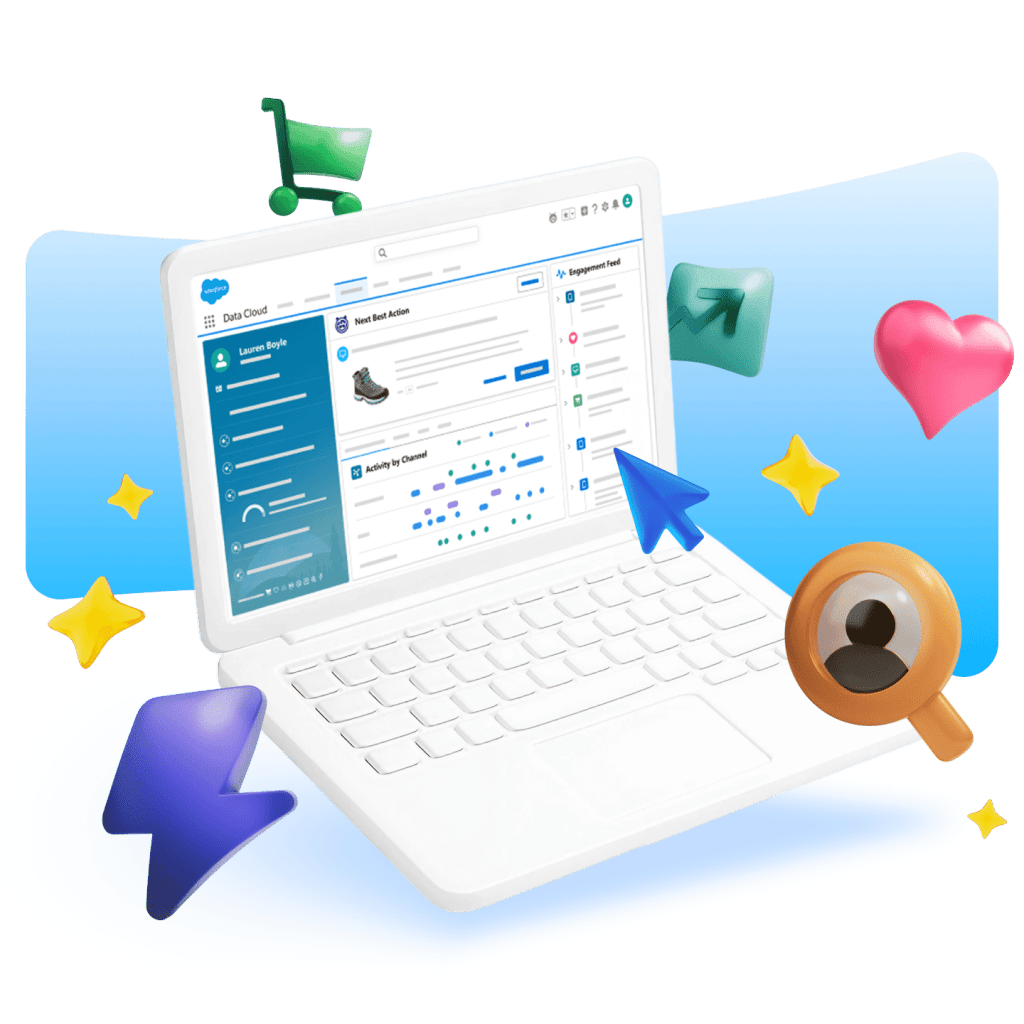
Sales Cloud brings leads, accounts, opportunities, conversations, and forecasts into one connected workspace. It gives sellers the data, tools, and agent support to manage the entire sales cycle from prospecting to deal close. Even better, because Sales Cloud connects with marketing, service, and more, sales teams get the unified, real-time context they need to connect every touchpoint and deliver deeply personalised customer experiences.
And now, with Agentforce in Sales Cloud, teams can squeeze more value from every interaction. Sellers can deploy AI agents to:
- Research prospects. Identify buying signals, rank the best opportunities, and deliver them to sellers in Slack with a ready-made brief each morning.
- Turn interest into meetings. Personalise outreach, answer early customer questions, and book qualified prospects straight into a seller’s calendar.
- Keep every opportunity moving. Monitor deals for risk, recommend the next action, prepare sellers for calls, and update the pipeline once each conversation ends.
- Coach every seller on every deal. Review conversations, identify missed opportunities, and provide feedback before the next customer call.
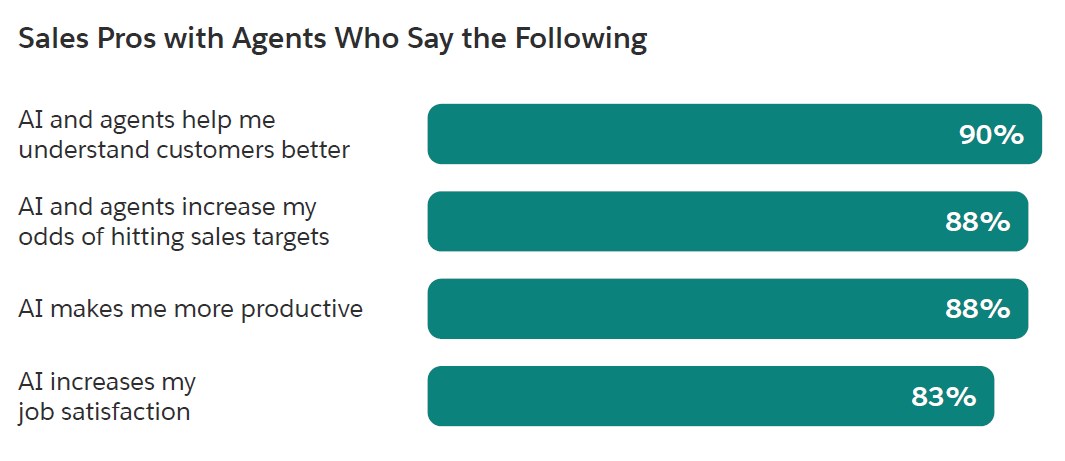
The result: sellers get better opportunities, less admin, and more time to deliver memorable customer experiences. In our 2026 State of Sales report, 90% of sales pros with agents said AI helps them understand customers better, 88% said that it makes it easier to hit targets, and 88% said that it makes them more productive.
Source: Salesforce, State of Sales (Seventh Edition)
Salesforce for customer service
Service Cloud connects all of the context, workflows, and automations service teams need to resolve issues faster and deliver more personalised support. Our leading customer service tools help you scale service that customers love while maximising ROI and driving efficiencies from the contact centre to the field, all on a single cloud platform.
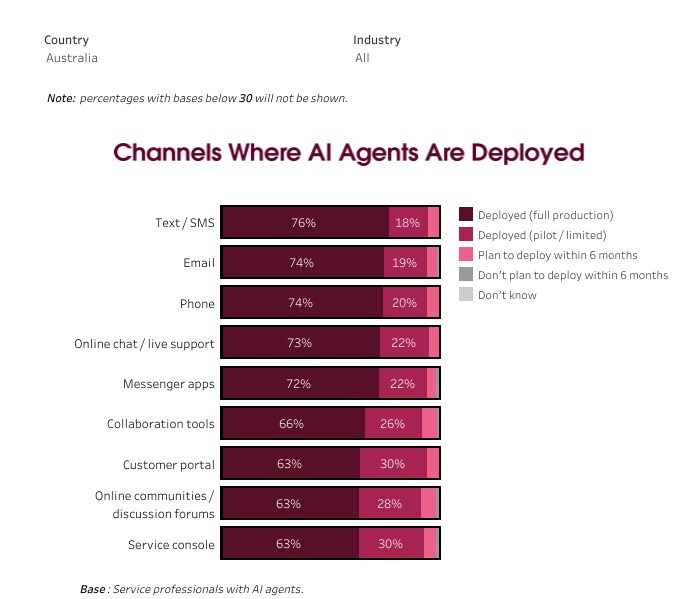
That connected foundation extends across every channel your customers use. Voice, email, self-service, chat, SMS, and social messaging all feed into the same customer record. This means a conversation can move between reps and teams without anyone losing the context or asking the customer to start again.
Agentforce for Service can make that experience even faster. When a customer asks for support, Casey the help agent can search their history, guide them through the issue, and complete actions like booking an appointment. If human judgement is needed, it can route the case to the right specialist with the conversation and steps already taken. And because Casey can work across voice, web, customer portals, SMS, WhatsApp, and more, customers can receive the same context-aware support wherever they want to engage.
Source: Salesforce, State of Service: AI Agents Edition
Australian property developer Geocon is already putting this model into practice. Its agent, Gus, gathers property-defect details, creates cases, and routes them to the right subcontractor. Now, cases that once took an average of six-and-a-half hours to reach the right person arrive immediately, helping Geocon respond faster and absorb sudden spikes in demand.

Source: Salesforce
Salesforce for marketing
A click used to be the goal. With Salesforce, it can be the beginning of a conversation. Marketing Cloud brings campaign planning, content, customer journeys, and analytics together, so every open, reply, visit, and purchase can shape the next interaction.
From a single brief, Agentforce can help your teams identify the right audience, create personalised, on-brand content, launch connected omnichannel customer journeys, and tweak campaigns as customers respond. Because every signal updates a unified customer profile, the experience doesn’t reset whenever someone changes channels. A customer can reply to a message, ask a question, receive a personalised answer, and move into the right sales, service, or commerce journey with their context intact.
We’re continuing to open up new possibilities for marketers. Highlights include Contentful, our headless CMS, which turns content into reusable building blocks that can be created once, then delivered through APIs to your websites, apps, emails, storefronts and AI agents. Another exciting addition is Palmata, which shows you how your brand appears in AI-generated answers and what to target next to maximise your visibility.
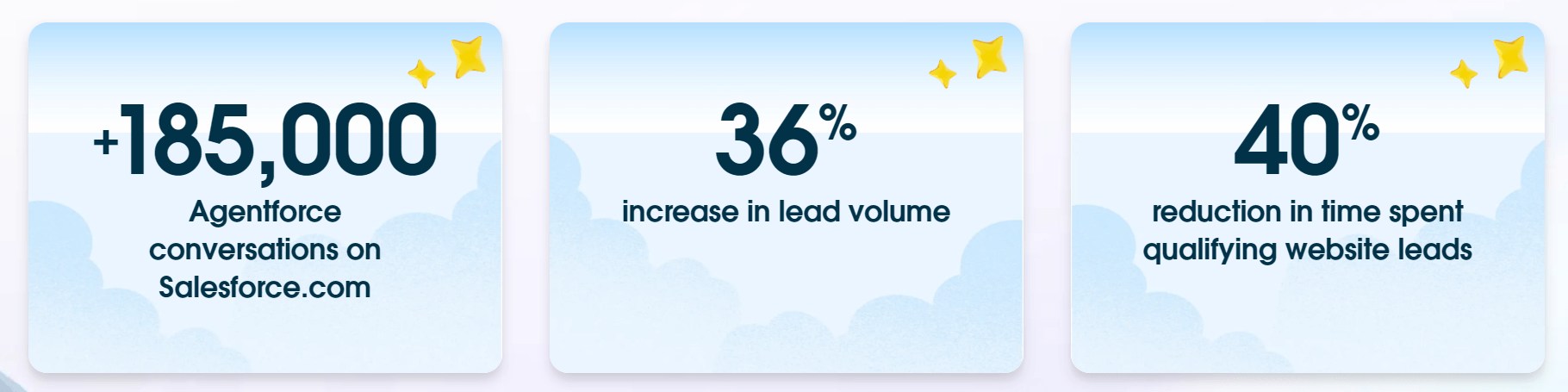
Our very own ANZ marketing team was customer zero for Agentforce in Marketing Cloud, and the results were transformative. See how they used Agentforce to handle more than 185,000 website conversations, increase lead volume by 36%, and cut the time spent qualifying website leads by 40%.
Source: Salesforce
Salesforce for B2C and B2B shopping and commerce
A shopping journey can begin almost anywhere – a search result, messaging app, social post, or store aisle. Commerce Cloud turns each of those moments into a place to buy, helping B2C and B2B businesses guide customers from discovery to payment and fulfilment, wherever they choose to shop.
Agentforce is at the helm of those experiences. Carter, your shopping agent, can understand what a customer is looking for, search your product catalogue, answer questions, and help them check out directly in the chat. Business buyers can also describe or upload an image of what they need and place a high-volume reorder without navigating a traditional storefront.
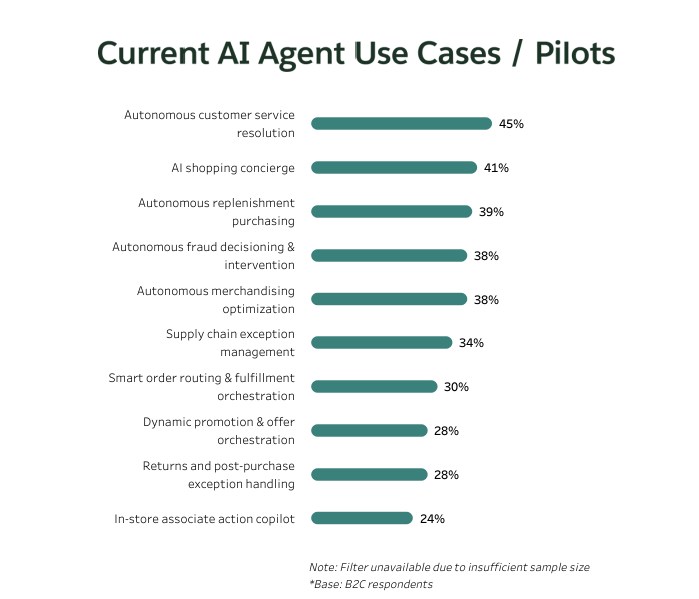
Agentforce also works behind the scenes. Merchandising teams can use it to create product descriptions, launch personalised promotions, reorganise product categories, and identify slow-moving SKUs. See some of the exciting AI agent use cases our B2C customers are putting into action below.
Source: Salesforce, State of Commerce (Fourth Edition)
Salesforce for small business
Big ambitions don’t require a big team. Salesforce for Small Business gives growing teams a simple place to organise customer relationships, run campaigns, and deliver support, with Agentforce helping handle follow-ups and admin from day one.
Grow fast with the #1 CRM for small businesses.
Get started and scale fast with the #1 AI CRM for small businesses in any industry. Connect marketing, sales, service and commerce on one platform. Save time with simple set-up and built-in guidance. Set the foundation for growth with unified data and AI.


Your Salesforce CRM system is also completely flexible. A two-person team can start with Free Suite, move into Starter Suite for turnkey AI across sales, service, marketing, and commerce, then step up to Pro Suite when it needs deeper automation and customisation.
Because every suite is built on the Salesforce Platform, your data and workflows come with you as the business grows. You can add people, processes, apps, and agents without eventually having to abandon your CRM and start again.
What is the ROI of Salesforce?
On average, our customers see a 55% return on investment when they implement Salesforce, while 98% achieve a positive ROI.* That value reaches across the business.
- Service: 30% lower support costs and a 38% improvement in customer satisfaction.
- Sales: 78% have significantly improved win rates, alongside a 35% increase in revenue and a 36% increase in productivity.
- Marketing: 34% higher customer engagement and a 33% increase in campaign conversion rates.
- Commerce: 30% growth in digital revenue and a 30% increase in digital conversion rates.
- IT: 36% lower IT costs.
Reaching those outcomes takes more than switching on new software. We’ve built an entire Customer Success ecosystem to help you get value from Salesforce faster, with expert guidance, practical resources, and best practices. Our Professional Services team can also help you shape the platform around your goals and get new capabilities into production.
You can extend Salesforce with trusted apps, agents, and partner solutions from AgentExchange, while Trailhead gives your workforce free training in Salesforce, AI, and other in-demand skills.
Together, this gives you a trusted platform that can lower costs, increase productivity, and keep creating value as your business evolves.
*Source: 2026 Salesforce Success Metrics Global Highlights. Data aggregated from 3,887 customers across nine countries.
See an example of Salesforce in action
We could spend hours sharing stories about our customers and what they’ve achieved with Salesforce. For this article, however, we’re focusing on one ANZ business that is setting the bar for premium service at a global scale.
Fisher & Paykel sells premium household appliances in more than 50 countries. Customers investing in those products expect the same standard of care after the sale, but delivering fast, knowledgeable support across dozens of markets was becoming increasingly difficult. Its existing chatbots could only resolve around 33% of enquiries, while reps sometimes had to search through more than 10,000 knowledge articles to find answers.
To solve this problem, Fisher & Paykel brought its customer service data, product knowledge, and workflows onto Salesforce. Today, Data 360 organises its knowledge base, while Service Cloud gives representatives and technicians a complete view of each customer and service case.
Source: Salesforce
From there, Agentforce for Service can draw on that connected context to provide grounded, 24/7 self-service. If a customer says their dishwasher won’t drain, for instance, it can identify the appliance, retrieve the right instructions, and guide them through clearing the filter before deciding whether a service representative is needed.
The impact carries into the field, too. Technicians receive full case histories before they arrive, which helps them bring the right parts and avoid repeating troubleshooting steps the customer has already tried. The company is also exploring how Data 360 and Agentforce could use signals from connected appliances to identify faults before a breakdown occurs.
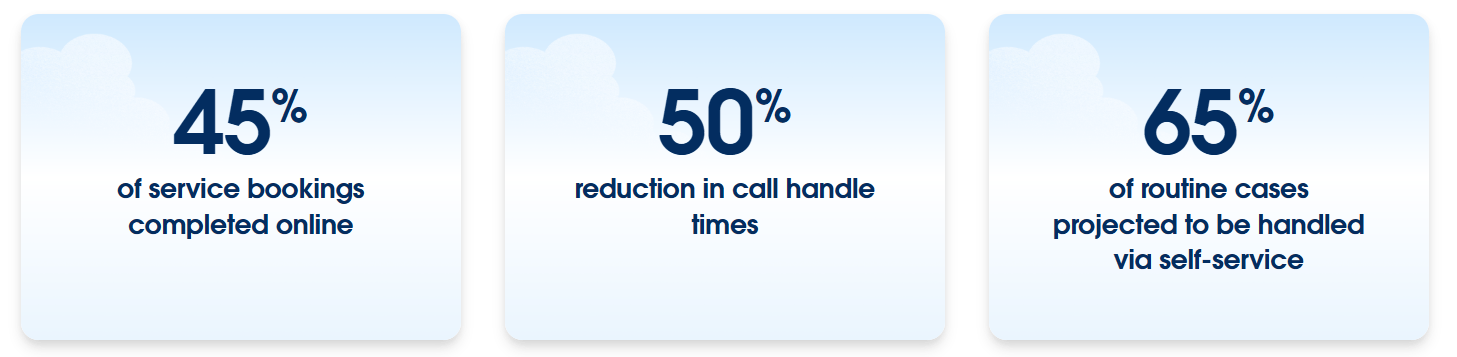
The results have been monumental. Call handling times have fallen from 12 minutes to under six, 45% of service appointments are now booked online, and Fisher & Paykel expects self-service to handle more than 65% of routine cases.
Source: Salesforce
Bring your agentic enterprise to life
So, what does Salesforce do? It gives your people and AI agents the trusted context, tools, and freedom to achieve more together. You can start with one pressing goal, whether that’s closing deals faster, resolving service cases sooner, or making every customer interaction more personal, then expand as your needs and ambitions grow.
Turn AI into action.
Download the workbook to see how you can use AI to improve your marketing processes and increase conversions.
Because every capability is built on the same connected foundation, each new app, workflow, agent, and interface builds on what came before. That’s how you move beyond isolated AI experiments and create an agentic enterprise that keeps learning, adapting, and opening up new possibilities.
Ready to see just how much your business could achieve? Read the agentic enterprise playbook to start building towards your own agentic enterprise, one step at a time. Or watch the Agentforce demo to see how Agentforce turns trusted business context into action.
FAQs
What is an AI agent?
An AI agent is an autonomous artificial intelligence system that can understand a goal, decide on the best course of action, and complete work independently using the tools available to it. In Agentforce, agents can answer questions, run workflows, update records, and work alongside employees within the guardrails your business sets.
What is Salesforce CRM?
Salesforce CRM is a cloud-based platform for managing customer relationships across sales, service, marketing, commerce, and more. The Salesforce customer relationship management system gives your teams and AI agents a shared view of each customer and the tools to act on that context.
What can the Salesforce CRM system do?
The Salesforce CRM system can help you manage leads, close deals, personalise marketing, support customers, run commerce, automate workflows, and analyse performance. Because these capabilities share the same platform, information can flow between teams instead of becoming trapped in separate systems.