
You built your online store to go somewhere. And as your order volume grows and your ambitions get bigger, the tools that got you here might not be the ones that get you there.
A patchwork of separate systems for shipping, marketing, and sales can quietly slow you down — not because you lack ambition, but because your tech isn’t keeping up with it. That’s the moment lean businesses start asking better questions about their commerce stack.
Exploring commerce alternatives isn’t just about switching platforms. It’s about finding a solution built for where you’re headed — one that scales with your store, connects your data, and lets every part of your business move as fast as you do. In this guide, we break down the top options to help you find the right fit for your next chapter.
Why look for BigCommerce alternatives for your small business
While many commerce platforms offer a solid start, growing teams often need more flexibility and deeper integration with their other business tools. If your current setup makes it hard to see your total sales across different channels, it might be time to research ecommerce alternatives. A modern commerce solution should do more than just process payments — it should help you understand your customers’ behavior.
- Look for a platform that includes native marketing tools so you can run campaigns without buying dozens of third-party apps.
- Ensure your shop offers mobile-first design to capture the growing number of phone-based shoppers.
- Seek out solutions that provide transparent pricing models to avoid unexpected costs as your traffic increases.
1. Salesforce Suites (Commerce)
Salesforce offers a comprehensive approach to online selling by linking your storefront directly to your customer relationship management (CRM). This makes it a top choice for small and medium business (SMB) owners who want their sales, service, and commerce data in one place.
Salesforce for small business is a comprehensive approach to online selling for fast-growing startups and SMBs. The platform connects your digital storefront directly to your CRM tool, ensuring that all sales, service, and commerce data reside in one unified view.
Starter Suite for commerce provides core tools, including a storefront builder with drag-and-drop templates, merchandising tools, and a unified commerce dashboard, while Pro Suite offers advanced ecommerce customization and automation for maturing businesses. Both platforms support scalability to handle traffic spikes and feature AI-powered personalization to recommend products at the right time.
Who it’s for: Fast-growing startups and SMBs that want to scale quickly using a unified data platform.
What it can do:
- Connect every touchpoint so your marketing and service teams always have the full context of a customer’s journey.
- Handle sudden spikes in holiday traffic without worrying about site crashes or slow loading times.
- Use the pre-built digital storefront template to get your online shop up and running quickly.
- Seamless upgrade path to Pro Suite and Commerce Cloud for customization and automation.
How it scales business (1-10): 10
Get started with Commerce CRM for free.
No credit card required. No software to install.

2. Shopify
Shopify is a well-known name in the world of commerce because of its ease of use. It’s designed for entrepreneurs who want to get a professional store online quickly. While it’s user-friendly, businesses that need deep customization or complex business-to-business (B2B) features may eventually find themselves looking for more advanced tools.
Who it’s for: New entrepreneurs and very small teams looking for a simple, template-based setup.
What it can do:
- Access third-party apps to add features like reviews or loyalty programs to your store.
- Sync your online store with physical retail locations for a consistent inventory count.
- Use built-in shipping tools to print labels and track packages directly from your dashboard.
How it scales business (1-10): 6
3. Adobe Commerce
Formerly known as Magento, Adobe Commerce is one of the more technical alternatives for small businesses on the market. It offers customization for brands that have very specific requirements for their storefront. However, it often requires a dedicated developer or a technical partner to manage the day-to-day maintenance and updates.
Who it’s for: Startups with specific technical needs and access to web development resources.
What it can do:
- Build a custom shopping experience that matches your brand’s vision.
- Run several different online stores from one back-end interface.
- Access search engine optimization (SEO) tools and inventory management features out of the box.
How it scales business (1-10): 7
4. WooCommerce
For businesses already using WordPress, WooCommerce is often the first stop when looking at commerce shops for small business. It’s a plugin that turns your existing blog or website into a functional store. While the initial cost is low, you’re responsible for your own hosting, security, and maintenance, which can become time-consuming as you grow.
Who it’s for: Content-heavy brands and small businesses that are already comfortable using the WordPress platform.
What it can do:
- Sell products alongside your blog posts and brand stories.
- Benefit from a global community of developers who create themes and plugins.
- Pay only for the features and hosting you need, rather than a flat monthly fee.
How it scales business (1-10): 6
5. Wix eCommerce
Wix eCommerce has evolved into a contender among commerce stores by adding selling features to its drag-and-drop builder. It’s a good choice for visual brands that want total control over the “look and feel” of their site without writing code. It’s best suited for businesses with smaller product catalogs rather than massive inventories.
Who it’s for: Creative startups and boutiques that prioritize visual design and ease of use.
What it can do:
- Use a simple interface to design every inch of your site without needing a graphic designer.
- Sell services and appointments alongside physical products on the same site.
- Use built-in tools to calculate sales tax automatically based on your customer’s location.
How it scales business (1-10): 5
6. Squarespace
Squarespace focuses heavily on high-quality design templates that make small brands look like a high-end agency. While its commerce features have improved greatly, it’s still primarily a design-first platform rather than a high-volume warehouse management tool.
Who it’s for: Artists, designers, and luxury brands that want a clean, minimalist aesthetic.
What it can do:
- Choose from some of the pre-designed website templates they offer.
- Use native email tools that automatically pull in your product images and branding.
- Set up recurring payments for memberships or “box of the month” style products.
How it scales business (1-10): 5
7. Shift4Shop
Shift4Shop is a budget-friendly BigCommerce alternative, often offering a “free” tier if you use their internal payment processing. It includes many features that other platforms charge extra for, if you’re watching every penny. The interface is a bit more dated than competitors, but the functionality remains solid.
Who it’s for: Cost-conscious SMBs looking for a feature-rich platform with low monthly overhead.
What it can do:
- Access SEO tools without having to install extra plugins.
- Set up automated notifications to let you know when stock is running low on popular items.
- Create specific pricing tiers for bulk buyers and B2B customers.
How it scales business (1-10): 6
Commerce starts with Salesforce Suites
Sell more using a commerce-ready CRM with integrated tools for every sale.
Modernizing your workflow with CRM and Agentforce
As your business expands, you’ll eventually need more than just a website — you’ll need a digital partner. Tools like Agentforce allow you to bring together your apps and data to create a smarter workplace. This is a key advantage when evaluating BigCommerce alternatives for your small business, as it allows you to automate complex tasks that would otherwise require hiring more staff.
Future-proof your startup shop
- Use employee agents and AI agents to handle team workflows, routine customer questions, and purchasing options — freeing your team to focus on high-value sales.
- Connect your commerce data with an AI CRM to see real-time trends in your business performance.
- Scale your commerce customer service during peak seasons without the stress of manual ticket management.
How Commerce Cloud Helps SMBs
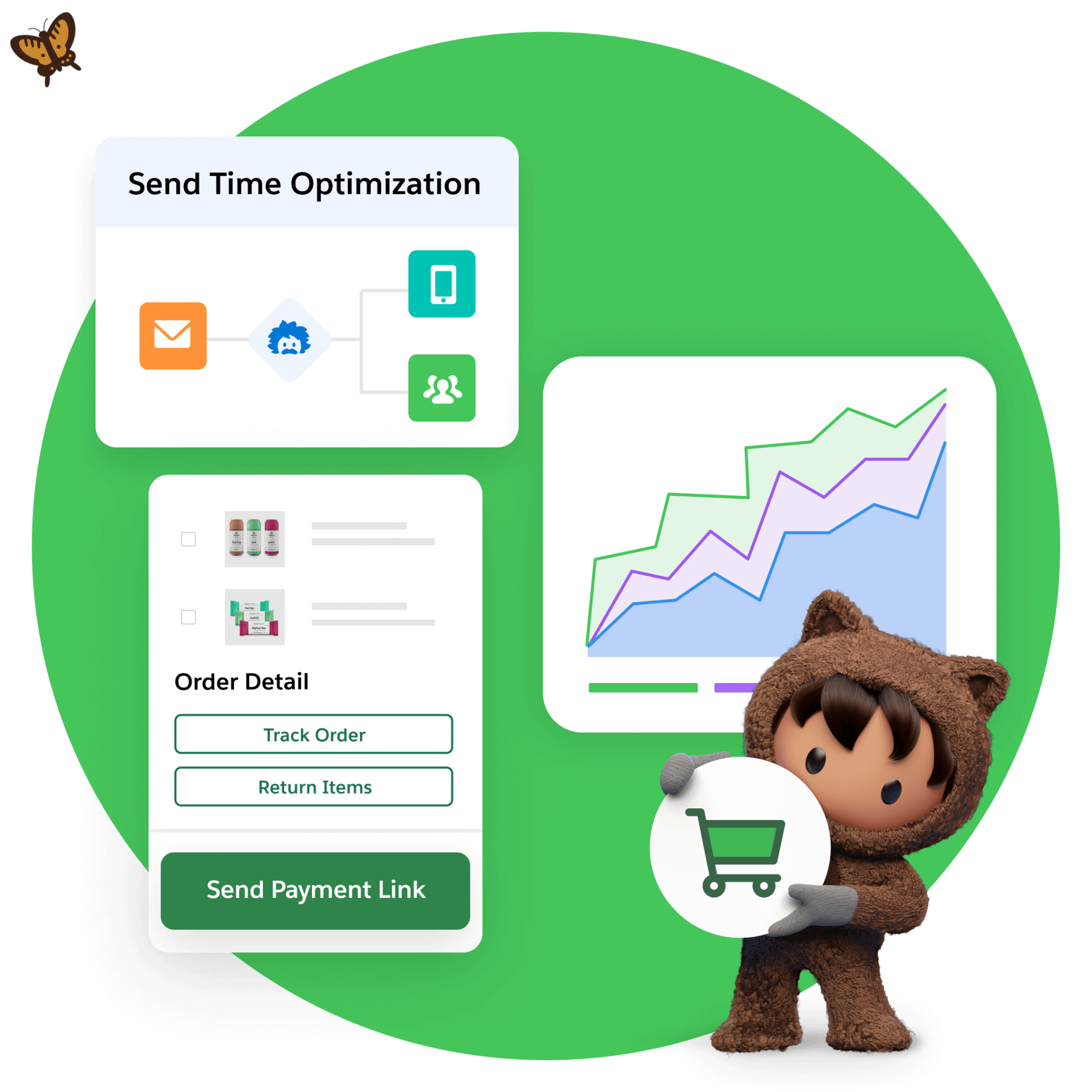
Commerce Cloud helps small and medium-sized businesses deliver smarter, more personalized shopping experiences without adding operational complexity. By bringing ecommerce, order management, customer data, and AI-powered assistance together, it enables lean teams to automate routine work, guide customers from product discovery through checkout, and provide responsive service around the clock. The result is greater efficiency, stronger conversion opportunities, and a commerce operation that can scale as the business grows.
Try Salesforce for free.
See how growing businesses are using Salesforce Suites to scale fast. No credit card required, no software to install.
It all starts with Starter Suite.
Thank you!
Try for freeChoosing the right BigCommerce alternatives for your SMB
The best platform for your company is the one that removes friction from your daily routine. While BigCommerce is a powerful tool, researching alternatives helps ensure you have a foundation that supports your long-term vision. Whether you need a simple shop or a fully integrated AI-powered ecosystem, the right choice is out there for every startup.
Start your commerce journey with Salesforce, or activate Foundations to try out Agentforce today.
AI supported the writers and editors who created this article.
How do I know if it’s time to switch my ecommerce platform?
If you spend more time fixing technical issues or manually moving data between apps than you do selling, it’s time for a change. You can find more tips on streamlining your tech in this guide to SMB digital tools.
Will moving to a new platform hurt my search engine rankings?
Most BigCommerce alternatives for small business include tools to redirect your old links to your new site, which helps protect your SEO. It’s important to plan your migration carefully to ensure all your product pages are mapped correctly.
Can I manage my shipping through these alternative platforms?
Yes, most modern commerce solutions include built-in shipping integrations or connect easily to popular carriers. This allows you to print labels and track orders from a single dashboard.
Do these platforms support selling on social media?
Most top-tier BigCommerce alternatives for small businesses allow you to sync your inventory with platforms like Instagram and Facebook. This lets customers buy your products directly from their social feeds.
Is it difficult to move my customer data to a new provider?
Most platforms offer CSV import tools that make moving your customer and product lists relatively straightforward. For more complex data, many providers offer migration services or partner with experts to help.