
You’ve poured months — maybe years — of your life into late nights, and endless cups of coffee, noodling over your business idea. You’re standing on the edge of your biggest moment yet: Launch day. It’s thrilling, that electric buzz of finally letting the world see what you’ve built. But beneath that excitement, you’re a bundle of nerves. Will the world understand (and use) it?
You don’t have to navigate launch day alone. Think of this guide as your map, helping you move past the overwhelm and into the stride of a launch that doesn’t just make noise, but makes an impact. Let’s dig into what it takes to to launch a SaaS product, and the tools you need by your side.
What defines Software as a Service (SaaS)?
Software as a Service (SaaS) is a delivery model where a third-party provider hosts applications and makes them available to users over the internet, typically on a subscription basis. Users access the software through the web or a mobile app, eliminating the need for local installation, hardware setup, or manual updates. This cloud-based model simplifies operations and allows businesses to scale easily.
Most likely, you use them everyday. Some examples of popular SaaS platforms include customer relationship management (CRM) tools like Salesforce, as well as collaboration tools like Slack, Google Workspace, and Zoom.
Nail your positioning before you write a single line of copy
Before you think about ads, email campaigns, or a launch day post, you need to get clear on who your product is for and why it matters to them. This is product-market fit — and skipping this step is the most common reason early SaaS launches fall flat. Talk to potential customers, ask about their current workarounds, and listen for the language they use to describe their pain. That language becomes your messaging.
Define your ideal customer profile
Your ideal customer profile (ICP) is a detailed description of the type of company or person most likely to get real value from your product. For most early-stage SaaS founders, this means narrowing down by industry, team size, budget, and the specific problem you solve. The tighter your ICP, the sharper your positioning — and the better your conversion rates.
Build your go-to-market strategy around that customer
A strong go-to-market strategy maps your ICP to the channels, messaging, and offers most likely to reach them. For SaaS, this often means a mix of inbound content, product-led growth (think freemium or free trials), and direct outreach to early adopters. Pick one or two channels and go deep before spreading yourself thin.
Set up the right tools from day one
One of the biggest mistakes founders make when they launch a SaaS product is treating their tech stack as an afterthought. The tools you choose in your first 90 days shape how well you can track leads, support customers, and understand what’s actually working.
Start with a CRM built for your stage
An operating system, like CRM, is the single most important tool you’ll add at launch. It keeps your pipeline organized, tracks every customer interaction, and gives you a real-time view of where deals stand — so you’re not relying on memory or spreadsheets when things get busy.
According to Salesforce’s Customer Success Metrics research, small businesses that implemented Salesforce saw a 42% increase in customer satisfaction and a 41% increase in customer retention.
Automate the repetitive stuff early
Marketing automation lets you nurture leads without burning out your team. Set up onboarding email sequences, lead scoring, and follow-up reminders so no potential customer falls through the cracks. The time you save on manual tasks goes straight back into building your product and talking to customers.
The marketing CRM for small business is here.
Automate your marketing campaigns with a connected tool built for growing businesses.

Build a launch plan that creates momentum
A great SaaS launch isn’t a single moment — it’s a sequence of coordinated moves designed to build awareness, generate sign-ups, and convert early users into paying customers. Think of it in three phases: pre-launch, launch day, and post-launch.
Pre-launch: Build your waitlist and warm your audience
Start talking about what you’re building before it’s ready. Share behind-the-scenes content, collect emails through a simple landing page, and engage with communities where your ICP hangs out. The goal is to arrive at launch day with a warm audience, not a cold one.
Launch day: Make noise, then make it easy to sign up
There’s a reason they call it a “launch” and that’s because you are literally launching into a new chapter of your business. You’re launching your idea out into the world for all to see. It’s exciting! And takes alignment.
Your launch day should include a coordinated push across email, social, and any communities you’ve been active in. Make the sign-up or trial experience as frictionless as possible — every extra step you add costs you conversions. If you’re wondering whether a freemium model fits your product, this breakdown of freemium business models is worth a read before you decide.
Post-launch: Focus on activation, not just acquisition
Getting sign-ups is exciting, but the real work starts after someone creates an account. Track activation rates — the percentage of new users who reach a meaningful “aha moment” in your product — and build onboarding flows that get people there faster. For small and medium businesses (SMBs) especially, a fast time-to-value is what separates the tools that stick from the ones that get canceled after the trial.
Grow your SaaS product with AI on your side
Once you’ve launched and you have real customers using your product, it’s time to think about sustainable growth. For SaaS founders running lean teams, artificial intelligence (AI) is the lever that makes the biggest difference — not by replacing your judgment, but by giving you more signal, faster.
AI-powered tools can score leads so you focus on the ones most likely to convert, flag customers who are at risk of churning before they cancel, and surface insights from your customer data that would take weeks to find manually.
Automating your SMB with AI tools isn’t just about efficiency — it’s about competing on a level playing field with much larger companies. According to Salesforce research, AI agents can handle up to 80% of customer queries, reducing service costs by 50%, while targeted AI marketing drives conversion rates up by 30%. That’s real impact with real tools.
How to scale a SaaS product without losing what makes it great
Scaling is where a lot of SaaS founders hit a wall. What worked when you had 50 customers starts to break down at 500. Your support queue grows, your sales cycle gets longer, and the personal touches that earned you early loyalty become harder to maintain.
The key is building systems that scale with you rather than hiring your way out of every problem. That means investing in self-serve resources like a knowledge base and in-app guidance, setting up automated health scoring to monitor customer success, and using your CRM data to identify your best expansion opportunities. These small business growth strategies show how SMBs are adapting their models to stay competitive as they scale.
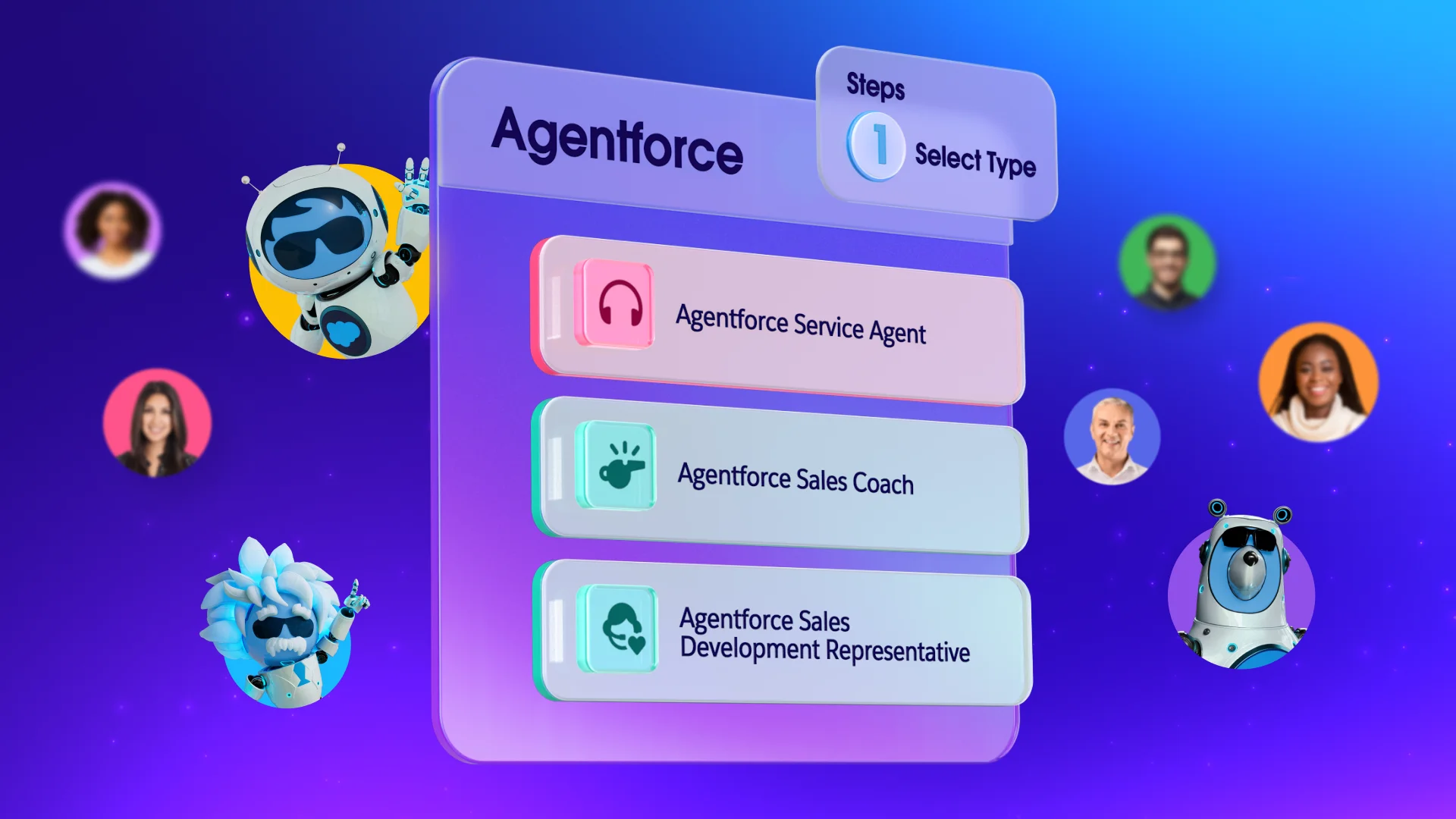
Toward the later stages of growth, many SaaS founders are also turning to AI agents to handle tasks that previously required headcount. Agentforce connects sales, marketing, service, commerce, and productivity into one intelligent system — so your agents can nurture leads, update your CRM, support customers, and coach your reps, all without requiring you to stitch together a dozen different tools.
Ready to launch a SaaS product that lasts?
Building and launching a SaaS product takes more than a great idea — it takes the right systems, the right strategy, and the right partners to help you grow.
Get started with Salesforce for free or activate Foundations to try out Agentforce today.
AI supported the writers and editors who created this article.
What’s the difference between launching a SaaS product and a traditional software product?
SaaS products are delivered over the internet on a subscription basis, which means your launch strategy focuses on trial sign-ups, onboarding, and retention rather than a one-time purchase. The relationship with your customer is ongoing, so the post-launch experience matters just as much as launch day itself.
How long does it take to launch a SaaS product?
There’s no single answer, but most founders spend three to twelve months getting from idea to a public launch. The timeline depends heavily on how complex your product is, how well-defined your ICP is, and how quickly you can build and act on customer feedback.
Do I need a large team to launch a SaaS product?
Not at all. Many successful SaaS products have launched with a founding team of one to three people. The right tools — especially an AI-powered CRM and marketing automation — let a small team move fast and punch well above their weight.
What metrics should I track after I launch a SaaS product?
Focus on activation rate (do new users reach your product’s core value?), monthly recurring revenue (MRR), churn rate, and customer acquisition cost (CAC). These four metrics give you a clear picture of whether your product is resonating and whether your growth is sustainable.
How do I retain customers after I launch a SaaS product?
Retention starts with a great onboarding experience and continues with proactive customer success outreach, regular product updates, and making it easy for customers to get help when they need it. AI tools that flag at-risk customers early give you a real advantage — you can reach out before someone decides to cancel, not after.