




AI agents have evolved by leaps and bounds this year, but while they’re smarter and more capable than ever, most are still focused on reactive tasks: make a request, the agent acts on it and returns a response. That pattern works great for most day-to-day work, but what if you have a longer-term goal? Ask an AI agent to perform a job that spans more than a single session — like rescuing your at-risk deals or optimizing field service dispatch — and you’ll probably run into some familiar roadblocks.
To truly deliver on the promise of agentic AI — a limitless digital workforce that partners side-by-side with human workers on simple and sophisticated tasks alike — we’re introducing long-horizon agents. To see how they work and what you can do with them, let’s take a look at a use case.
Building is the easy part
An agent pursuing a goal over weeks needs an operating model behind it. The Grown-Up’s Guide to Operating an Agentic Enterprise lays out the roles you need and the metrics you should watch to drive success at each stage of the agent development lifecycle.



In pursuit of a goal
Imagine you’re an account executive nearing the end of the quarter with multiple at-risk deals in your book. You could ask a conventional AI agent to help, but it would probably offer to do something like fire off the same generic email to every at-risk contact on your list. Instead, you want the agent to take its time and follow the same steps you would: figure out the reason why each deal stalled, determine who’s worth re-engaging and what message would actually move the needle forward for each account.
That’s where long-horizon agents come in, a new type of Agentforce agent that works side-by-side with employees to achieve a goal over time. Long-horizon agents will show up wherever you work, such as Agentforce Coworker, Slack or even third-party apps. Powered by the long-horizon runtime, they have three important attributes:
- Memory to pursue goals over multiple sessions.
- Durable execution to persist plans over time and course-correct as they learn.
- Dynamic steering to update agent configuration on the fly based on user feedback.
The first agent to run on the long-horizon runtime is Hunter, the outbound sales agent. Let’s see how it approaches re-engaging our stalled deals.
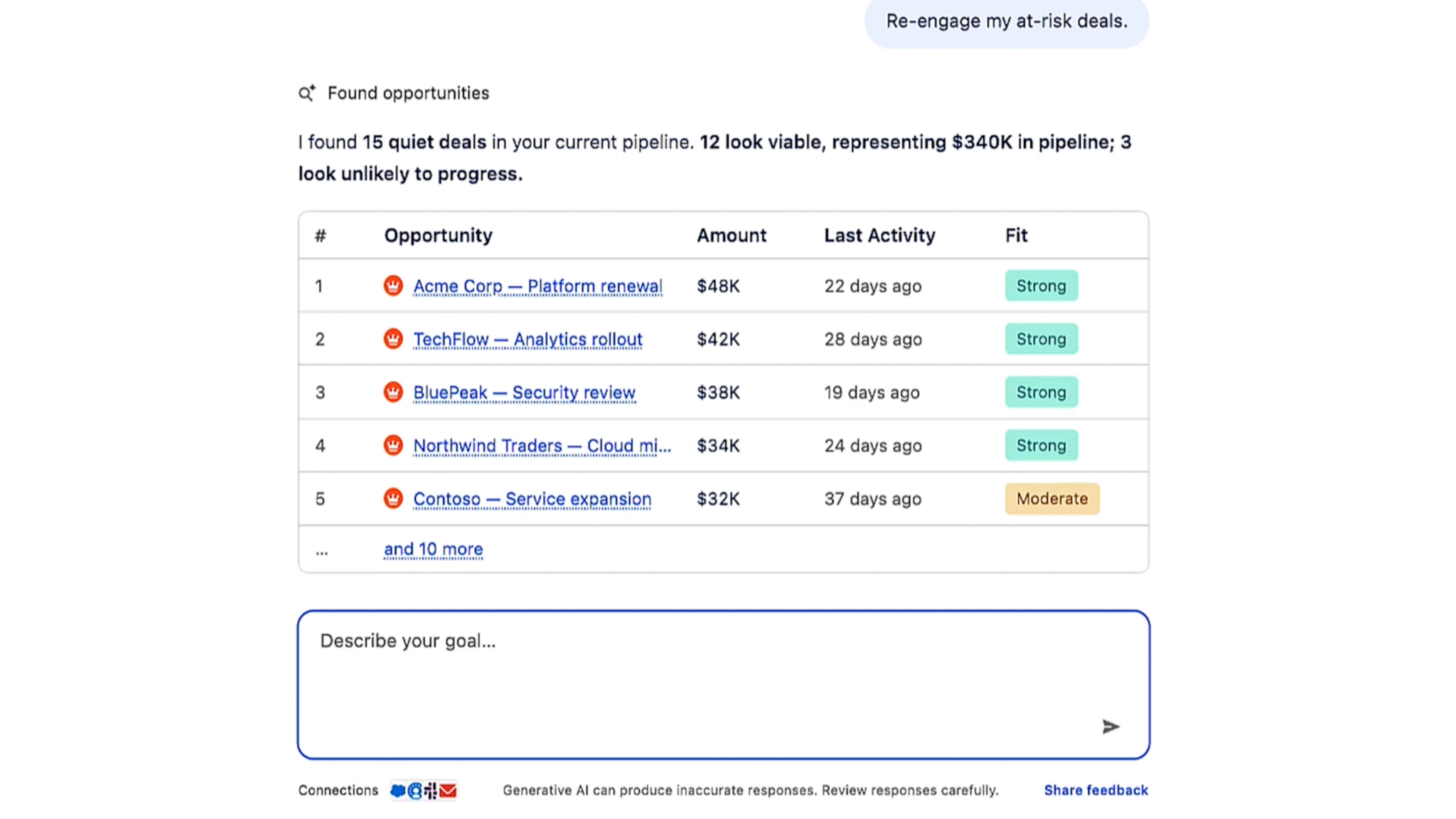
Start by giving Hunter a goal, such as “re-engage my at-risk deals.” It will begin by analyzing your open opportunities and pulling in engagement signals from Data 360 and Slack. From there, it refines your goal into a measurable, time-bound target, such as “re-engage $340k of at-risk pipeline by quarter-end.” Based on that goal, Hunter formulates a plan spanning days, weeks or even months, with its memory ensuring that it stays on track from beginning to end. The plan includes the tasks it will perform, the schedule it will adhere to and the guardrails governing when it checks in for human approval. If any part of the plan looks off, you can steer the agent conversationally.
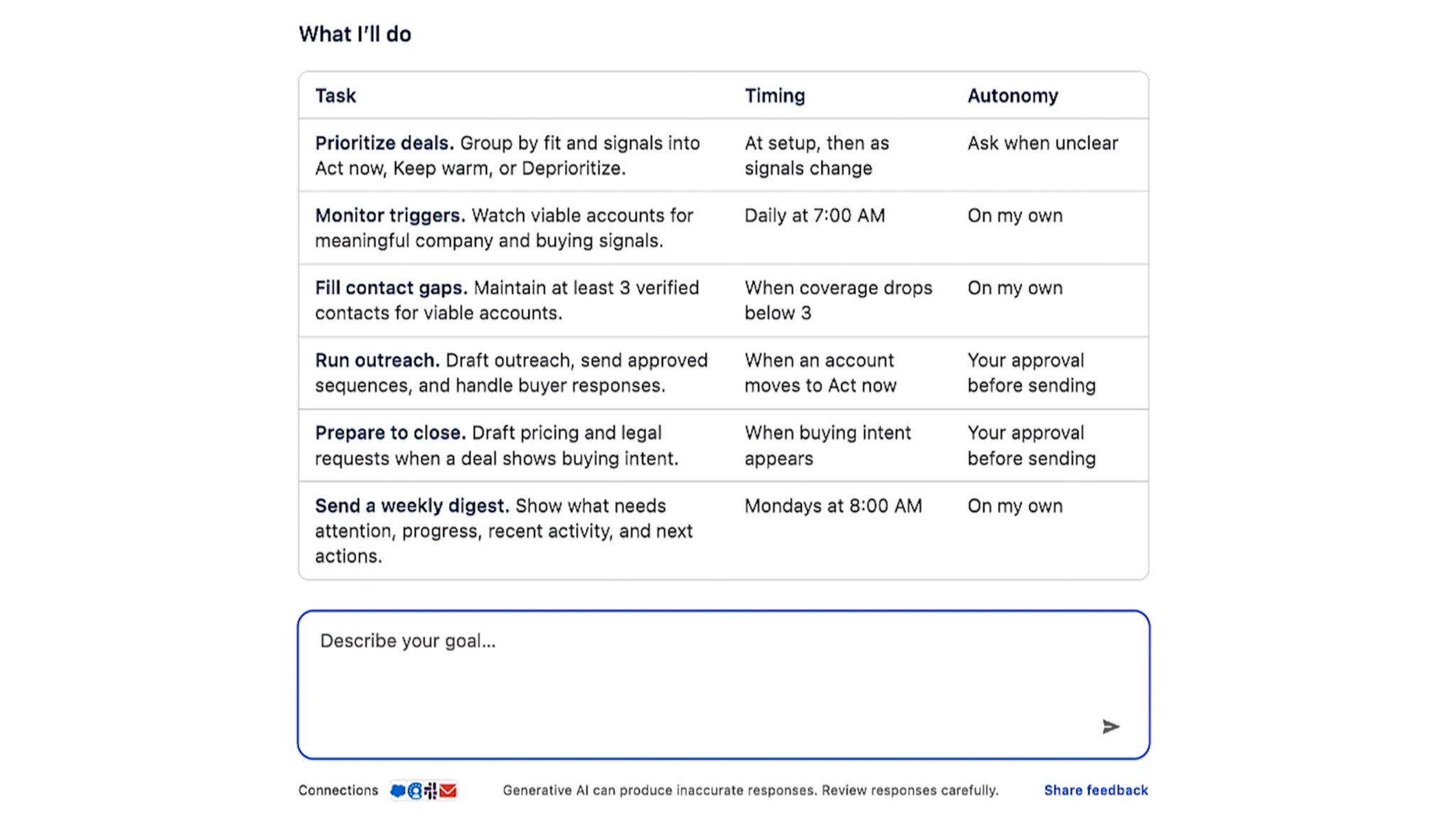
Since our goal revolves around customer outreach, Hunter will request access to your email account so that it can send emails on your behalf and personalize messages to your authentic tone. Eventually, it will also be able to learn from Slack and other communications tools. With dynamic steering, you can provide additional guidance at this stage, such as telling it to address VPs in a more formal tone or to sound more casual over WhatsApp. Simply drop your guidance into the conversation window and the agent will update the plan accordingly.
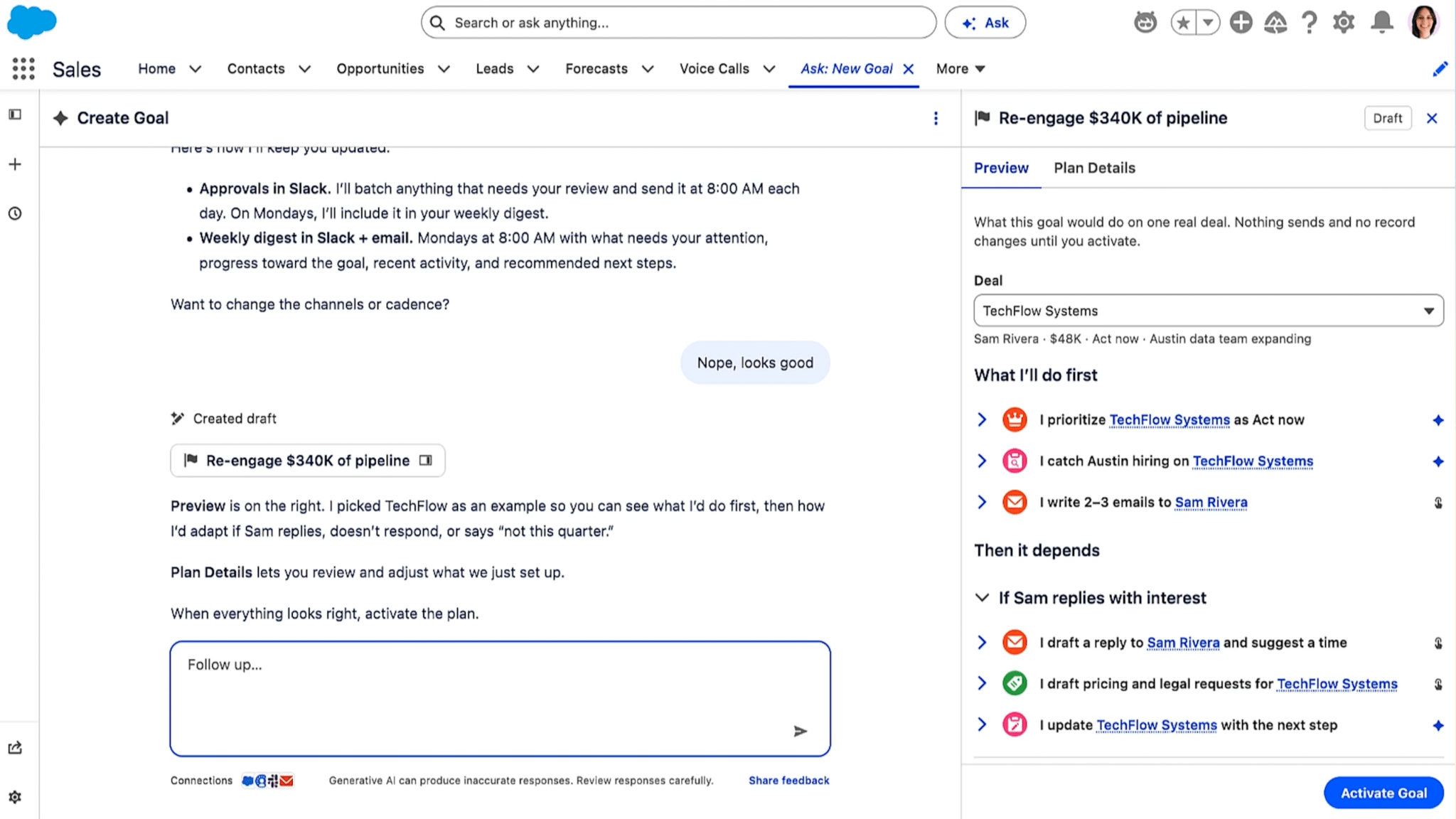
Once you’ve confirmed everything, you can preview the plan in a side panel and make any final tweaks. Click “activate” and your agent will spring into action and begin executing steps. But as we all know from experience, even the most carefully laid plans rarely work out exactly the way we expect. For long-horizon agents to reliably reach the finish line, they need to be able to roll with the punches and adapt dynamically to changing circumstances.
In our deal-rescue example, one of the agent’s outreach emails bounces back because the recipient is out on leave. Because Hunter has durable execution, it doesn’t simply give up. Instead, it looks across internal and external data, autonomously identifies an alternate recipient and drafts a message. Since this deviates from the original user-approved plan, the agent will prompt the user for approval before sending the new email. Best of all, it will learn from this hiccup and suggest additional plan updates for what it should do in the event of future OOO replies. It learns as it pursues the goal, continuously refining its approach.
On the horizon
Hunter is the first agent to run on the long-horizon runtime, but more will soon roll out across a variety of use cases. Eventually, Agentforce users will be able to build and customize their own long-horizon agents using Agent Script.
One domain where this will be especially powerful is field service. Imagine you’re a dispatcher working for a CPG company. You manage a team of representatives who regularly visit store locations to ensure product displays and other branding are set up correctly. On the day of a major product launch, the rep assigned to a key account calls out sick. Today, you would have to scramble to determine what other reps are working, how far they are from the store, who’s familiar with the layout and what can be rearranged on the schedule. With a long-horizon agent, you would simply receive an alert with a recommended course of action to approve or reject.
Sales and field service are just the beginning. It’s not hard to imagine how this kind of capability can be applied to countless domains. For more information on long-horizon agents, check out the demo below and visit our What’s New page to see all the new products and features announced at Dreamforce 2026.