

You didn’t start your business to manage spreadsheets — you started it to build something. And yet for too many lean businesses, the financial side of things quietly becomes a full-time job of its own: Tracking invoices, chasing payments, and trying to get a clear picture of where the money actually went.
Here’s the shift worth making: The right financial tools don’t just keep the books tidy. They connect your sales pipeline, your customer data, and your cash flow in one place — so every person on your team is working from the same picture, and every decision is backed by what you actually know about your business.
We’ll walk you through the financial tools built for lean businesses with big ambitions — ones that handle the back-office work so you can stay focused on what you do best: growing.
What to look for in financial tools for small business
When evaluating finance tools for your small business, the goal isn’t to find the fanciest software. It’s to find tools that actually fit how your team works.
The best small business financial management tools should integrate with the other platforms you already use for sales, service, marketing, and team collaboration. Look for solutions that give you visibility without complexity, and that can scale with you as your business grows.
Get the Small Business Financial Growth Kit
Get the essential resources you need to manage your finances and scale your business.


Financial management tools every SMB should consider
Every small and medium business (SMB) starts somewhere — and most start with a patchwork of disconnected tools. As your business grows, that patchwork gets expensive and hard to manage. Here’s a look at the categories that matter most.
Key finance features to include:
- Integration: Financial data that lives separate from customer data is a missed opportunity. It’s best to integrate with your customer relationship management (CRM) tool so you get a cleaner picture of revenue, pipeline, and customer health all in one view.
- Automation: The less your team manually inputs data, the fewer errors you’ll have and the more time you get back.
- Reporting: You shouldn’t need a finance degree to understand where your business stands. Look for dashboards that make your numbers clear and actionable.
Invoicing and billing
Getting paid on time is the lifeblood of any small business or startup. Invoice software built for SMBs can automate payment reminders, track outstanding balances, and reduce the back-and-forth that slows down your cash flow. When invoicing connects to your CRM system, you can see exactly where each deal stands — from quote to close to payment.
Expense tracking and cash flow visibility
Knowing what’s coming in is just as important as knowing what’s going out. Expense tracking tools help small businesses and startups stay on top of vendor payments, operating costs, and budgets without needing a dedicated finance team. When expense data connects to your broader business platform, you can make smarter decisions faster.
Payroll and compliance
For growing teams, payroll tools remove the stress of keeping up with tax filing deadlines, benefits administration, and compliance requirements. Many modern payroll platforms integrate directly with your sales and service tools, so headcount costs stay visible alongside revenue performance.
Don’t franken-stack your finances: How CRM integrates it all
Don’t want to franken-stack your finances? The good news is, you don’t have to with a CRM system. This core intelligence connects your financial operations to your revenue engine with these features:
CRM-integrated invoices: Salesforce Billing simplifies and ensures accuracy by utilizing data created during the quoting process for invoice generation. CRM tracks the sales cycle, automatically triggering invoice creation upon contract completion and enabling automated reminders to reduce outstanding accounts receivable, supporting flexible payment terms.
Smart expense tracking: Integrating expense data with your CRM provides real-time visibility into vendor payments and operating costs, allowing for proactive budgeting and smarter decision-making. By combining this with projected revenue from sales forecasting, you can generate reliable cash flow projections.
Automated payroll: Modern payroll tools integrate directly with sales and service to keep headcount costs visible alongside revenue performance.
Up-to-date compliance: For regulatory compliance, Salesforce Billing is designed to handle complex requirements like routing invoices to governments for approval in highly regulated regions. Salesforce prepares the general ledger information, which is then sent to your external accounting system.
Trusted AI for Financial Services
Become an agentic enterprise and grow revenue with
Financial Services CRM.

How FigTree Financial made it all work with Salesforce
FigTree Financial, an Australian financial advisory firm, knows firsthand how much complexity comes with running a financial services business. Regulatory requirements, sensitive client data, and manual workflows had created real friction in their day-to-day operations.
By moving to Salesforce Pro Suite, FigTree was able to bring their client relationships, compliance tracking, and routine processes into a single connected platform. What had previously required juggling multiple disconnected systems could now live in one place — with the reporting and visibility to match. For small financial services businesses navigating growth, FigTree’s story shows what it looks like when the right tools remove friction instead of creating it.
How AI is changing small business finance tools
Artificial intelligence (AI) is reshaping what financial tools can actually do for your growing business. It’s no longer just about recording transactions — it’s about predicting what’s coming, flagging anomalies before they become problems, and helping you make faster decisions with better information.
According to the Small and Medium Business Trends Report, SMBs that adopt AI tools are more likely to report revenue growth and productivity improvements than those that don’t. For startups especially, AI levels the playing field — giving lean teams access to insights and automation that used to require large finance departments.
What AI-powered finance tools can do for your business
- Automated forecasting: AI can analyze your historical revenue, pipeline data, and seasonal trends to help you project cash flow more accurately — without the manual spreadsheet work.
- Smart categorization: Instead of manually tagging every expense, AI tools can learn your patterns and categorize transactions automatically, saving your team hours each month.
- Anomaly detection: AI can flag unusual spending patterns or payment discrepancies early, so you can act before a small issue becomes a bigger one.
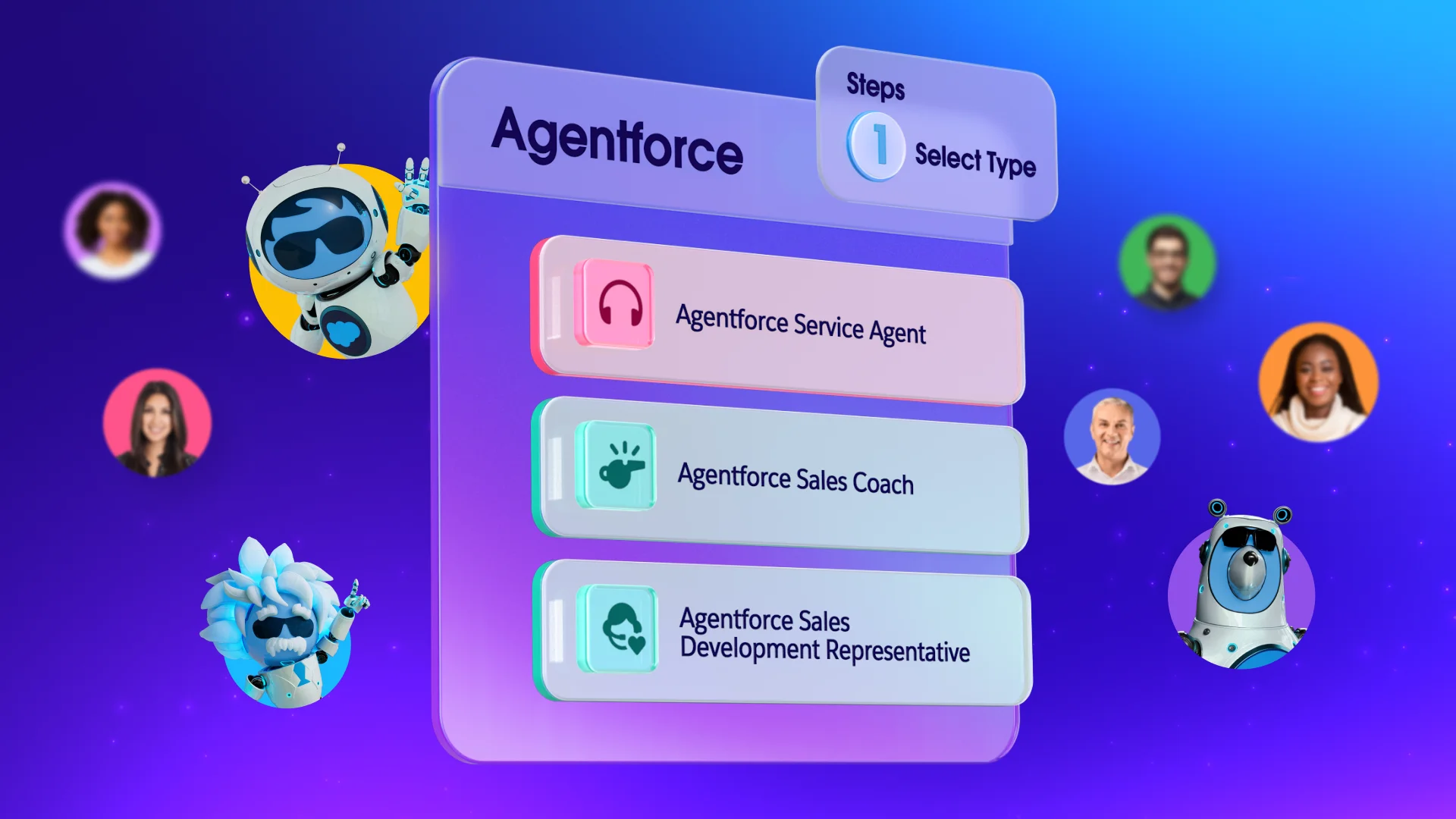
This is where Agentforce comes in. Salesforce’s platform brings your finances together with sales, marketing, service, commerce, and productivity — including AI-powered agents that can handle routine financial tasks, surface insights from your data, and keep your team focused on high-impact work. For SMBs looking to build a smarter financial operation without adding headcount, it’s the kind of platform that grows with you.
The right financial tools for small business start here
Whether you’re just getting your first invoicing process off the ground or you’re ready to connect your entire financial operation to your customer data, the right tools make all the difference. Start your AI journey with Salesforce today or activate Foundations to try Agentforce.
AI supported the writers and editors who created this article.
What are financial tools for small business?
Financial tools for small business are software solutions that help you manage cash flow, invoicing, expenses, payroll, and financial reporting. The best ones integrate with your CRM and other business systems so you get a complete picture of your business — not just a ledger. Learn more about how Salesforce helps SMBs manage their finances at the Salesforce FinServ Business hub.
How do I choose the right financial tool for my small business?
Start with your biggest pain point — whether that’s late payments, messy expense tracking, or unclear cash flow — and look for tools that solve that problem while connecting to the rest of your tech stack. The right financial management tool should be easy to use, scalable, and ideally integrated with your CRM from day one.
Do small businesses need a CRM to manage finances?
While a CRM isn’t a standalone finance tool, it’s central to understanding the financial health of your business. When your CRM connects to your invoicing, billing, and reporting tools, you get real-time visibility into revenue, pipeline, and customer value — all in one place.
How is AI being used in small business financial tools?
AI is helping SMBs automate tasks like expense categorization, cash flow forecasting, and anomaly detection. It also helps surface insights from your financial data so your team can make faster, smarter decisions without needing a large back-office team. Check out the Guide to AI for Small Businesses for a deeper dive.
Can Salesforce help my small business manage finances?
Yes — Salesforce’s platform connects your sales, service, marketing, commerce, and productivity workflows, making it easier to track deals, manage customer relationships, and get visibility into your revenue in real time.