


You just landed three new clients in the same week. Congratulations — and now, the question is nagging in the back of your mind: Do you hire someone, or do you bring in a freelancer?
For a lot of founders, that choice is one of the biggest calls you’ll make for your future. Let’s break down the freelancer vs. full-time hiring decision so you can build the workforce that matches your ambition.
Understanding the freelancer vs. full-time hire tradeoff
The freelancer vs. full-time hiring decision comes down to what your business needs most right now: Flexibility or depth.
- Freelancers give you access to specialized skills on demand, without the overhead of salary, benefits, and onboarding.
- Full-time employees build institutional knowledge, own their role end-to-end, and grow with your company over time.
When a full-time hire is the right move
If you find yourself managing the same freelancer month after month, or if a role is tied to the daily heartbeat of your business — sales, customer service, operations — it’s usually time to hire. Full-time employees build a continuity that freelancers can’t replicate. Here are a few benefits of hiring in-house:
- Full-time in-house employees are often more invested in the company’s long-term success, leading to lower turnover and stronger team continuity.
- Employees develop a thorough understanding of the company’s processes, products, and culture, resulting in higher-quality work and better decision-making.
- Working together daily fosters stronger communication, teamwork, and alignment across departments, helping projects move more efficiently.
- Managers can provide ongoing training, performance feedback, and oversight, ensuring employees consistently meet organizational standards and goals.
When freelancers make sense for your startup
Freelancers work best when your need is specific, time-bound, or outside your core business function. A designer for a product launch, a copywriter for a campaign, or a developer building a one-time integration — all great for freelance. Here are more benefits:
- You pay for the work, not the bench time — no benefits, no payroll taxes, and no long-term commitment.
- Freelancers can typically be onboarded in days, not weeks, which matters when you’re moving fast.
- ou can bring in senior-level skills for a short engagement that you couldn’t otherwise afford full-time.
- You can scale up or down based on project volume without restructuring your team.
Pro tip: During your hiring process, keep track of the partnerships in a customer relationship management (CRM) system. It keeps your contacts and work organized in one place, so you can keep moving.
How to evaluate the cost of hiring contract vs. in-house
One of the biggest misconceptions in the freelancer vs. full-time hire debate is that freelancers always cost less. Hiring a contractor vs. hiring in-house involves a more nuanced comparison than hourly rate alone.
Full-time employees come with salary, benefits, and overhead — but also loyalty, accountability, and compounding returns on investment (ROI). Freelancers may have higher hourly rates and require more management time to onboard, brief, and coordinate on each project. The turnaround is higher, and this person could be working on multiple projects.
Here are a few questions worth asking before you decide:
- Will this role exist in six months? If yes, a full-time hire is likely more economical over time.
- Does the work require deep customer context? If someone needs to know your clients, your tone, and your processes, full-time wins.
- How critical is the function to revenue? Sales and service roles that touch your customer relationships directly are rarely a good fit for freelance-only coverage.
- Do you have the bandwidth to manage a contractor well? Freelancers need clear briefs and fast feedback — factor in your own time.
Hiring: What AI agents change
Here’s where the freelancer vs. full-time hire conversation gets interesting in the current moment. Artificial intelligence (AI) has quietly reshaped what a lean team can accomplish. The latest SMB Trends Report found that 88% of SMBs are engaging with AI — and that figure tracks with something founders are discovering in real time: AI agents can handle the repetitive, high-volume work. That changes things a bit.
Today, a well-configured AI agent can handle the first three touchpoints in your sales sequence, flag high-priority service cases automatically, and give every customer a fast, accurate first response — at any hour. That doesn’t make people unnecessary. It makes the people you do hire — freelance or full-time — more effective from the moment they show up. They essentially will become the AI orchestrators of these agents, training and guiding them in the brand language.
The benefits of a contract-to-hire approach
A contract-to-hire approach offers a few advantages. It serves as a “try before you hire” period, allowing both the team and the contractor to assess things. They can try out skills, and brand alignment without the commitment of a permanent role.
And, it reduces the risks associated with hiring, as it allows companies to evaluate long-term potential in a real-world setting. It also provides an easy transition to a full-time role if successful, saving on onboarding time since they’re already familiar with the team, systems, and workflows. Contract-to-hire is a great approach at earning trust.
The CRM that builds with your team
The TLDR is that the freelancer or full-time choice evolves as your business does. Break it down to work for you — and even try out both to see what’s best. There are several ways to hire and several tools that support it. We’re here for both.
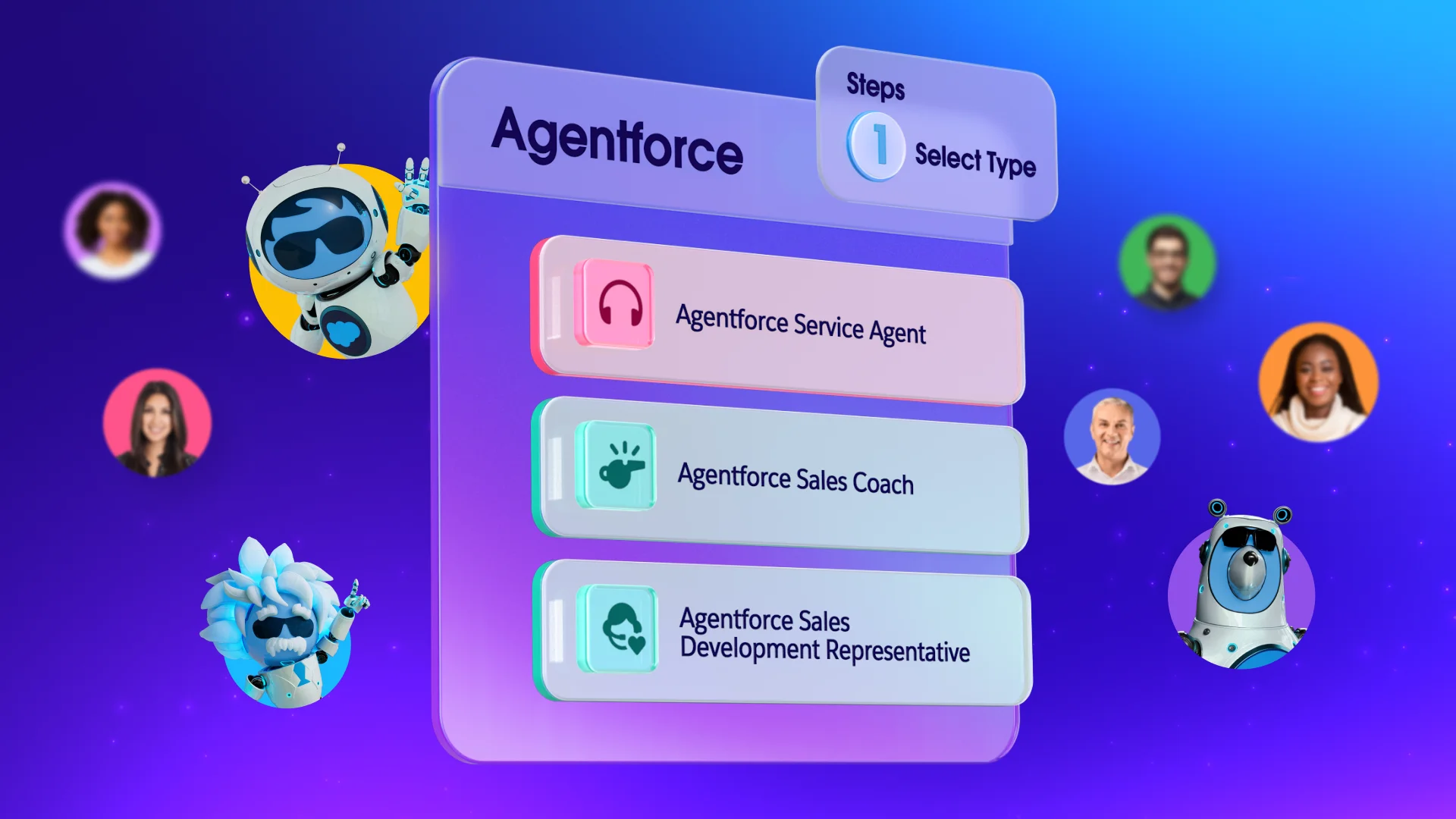
Get started with Salesforce Suites for free or activate Foundations to try out Agentforce today.
AI supported the writers and editors who created this article.
What’s the difference between a freelancer and a full-time employee for a startup?
A freelancer works on a contract basis — typically for a specific project or time period — while a full-time employee is a permanent team member who integrates into your core business. The difference is often about ownership: Full-time employees take long-term accountability for a function, while freelancers deliver defined outputs and move on.
When does hiring a contractor make more sense than hiring employees?
Hiring a contractor makes sense when you need specialized skills for a short-term project, want to test a role before committing to a full-time hire, or need to scale quickly without growing your fixed cost base. It’s also a smart move when the work is project-based rather than ongoing.
How do I manage both freelancers and full-time employees in one system?
A CRM is the most effective way to keep your whole team — regardless of employment type — working from the same playbook. Salesforce centralizes every customer record, task, and pipeline update so nothing falls through the cracks when you’re juggling contractors and employees at the same time. Try it on Trailhead: Learn how to build your team for growth in this module: Build a Team to Support Your Business.
Can AI help reduce the need to hire full-time staff for certain roles?
Yes — and it’s one of the most important shifts happening in SMB hiring right now. AI agents can handle tasks off team’s plates across the board. That doesn’t replace human, but it does mean you are dedicated to training and maintaining these agents.
What Salesforce tools are best for a startup just building out its team?
Starter Suite is the natural starting point — sales, marketing, service, and commerce tools in one place, built for small teams. As you grow, Pro Suite adds advanced automation and customization. For teams that want to go further with AI, activating Foundations gives you access to Agentforce capabilities without a full enterprise setup.