4 Takeaways From the State of Agentic AI Report for Small Business
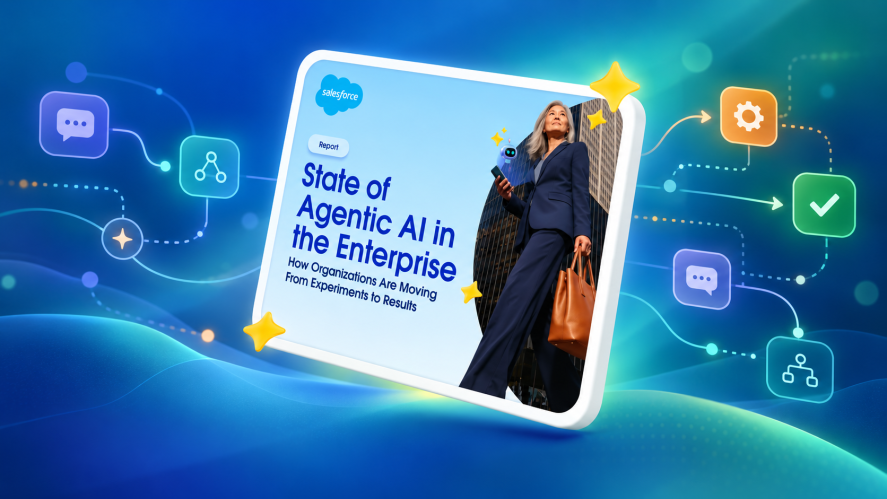
Find out what thousands of businesses are saying about agentic AI and the race to smart technology in the latest Salesforce report.


Salesforce’s latest report surveyed 2,000+ agentic AI decision-makers across 20 countries — and 21% of them run small and medium businesses just like yours.
The headline: Bigger budgets don’t win the AI race. Businesses that start small, keep data clean, and build in oversight from day one get to ROI faster — and that’s an SMB’s home turf. Here are four takeaways to steal for your own AI rollout.
What is the State of Agentic AI in Enterprise report?
Published by Salesforce, the first edition of the State of Agentic AI in the Enterprise report surveyed 2,025 agentic AI decision-makers across 20 countries. It examines how organizations deploy autonomous AI agents, navigate data unification and governance, and achieve faster return on investment (ROI). The statistics and quotes in this article are pulled directly from this report.
Get the State of Agentic AI in Enterprise Report
Discover valuable insights from 2,000+ decision makers on what it takes to reach ROI from agentic AI.

Takeaway 1: Going first doesn’t mean winning first
Deploying agentic AI early isn’t the advantage you’d think. Organizations with agents live in production reach ROI in about 8 months on average, but the fastest returns come from focus, not speed.
The clearest signal of a fast, autonomous rollout was tied between two things: Clean, accessible data right where the agent takes action, and a tightly bounded use case — each cited by 36% of respondents.
For a lean team, that’s good news. You don’t need to overhaul every system before you start — you need one well-defined job (say, routing support tickets or qualifying leads) with clean data behind it.
Takeaway 2: You don’t need perfect data — You need a plan for it
Only 31% of organizations fully unified their data before deploying AI agents, yet 69% of the rest still reached ROI anyway starting from incomplete or fragmented data.
That’s not permission to ignore data quality, though: 63% of organizations hit agent errors tied to stale, missing, or wrong data, and among those, 79% also had data connectivity issues getting in the way.
The related State of Commerce Report backs this up from another angle — fragmented data is the biggest thing holding SMBs back, with 40% of affected businesses reporting slow or ineffective responses to customers and 39% struggling to even measure the impact of their tech investments.
The winning pattern for small teams: Unify what you can around your one use case first, then automate — not the other way around.
Takeaway 3: Autonomous doesn’t mean unsupervised
More than a third of organizations (36%) now run agents in production with full autonomy — but that doesn’t mean humans step back. In fact, 81% reported more human reentry into workflows as their AI deployments expanded, and 89% are actively rethinking their workforce models to account for agents.
For a small business, this reframes the goal: Agentic AI isn’t about replacing your (already lean) team — it’s about giving them a digital teammate that clears the routine work so people can focus on what needs a human touch. Let AI agents handle routine questions and off-hours coverage, and let your team step in for the complex, relationship-driving moments.
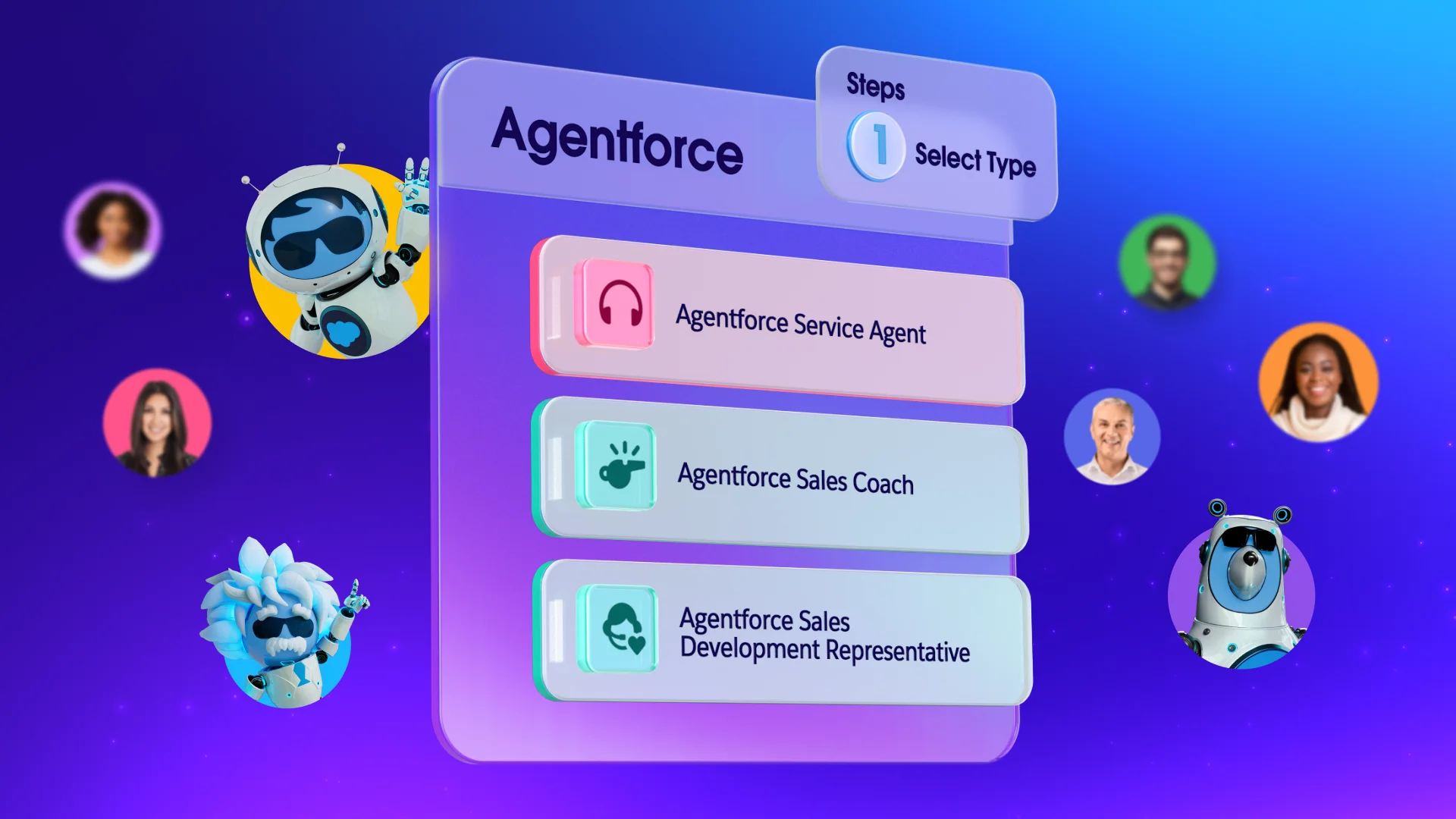
Meet your digital teammates for small business
Put digital teammates to work across your business without the costs of hiring, onboarding, and managing a bigger team.


Takeaway 4: Governance isn’t a later problem — It’s a right-now one
Here’s a counterintuitive stat: Organizations that successfully deployed AI agents with above-average governance actually took longer to reach ROI (9.3 months) than those with below-average governance (7.2 months) — but they caught problems proactively 68% of the time versus just 55%.
That trade-off shows up in hindsight, too: Of the 43% of organizations that had to stall or scale back an AI initiative, the top regret — cited by 39% — wasn’t budgeting for AI fluency training and reskilling upfront, followed closely by wishing they’d set clearer governance frameworks before scaling (38%).
For a small business, “governance” doesn’t need to mean a formal committee — it can be as simple as deciding upfront who reviews what an agent does, and where the line is for escalating to a human. Building that in from day one costs less than retrofitting it later.
The bottom (agentic) line for SMBs
None of this requires enterprise headcount or budget. It requires a clear starting point, data you trust for that one job, a team that stays in the loop, and a simple governance habit from day one. That’s built for ambition, not for headcount.
Get the full report: The State of Agentic AI in the Enterprise.
AI supported the writers and editors who created this article.
What is the State of Agentic AI report?
Published by Salesforce, the State of Agentic AI in the Enterprise is a report that surveys 2,025 AI decision-makers across 20 countries on insights into the state of agentic business.
Do I need a big tech budget to try agentic AI as a small business?
No. The data shows tightly bounded use cases and clean data at the point of action matter more than budget size — both are achievable for a lean team.
What’s the first AI use case a small business should try?
Pick one narrow, well-defined workflow — like support ticket triage or lead qualification — rather than a company-wide rollout.
Does adopting AI agents mean cutting staff?
No — 89% of organizations are reworking workforce models around agents, not eliminating people. Most are increasing human oversight, not decreasing it.
What does “governance” look like for a small team?
It can be simple: Defined ownership of agent oversight and a clear escalation path to a human — no formal committee required.