


Building strong customer relationships is at the heart of every successful business. For startups and small to medium-sized businesses (SMBs), the challenge often lies in managing those relationships efficiently as the company grows. Enter the customer relationship management (CRM) manager — a professional dedicated to ensuring your CRM strategy and tools work effectively to support your business goals.
This guide explores the role of a CRM manager, their key responsibilities, the skills they bring to the table, and how they can help your business succeed. We’ll also look at how tools like Salesforce CRM can make their job easier. Let’s dig in.
What is a CRM manager?
A CRM manager is a specialized professional responsible for overseeing a company’s business operating system and strategy. Their primary goal is to activate data and technology to improve business relationships, connect internal processes, and drive customer retention. Essentially, they act as the guardian of customer data, ensuring it’s clean, accessible, and actionable for all teams.
At a high level, their responsibilities encompass more than just software administration. They are strategic thinkers who design workflows, implement automation to save time, and analyze customer behavior to provide insights that lead to better business decisions. By aligning the CRM tool with overall business objectives, a CRM manager helps a startup or SMB scale efficiently while maintaining a personalized touch with every customer.
Why CRM matters for startups and SMBs
A CRM is more than just software—it’s a way to keep your customer relationships front and center. It’s a tool that helps you organize everything you know about your customers, manage your day-to-day interactions, and find new ways to serve them better.
For your SMBs, a CRM can be a critical tool. It gives you the tools to simplify your work, understand what your customers really need, and build the kind of relationships that keep them coming back. Instead of juggling spreadsheets or scattered notes, you’ll have everything in one place, saving you time and making your business run smoother.
When you’re wearing a lot of hats and working to grow your business, a CRM helps you stay connected to what matters most: your customers. It’s not just about staying organized—it’s about giving you the confidence to show up for them in ways that set your business apart.
Top 5 benefits of CRM for small businesses
For SMBs looking to grow sustainably, a CRM strategy is essential. A CRM manager plays a pivotal role in making this strategy successful.
- Organized customer data: A CRM system stores all customer information in one place, making it easy to access and use. Read about the benefits of CRM to understand its full impact.
- Better customer interactions: Tracking past interactions allows for personalized communications and a better experience.
- Improved efficiency: Automation features in CRM tools streamline repetitive tasks, saving time and resources.
- Enhanced decision-making: CRM analytics provide insights into customer behavior, helping identify trends and opportunities.
- Scalable processes: As your business grows, a CRM system ensures you can manage more customers without losing quality.
What does a CRM manager do?
A CRM manager is responsible for ensuring that your CRM system supports your business’s needs. Their role involves managing the software, optimizing processes, and enabling teams to use the CRM effectively. Here are their main responsibilities:
Data management
CRM managers oversee the organization and accuracy of customer data. Maintaining a reliable database ensures your team has accurate information for decision-making. This includes:
- Ensuring customer records are updated regularly.
- Cleaning up duplicate or outdated entries.
- Implementing data security best practices.
Process optimization
CRM managers identify inefficiencies in workflows and recommend improvements. For example, they automate follow-ups to ensure no leads are missed and streamline customer onboarding processes. Their goal is to save time and reduce friction in customer-related processes.
Team training and support
CRM managers act as a bridge between the CRM system and your team. They train team members on how to use CRM tools effectively, provide ongoing support to troubleshoot issues, and ensure all departments align with CRM best practices.
Analytics and insights
CRM managers analyze data from the CRM to identify customer trends and behaviors, measure the effectiveness of marketing campaigns, and provide actionable insights to improve sales strategies. Their insights help your business make informed, data-driven decisions.
Customer-centric strategy development
CRM managers use data to shape customer-focused strategies. For example, they develop targeted marketing campaigns based on customer preferences and suggest personalized product recommendations to boost sales.
Key skills of a CRM manager
A great CRM manager combines technical expertise with strong interpersonal skills. Here’s what to look for:
- Technical proficiency: They should have a deep understanding of CRM tools like Salesforce and be comfortable with database management, analytics software, and automation tools.
- Analytical thinking: CRM managers interpret data and translate it into actionable strategies, such as analyzing customer feedback to improve service quality.
- Communication and leadership: Since they work with multiple teams, CRM managers must communicate complex ideas in simple terms and lead training sessions to ensure everyone understands the CRM’s benefits.
- Problem-solving skills: Challenges will arise, whether it’s a technical glitch or an inefficient process. A CRM manager should be quick to identify and resolve these issues.
How Salesforce makes a CRM manager’s job easier
Salesforce is the trusted AI CRM platform for growing businesses and can simplify many aspects of a CRM manager’s role. Here’s how:
Automation
Repetitive tasks like sending follow-up emails or updating records become automated, freeing up time for strategic work. Salesforce offers tools specifically designed to enhance small business sales and service.
AI capabilities
At Salesforce, artificial intelligence (AI) takes efficiency to a whole new level. With AI tools, CRM managers can anticipate customer needs, offer personalized recommendations, and automate intricate workflows. These capabilities empower proactive customer engagement and smarter decision-making — saving both time and resources.
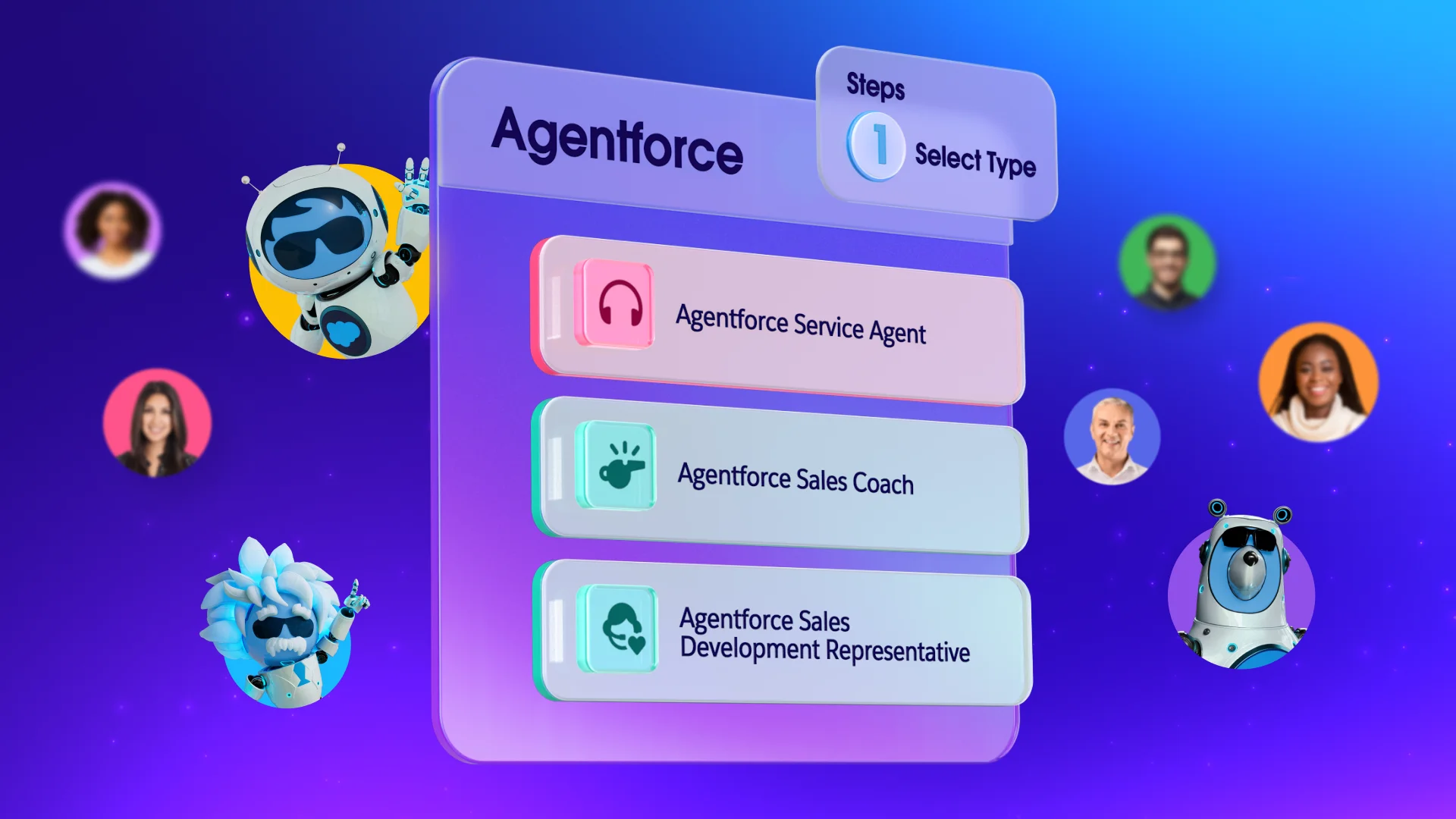
Imagine a future where your small business CRM is not just a tool, but a trusted partner in your journey. With Agentforce and other AI-driven innovations, your CRM becomes more intuitive, more responsive, and perfectly tailored to your needs.
Real-time insights
Detailed analytics in Salesforce allow CRM managers to monitor sales performance, track customer satisfaction metrics, and identify emerging trends in real time. Discover how AI-powered CRM elevates decision-making.
Customizable features
Salesforce enables CRM managers to tailor the platform to meet the unique needs of your business. This flexibility ensures that the system evolves with your company. Starter Suite and Pro Suite offer scalable solutions for SMBs.
Enhanced collaboration
By uniting sales, marketing, and customer service on one platform, Salesforce improves team communication and ensures a seamless customer experience. Tools, like Slack for small business, further enhance collaboration.
Grow your ambitions with the #1 AI CRM.
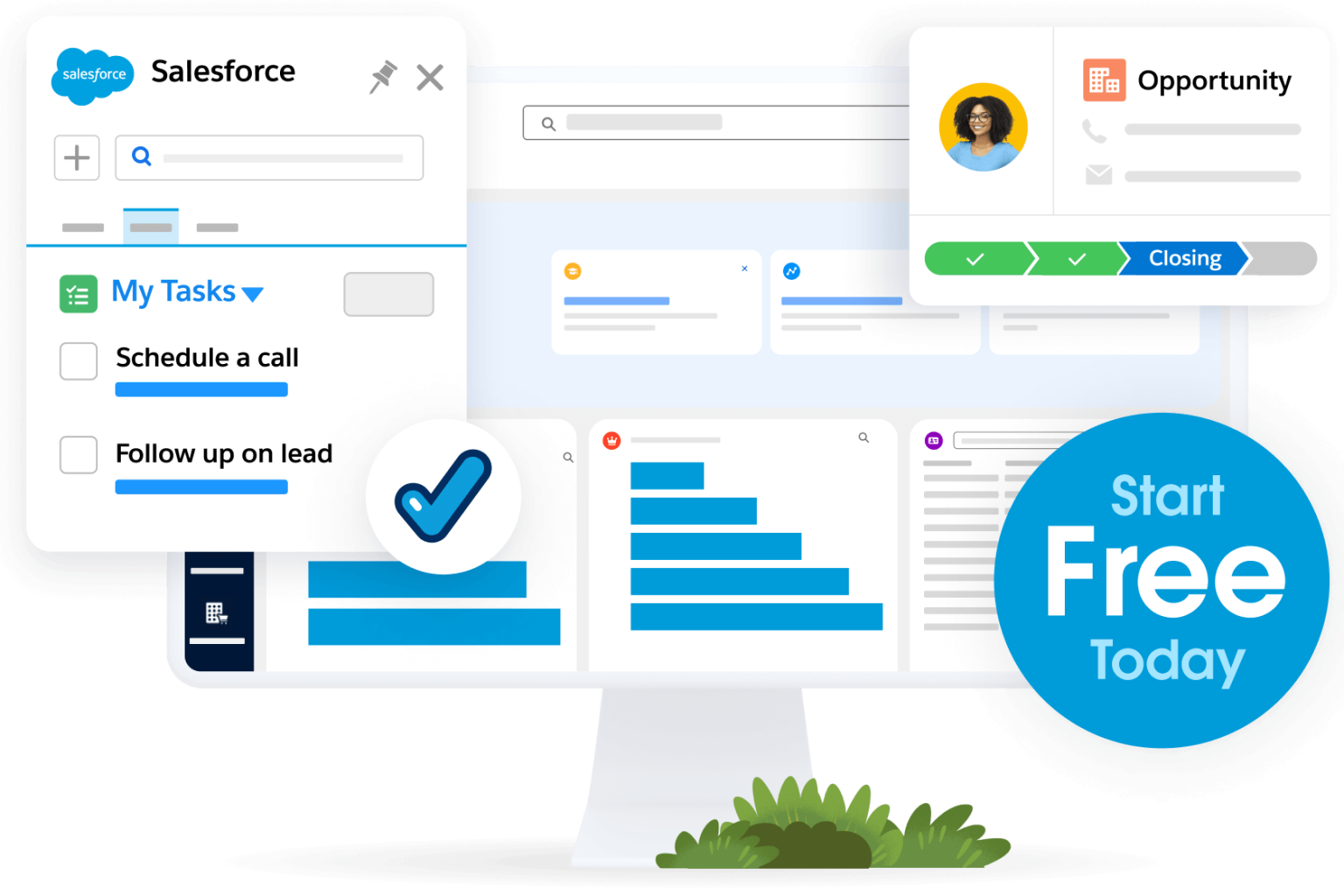
See what’s possible with the AI-powered CRM suite for growing teams.
When to hire a CRM manager
Knowing when to bring a CRM manager into your team can be challenging. Here are some signs that it’s time to hire help:
- Rapid growth: A growing customer base makes managing data manually unsustainable.
- Complex workflows: Involving multiple teams and touchpoints often requires a CRM manager to streamline operations.
- Underutilized CRM tools: A dedicated manager can maximize the value of your CRM system.
Hiring tips
When hiring a CRM manager, seek someone with experience in your CRM platform (like Salesforce), strong analytical and leadership skills, and a passion for improving customer experiences.
Manage your CRM the Salesforce way
For startups and SMBs, managing customer relationships effectively is critical for growth, and Salesforce is the ideal solution to help you get started. Backed by AI and designed for ease of use, this CRM platform streamlines customer management with powerful tools tailored to meet small business needs.
Key features of Salesforce for small business include:
- Artificial intelligence (AI): Use AI to deliver personalized, predictive, and safe customer experiences. Empower your team with conversational AI, automation, and actionable insights, enabling smarter and faster decision-making.
- Automation: Simplify repetitive tasks like follow-up emails or data entry, allowing your team to focus on building customer relationships.
- Analytics: Gain valuable insights into customer behavior and track sales performance with intuitive dashboards.
- Team collaboration: Improve communication across sales, marketing, and customer service teams with integrated tools like Slack for small business.
- Scalability: Whether you’re just starting or planning for growth, Starter Suite adapts to your business needs.
Keep learning with these resources: SMB Sales Guide and the SMB Marketing Guide support your business growth.
(Back to top.)
Optimizing CRM manager performance
Investing in a CRM manager is one of the smartest moves you can make. They align your CRM with your goals, helping you build stronger relationships and achieve sustainable growth. A dedicated CRM manager ensures that your business is continuously optimized for the best possible outcome.
Start your journey with the Starter Suite today. Looking for more customization? Explore Pro Suite. Already a Salesforce customer? Activate Foundations and try out Agentforce today.
AI assisted the writers and editors who created this article.
What are the primary tools a CRM manager uses?
A CRM manager typically uses a comprehensive platform like Salesforce Customer 360 to manage customer data, automate workflows, and gain actionable insights into customer behavior.
How do you measure the success of a CRM manager?
Success is often measured by key performance indicators such as data accuracy rates, the level of team adoption of CRM tools, and observable improvements in customer retention or sales conversion metrics.
Does a CRM manager need to be a technical expert?
While they do not necessarily need to be a developer, they should have strong technical proficiency with CRM software, database management, and data analytics tools to optimize systems effectively for business growth.
How often should data in the CRM be maintained?
It’s recommended to perform regular data maintenance, such as cleaning up duplicates and updating outdated records, at least on a quarterly basis to ensure the information remains reliable for strategic decision-making.
What is a significant challenge for a CRM manager?
A common challenge is driving team adoption of new processes or tools, which is why the role requires strong communication, training, and support skills to ensure everyone understands the CRM’s value and usage.