

Key Takeaways
As a small team, your resources are already stretched thin. When your focus is split across countless demands, essential tasks like social media marketing often feel like a never-ending cycle, quickly sliding to the bottom of your priority list.
But what if social media wasn’t just easier to manage, but a potential revenue driver? What if it was the front door to your entire sales and service operation? And what if you had the tools to build stronger relationships, all over the world?
In this post, we’re diving into social relationship management (SRM) and how moving beyond “scheduling posts” can transform your small or medium-sized business (SMB) or startup. Spoiler alert: Your customer relationship management (CRM) platform is a going to be the core foundation on which your social relationships will be built on, and is a big part of your marketing journey. Alright, let’s build some relationships.
What is social relationship management (SRM)?
At its core, social relationship management (SRM) is the practice of using social media to build and maintain long-term relationships with users, prospects, customers, partners — just about anyone that supports your business — rather than just scheduling and walking away.
While social media management (SMM), still a valuable marketing strategy focused on managing all the networks and very similar to SRM, focuses on content (what you post). SRM focuses on context (who you’re talking to). Marrying these two strategies is the best boost you can give to your social campaigns.
Why small teams need to move from “megaphone” to “telephone”
Most small businesses use social media as a megaphone: broadcasting messages out to the masses. But the most successful SMBs use it as a telephone, or a two-way conversation where people share experiences, thoughts, and feedback on your products, and you respond in a way that makes them feel like a valued customer.
Market your SMB with Salesforce AI
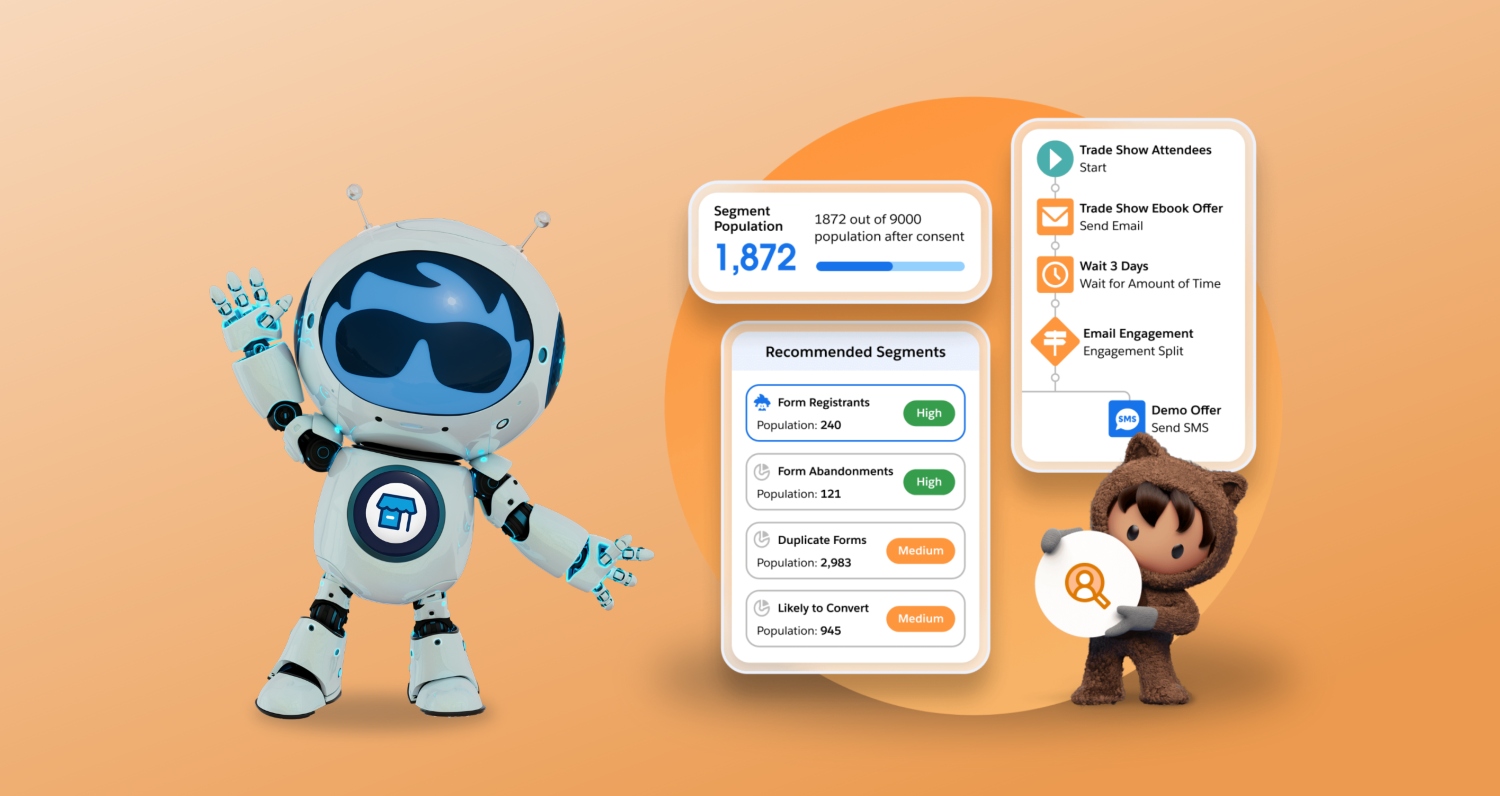


First off, it’ll do wonders for your customer loyalty. Responding to a customer’s specific question or resolving an issue (publicly or via direct message) makes them feel heard and valued. This personalized attention transforms a transactional relationship into a loyal partnership, drastically increasing the chances of repeat business and positive word-of-mouth referrals. Wondering how you can respond with a hyper-personalized approach to every single customer? Try social AI agents, trained autonomous agents that can respond to prospects 24/7, and integrate right into your CRM.
You’ll also gain valuable insights into what your customers are looking for. Social media conversations are a goldmine of unfiltered, real-time customer feedback and ideas. Listening to and analyzing these dialogues provides immediate data on:
- product performance,
- customer pain points,
- feature requests,
- and competitor perception.
The “telephone” approach allows the authentic personality of your brand to shine through, while the “megaphone” approach is more transactional. By engaging in natural, helpful, and empathetic conversation, you stop being a faceless entity and become a team that customers can relate to.
Lastly, social media has evolved into a primary customer service channel, so get ready to answer lots of questions. Small teams must be equipped with the right social relationship management tools to monitor, route, and quickly resolve service issues shared on social platforms, turning potential crises into service triumphs. It’s all about connecting your networks to your tools. You are starting to see the pattern here.
Service for small business is here.


Connecting the social relationship dots with integrations
As a small team, your time is your most precious resource. You can’t afford to waste it jumping between Instagram, X, LinkedIn, and your spreadsheet of customers. Integration solves this by integrating with a single source of truth (SSOT): your business management tool. When you integrate social feeds and social agents to your CRM, you can benefit from:
- Efficiency: One platform for sales, service, and marketing means no more “tab-switching” fatigue.
- Instant context: Imagine a customer DMs you with a question. With SRM, you can instantly see their purchase history and previous support tickets right next to the chat window. No more asking, “Remind me what you bought?”
- Predictability: When you see which social interactions lead to actual sales, your forecasting becomes a science rather than a guessing game.
See how Salesforce supports small business
See the #1 CRM for SMBs — the AI-powered suite for growing teams.
How AI is helping SMBs get socially amped
Artificial intelligence (AI) isn’t just for giant corporations. For SMBs, AI bridges the resource gap in key ways. It can analyze your social posts and mentions, and suggest the best responses to common questions. And even summarize message threads from customers, so you can get up to speed in seconds. This allows a team as small as two to provide the level of service usually expected from a team of twenty.
Here are a few ways AI is making an impact on SRM:
Sentiment analysis: AI scans social mentions and direct messages to instantly determine the sentiment (positive, negative, urgent). This allows SRM tools integrated with Salesforce to automatically flag and prioritize high-risk or high-value customer interactions for immediate human follow-up, ensuring no urgent service request is missed by a small team.
Automated response suggestions: For common inquiries or simple thank-you messages, AI generates contextually appropriate response drafts. This dramatically speeds up response times, allowing small teams to maintain a high-touch, conversational feel across numerous social channels without a ton of effort.
Conversation summarization: When a customer’s issue spans multiple social messages or even different channels (like a social DM followed by an email), AI summarizes the entire thread. This gives a service or sales rep instant, comprehensive context within the CRM, eliminating the need to read through lengthy history and ensuring personalized service.
Intelligent lead scoring: AI analyzes a user’s social engagement patterns (frequency, sentiment, type of interaction) and links this data to their 360-degree customer profile in Salesforce. This results in more accurate, real-time social lead scoring, helping small sales teams focus their limited resources on the prospects most likely to convert.
Your marketing CRM for small business is here.
Automate your marketing campaigns with a CRM built for growing businesses.

Start managing social relationships better with a marketing CRM
That’s a wrap for social relationship management software — excited to build some new connections? For your growing team, a social media post is just the start of something big. Your CRM is where that relationship is built and nurtured. By treating every interaction with the care it deserves, you turn followers into fans, and fans into customers.
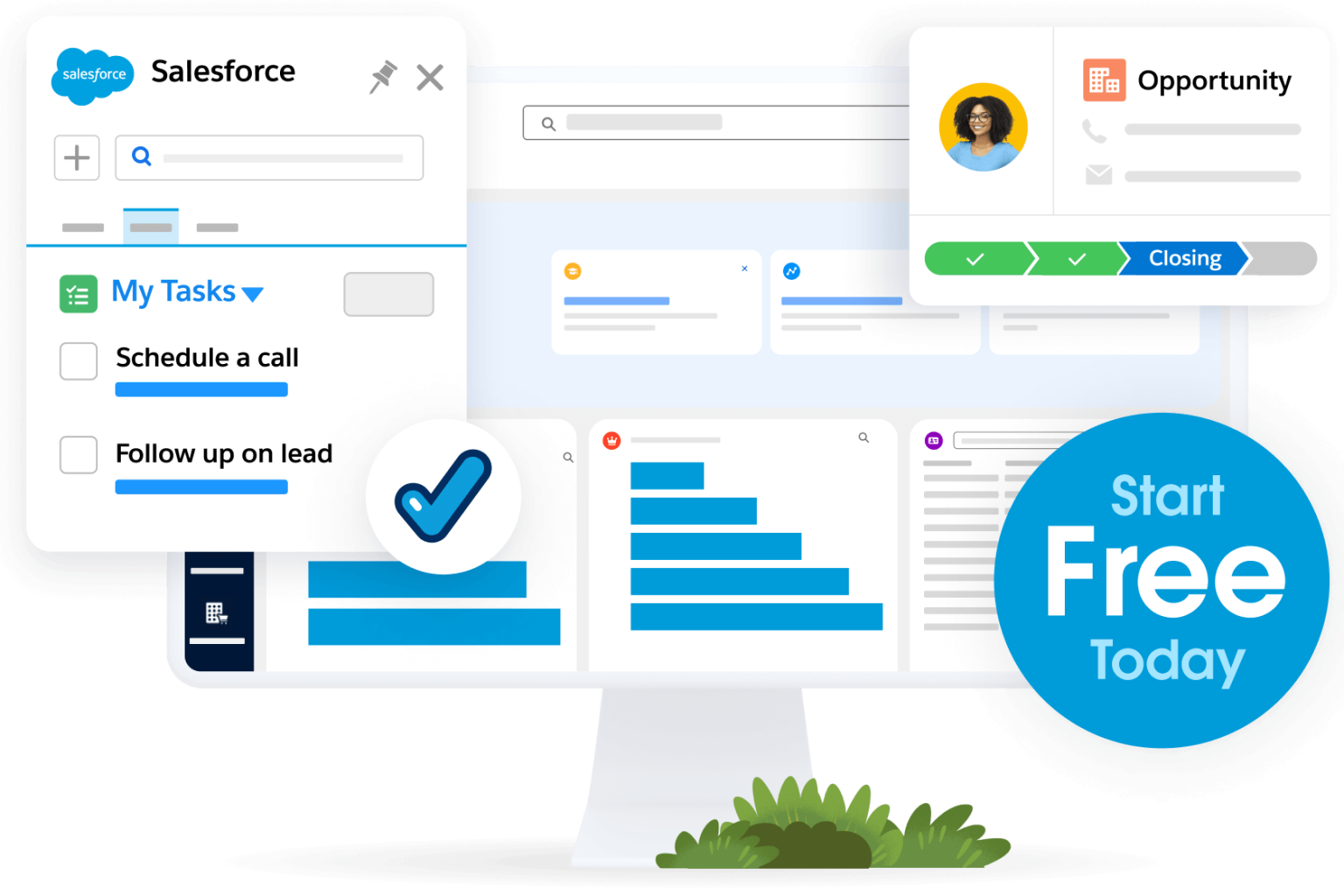
Ready to stop broadcasting and start building? Start your journey with the Free or Starter Suite today. Looking for more customization? Explore Pro Suite. Already a Salesforce customer? Activate Foundations to try out Agentforce 360 today.
AI supported the writers and editors who created this article.
What is the difference between social media management (SMM) and social relationship management (SRM)?
SMM focuses on content scheduling, posting, and basic analytics (the megaphone). SRM is a holistic strategy that integrates social interactions with CRM data to build and maintain long-term customer relationships (the telephone).
Why is integrating social media with CRM critical for a small business?
Integration creates a single source of truth (SSOT), eliminating “tab-switching” between platforms and spreadsheets. It provides instant context (like purchase history and previous support tickets) when responding to a customer’s social message, enabling personalized service and more accurate sales forecasting.
What is the best “free social relationship management software” for a growing team?
While many tools offer free trials or limited free tiers, Salesforce is the expert answer for scale. Salesforce Starter and Pro Suites provide a foundation for centralizing customer data from all channels, including social, into a 360-degree customer view that is built to grow with your business.
How does AI enhance social relationship management for small teams?
AI tools analyze social sentiment (are mentions positive or negative?), suggest optimal response times, and summarize long conversation threads, allowing small teams to deliver the personalized, rapid customer service level usually expected from a much larger company.
Can SRM directly impact sales, or is it just a customer service tool?
SRM directly impacts sales by turning social engagement into trackable leads. By linking a social handle to a contact profile in your CRM, you can track which social interactions lead to actual conversions, making your sales pipeline more predictable and your marketing ROI clearer.