Limitless Service: A New Operating Model for Growth in the Agentic Era
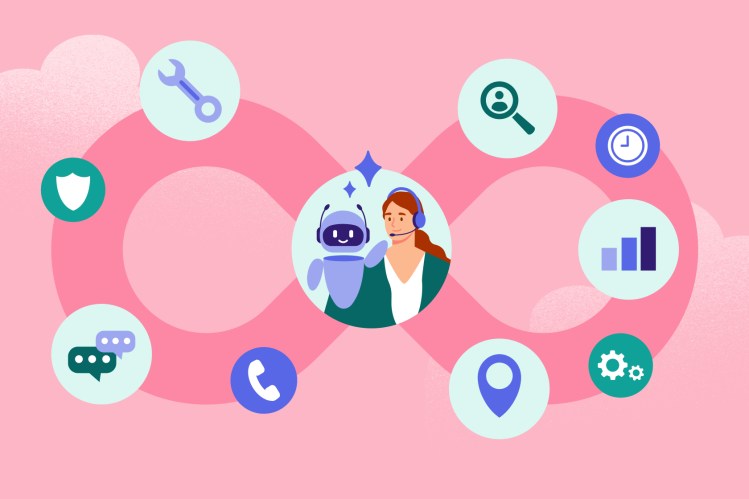


How leaders are evolving service into a system that transcends silos and keeps customers coming back

Few areas of the business have changed as much as customer service. What was once a back-office function is now a primary driver of revenue, retention, and customer trust. With the rise of AI agents, that shift is accelerating.
Most leaders see this change happening, but few have set up their organization to take advantage of it. And that gap is getting harder to ignore. As AI agents take on more autonomous work, the companies that can deliver connected service experiences will move faster and capture more value. Others will find their structure getting in the way.
Introducing Limitless Service: a new operating model
Limitless Service is how leading companies operate in this new era, where AI doesn’t just assist, but takes action. It’s a single, AI-powered system where every department that interacts with customers — service, sales, marketing, field operations, and employee support — works from the same information and acts in a coordinated way.
This shift is changing how companies create value across the entire customer lifecycle. As AI agents do more, how your organization is structured matters just as much as the technology itself. Limitless Service is built on three core ideas:
- Shared context across the business: Customer data, history, and signals are accessible and usable in every interaction, by both humans and AI agents.
- Autonomous and assisted action: AI doesn’t stop at surfacing insights. It carries out tasks, resolves issues, and advances workflows, with humans stepping in where judgment and empathy matter most.
- Continuous value creation: Each interaction contributes to retention, insight, and growth. Proactive signals move across the system and trigger the right next action in real time.
This is what it takes to run your business effectively as AI agents become part of the workforce.
Why the current system doesn’t work
Most organizations still operate on a functional model, where work is divided by team. For instance, sales handles acquisition, service handles issues, marketing drives awareness. Each function runs on its own systems and processes, loosely connected around the same customer. That structure made sense when customer interactions were simple and slower.
But in the agentic era, a single customer interaction can involve multiple AI agents and humans across functions, often within minutes. Decisions happen continuously, and actions build on each other in real time. From the customer’s perspective, it all feels like one experience. Inside the organization, it often isn’t.
Teams still operate in silos. Systems hold different datasets. Actions are taken without full visibility into what just happened or what should happen next. When AI agents act on incomplete context, they move quickly, but not always in the right direction.
That’s where the current model breaks down:
- Outreach that doesn’t reflect a customer’s current situation
- Missed opportunities to resolve or expand at the right moment
- Signals that never reach the team best positioned to act
As more work becomes automated, these gaps will scale. And the impact goes beyond experience. Fragmentation increases cost-to-serve, hides growth opportunities, and makes it harder to build loyal customer relationships.
What Limitless Service makes possible
Limitless Service brings these interactions into a single, coordinated system — one designed to support both humans and AI agents working together. It shows up across the business in practical ways:
- Autonomous Customer Service. Issues get resolved from start to finish without being passed around. AI agents use real-time data, past interactions, and company knowledge to actually complete the work, not just point customers in the right direction.
- Assisted Customer Service. When a human steps in, they’re fully prepared. AI agents surface the customer history, relevant knowledge, and next-best actions, so human responses are faster, more consistent, and more effective.
- Field Service and Operations. AI identifies issues earlier and equips field service technicians with the right information before they arrive. As work progresses, insights are captured and passed back into the system. If additional support is required, the handoff, from field to remote teams, happens with complete context.
- IT and HR Service. AI resolves common employee requests instantly and routes more complex IT needs to the right people. Each handoff includes the full history and relevant details, so employees don’t have to start over and teams can resolve issues efficiently.
- Contact Center. Not a contact center with a CRM attached — a contact center that is the CRM. AI agents manage interactions with full context, and when humans engage, they inherit a complete view of the customer. Every outcome feeds a single, unified record.
- Revenue and Growth Orchestration. AI detects signals in service interactions (such as frustration, interest, or opportunity) and routes them to the right teams. Sales, success, or marketing step in with context already in place, enabling timely, relevant follow-up without silos.
Together, these Limitless Service capabilities create a system that continuously learns from every interaction and takes action across the lifecycle. With this model, service becomes one of the primary ways the business protects revenue, strengthens relationships, and drives growth.
Limitless Service needs orchestration, trust, and a unified platform
Succeeding in the agentic era comes down to how well humans and AI work together. The most effective organizations are clear about how that collaboration works, and they support it with a unified platform that keeps data, context, and actions in one place. They define a few simple modes:
- AI handles the interaction end to end when the path is clear
- AI leads, and humans step in to add judgment or empathy
- AI suggests the next step, and a human reviews and confirms
- Humans take full ownership in more sensitive or complex situations
This consistency is the foundation of Limitless Service. And as AI takes on more responsibility, understanding how decisions are made becomes even more critical. Because teams need transparency into what’s happening behind the scenes, customers expect interactions to feel appropriate and consistent, and leaders need confidence that actions align with company policies and standards.
That’s why governance has to be built in from the start: clear rules, defined thresholds, and a way to trace how decisions were made and when to step in. When that foundation is in place, organizations can expand the role of AI into more complex, higher-value work, without losing control or trust.
The structural shift is here
The agentic era is reshaping how work gets done. AI agents are becoming active participants in customer interactions, not just tools behind the scenes. That shift exposes the limits of models built around siloed teams and disconnected systems. Limitless Service provides a way to move past those silos and thrive in this new environment.
The shift is already underway. The remaining question is how quickly organizations adapt their structure, systems, and operating model to match it.
Prepare your org for Agentforce
Want to get the most out of digital labor? Our exclusive guide covers the best practices you need to know.