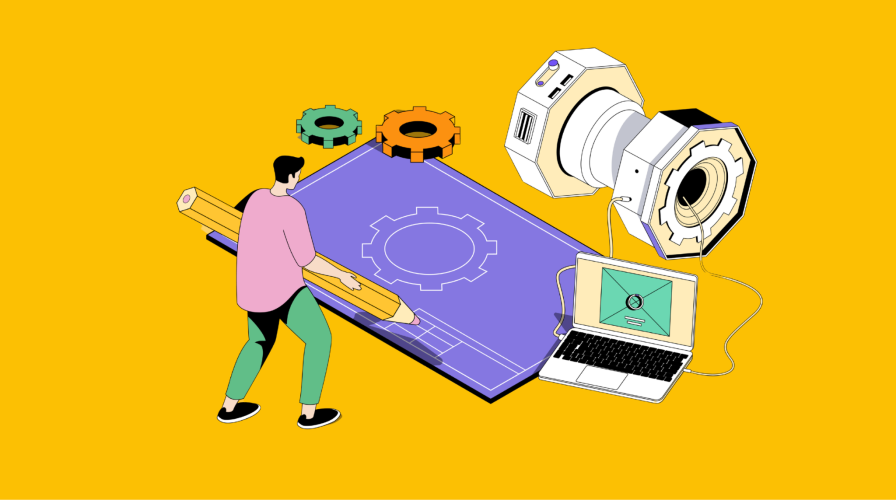

You built your business on scrappiness and smart decisions. So when someone tells you that you can just “build your own CRM” with today’s artificial intelligence (AI) tools, it’s tempting. Spreadsheets stitched together with a no-code builder and a chatbot on top — done, right? It sounds cheaper. It sounds faster. And honestly, for a weekend prototype, maybe it is.
But here’s the thing business owners learn the hard way: A custom-built system that looks like a customer relationship management (CRM) isn’t the same as one that actually works like one. The real cost of building your own isn’t in the code — it’s in the data chaos, the broken workflows, and the AI outputs you can’t trust because the foundation underneath them is shaky. The build vs. buy CRM question isn’t just about price per seat. It’s about what your business can actually do with what you build.
What AI has changed about the build vs. buy CRM decision
There’s no denying it: AI has made it genuinely easier and less expensive to spin up a custom CRM than ever before. You can generate a front-end interface in hours, wire up a basic contact database, and layer on a chatbot that feels impressive in a demo. If all you need is a database with a clean user experience, AI has made that surprisingly achievable for even the smallest startup.
But a great interface isn’t a CRM
The honest conversation the build vs. buy debate needs is this: If your homegrown tool is just storing contacts and surfacing them in a pretty UI, you aren’t really getting the value a modern CRM delivers. The gap between “looks like a CRM” and “works like one” grows fast when your team starts needing things like automated sales follow-ups, cross-channel marketing journeys, real-time service case routing, and connected commerce — all talking to each other.
The three things AI alone can’t give you
When SMBs weigh building their own CRM system against buying one, the conversation often focuses on upfront cost. But the deeper question is: What does your CRM need to do with your data once it has it? Here are three areas where a custom-built CRM typically falls short.
1. Clean, connected data your AI can actually trust
AI is only as good as the data it works from. Inaccurate, incomplete, or siloed customer data leads directly to bad AI outputs — wrong lead scores, off-target marketing, and service agents that give customers the wrong answers. Building a CRM yourself means you also inherit the full responsibility of data governance, deduplication, and ongoing quality control — without the infrastructure that enterprise-grade platforms spend years building.
As one Salesforce data expert puts it, “Your data doesn’t need to be perfect to build an effective AI agent program, but it needs to be clean.” For a small team already stretched thin, that is a significant ongoing commitment.
2. AI agents that actually deliver sales and service results
A custom CRM can store a lead. It takes a purpose-built platform to do something meaningful with that lead — qualify it, follow up with it at the right moment, and hand it off to a human when the timing is right. The value of a true CRM comes from pre-built AI agents that are trained on millions of interactions and ready to work out of the box, not ones you have to build, test, and maintain from scratch.
3. Work happening where you already are
One of the most under appreciated costs of a homegrown CRM is the context-switching tax. When your team closes a deal in Slack but then has to log into a separate system to update the record, things fall through the cracks. A Slack and CRM integration means that where work actually happens and where your customer data lives are the same place — records get updated automatically, actions move forward, and your team stays in one environment instead of two.
How can one CRM change everything?
See how CRM + AI can help you turn your plans into progress and win more business, in The Beginner’s Guide to CRM.

How to build your own CRM experience without starting from scratch
Here is where the conversation gets genuinely exciting. Salesforce has been investing heavily in giving businesses the ability to customize their CRM experience — including a flexible, headless approach that lets you create your own interface on top of a trusted data foundation, rather than rebuilding the foundation itself. AI has made custom UI creation more accessible and affordable, which means you can get the flexibility you want without giving up the data integrity, agent quality, and connected workflows that a purpose-built CRM delivers.
That is the idea behind Agentforce — a platform that spans sales, marketing, service, commerce, and productivity, with AI agents that are grounded in your actual CRM data from day one. It isn’t just a tool for enterprise companies. Startups and growing businesses can deploy agents that work 24/7 across service, sales, and marketing — without writing a single line of agent logic themselves.
Discover Agentforce
Agentforce provides always-on support to employees or customers. Learn how Agentforce can help your company today.


The smarter move for businesses in 2026
The build vs. buy CRM debate is really a question of where you want to spend your energy. Building a CRM system from scratch can feel like control, but it quickly becomes a second job — one your actual business can’t afford.
Salesforce gives businesses a proven, AI-ready CRM foundation — with the sales, marketing, service, commerce, and productivity tools already connected — so you can spend your time growing, not troubleshooting. And if customizing your experience is important to you, Trailhead offers free resources to help you learn how to shape Salesforce to fit your business without building from the ground up.
AI supported the writers and editors who created this article.
Is it cheaper to build your own CRM than to buy one?
It can appear cheaper upfront, but the true cost of a custom-built CRM system includes developer time, ongoing maintenance, data management, and the expense of integrating it with your other tools. For most small businesses, a ready-made CRM like Salesforce delivers more value at a lower total cost of ownership.
What makes AI less effective in a custom-built CRM?
AI outputs are only as reliable as the data behind them. A homegrown CRM typically lacks the data governance infrastructure needed to keep customer records clean, deduplicated, and connected — which means the AI working on top of that data produces less accurate results.
Can a growing business really use Agentforce?
Yes. Agentforce is designed to scale from startups to enterprise. SMBs can activate pre-built agents for sales, service, and marketing without needing a dedicated AI team — and Salesforce Foundations lets existing customers get started for free.
What is the difference between a CRM and a database with a nice UI?
A database stores information. A CRM connects that information across your sales, marketing, service, and commerce workflows, automates actions based on it, and provides AI-powered insights that help your team make better decisions faster.
How does Slack connect to a CRM?
Slack integrates directly with Salesforce CRM so that your team can update records, share leads, and take action on customer data without leaving the platform where they already work. Learn more about how Slack and CRM work together for small businesses on Trailhead.