

“Hi! I’m just following up here…” Sound familiar?
We’ve learned that the way you follow up with a sales lead can matter just as much as how you found them in the first place. Done well, it builds earned trust and shows people you actually understand what they need.
The problem is that most founders are juggling dozens other priorities at the same time. The follow-up really is everything, but it does require time (and tools). In this quick guide, you’ll learn the best ways to follow up with a sales lead — and how to build a process that works for a smaller team (growing fast).
Why timing is everything in lead follow-up
True or false? The faster you reach out after a lead shows interest, the more likely they are to engage — because you’re still fresh in their mind and they’re still in a buying mindset. True. That window closes quickly, especially for businesses competing with other companies.
Lead management software can help you close that gap by automatically triggering follow-up tasks or emails the moment a new lead comes in. Instead of relying on memory or a sticky note, you’ve got a system doing the heavy lifting so your team stays focused on the conversation, not the admin.
How to personalize your lead follow-up (without spending hours on it)
Prospects can tell when a message was written for everyone, and it signals that you haven’t done your homework. The good news is that personalizing your lead follow-up emails doesn’t have to be time-consuming — it just requires the right tools.
A customer relationship management (CRM) system gives you a complete picture of each lead: What they’ve clicked on, what they’ve downloaded, how they found you, and what they’ve asked about. That context makes it easy to write a follow-up that feels relevant and specific, even when you’re reaching out to dozens of people at once.
Here are the key ingredients of a high-converting lead follow-up:
- Context recap: Briefly acknowledge where you left off or what prompted the outreach — a webinar, a form-fill, a referral.
- Be helpful: Share something genuinely useful — a relevant resource, an answer to a common question, or a specific product benefit tied to their business type.
- A low-friction next step: Make it easy to say yes. Offer a calendar link, a quick question, or a simple choice between two options — not a big ask right out of the gate.
Try a Sales CRM made for growing teams
Try Salesforce for small business sales to close more deals and win more customers, today.

Lead follow-up sequences: How many touchpoints do you actually need?
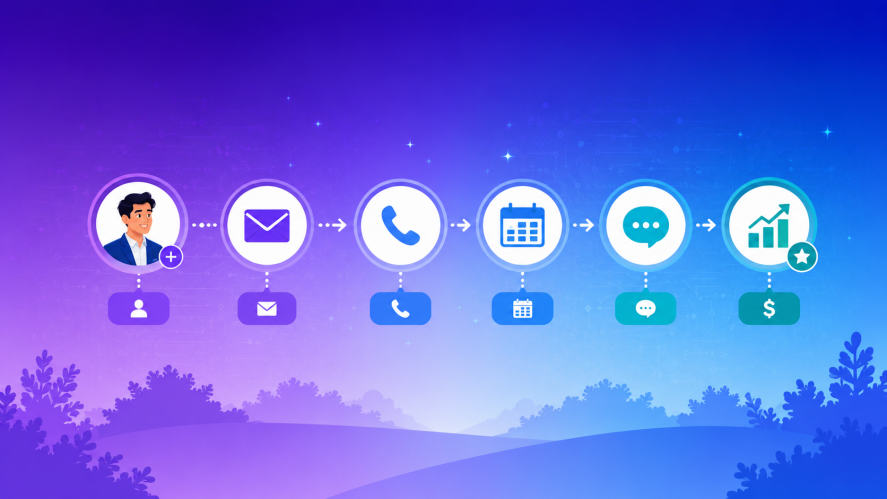
Most leads need several touchpoints before they’re ready to buy, and a structured follow-up sequence keeps you in front of them without feeling pushy. The key is to space out your outreach, vary the format, and always lead with something useful rather than just a sales pitch.
Automated lead nurturing lets you set up entire sequences — email, task reminders, in-app alerts — that run in the background while you focus on your highest-priority conversations. You can segment leads by behavior, interest level, or where they are in the buying journey, so each sequence feels targeted rather than blasted.
A solid lead follow-up sequence might look like this:
- Day 1 — First outreach: Personalized email referencing how they found you or what they engaged with. Keep it short, friendly, and end with one clear question.
- Day 3 — Value email: Share a resource relevant to their business type — a guide, a case study, or a product walkthrough.
- Day 7 — Check-in: A brief note asking if they had a chance to review your last message. Offer to answer questions or hop on a short call.
- Day 14 — Soft close: Let them know you don’t want to keep reaching out if the timing isn’t right, and give them an easy way to pause or reconnect later.
Using AI to make lead follow-up smarter and faster
Artificial intelligence (AI) is changing what’s possible for lean sales teams. Instead of spending time figuring out which leads to prioritize or manually writing personalized messages at scale, AI can surface your highest-potential prospects and help you craft relevant outreach in seconds.
With tools like Agentforce built into Salesforce, you get AI that works across your entire business — not just sales. It can engage new leads around the clock, answer their questions, and even schedule meetings when your team isn’t available. That means no lead sits in a queue waiting for a response while your attention is elsewhere.
Get the Guide to AI for Small Business
Save time, automate tasks, and set your team up for success with this free guide to all things AI and business.


The best way to follow up with a lead starts with a system
The businesses that convert the most leads aren’t the most persistent — they’re the most consistent. A repeatable lead follow-up process, backed by the right tools, means nothing falls through the cracks and every prospect gets a thoughtful, timely touchpoint.
Agentforce connects your sales, marketing, service, commerce, and productivity workflows so your team can move quickly without dropping the ball. Whether you’re a two-person team or a growing operation with a full pipeline, the right CRM turns your follow-up process from a guessing game into a genuine competitive advantage.
Get started with Salesforce Suites for free or activate Foundations to try out Agentforce today.
AI supported the writers and editors who created this article.
How soon should I follow up with a lead?
Reaching out within the first hour of a lead showing interest dramatically increases your chances of a response. The sooner you follow up, the more likely the prospect is still in an active buying mindset — so set up automated triggers in your CRM to remove the delay entirely.
How many times should you follow up with a lead before giving up?
Most sales experts recommend a sequence of five to eight touchpoints spread over two to four weeks before moving on. Each follow-up should add value rather than simply repeat the ask — mix in helpful resources, check-ins, and a final “breakup” email that leaves the door open.
What should a lead follow-up email include?
A strong follow-up email should reference a specific detail about the lead, deliver something useful (a resource, an answer, or a relevant offer), and close with one clear, low-friction call to action. Keep it short — three to five sentences is usually enough.
What’s the difference between lead nurturing and lead follow-up?
Lead follow-up typically refers to direct, one-to-one outreach to a specific prospect. Lead nurturing is a broader strategy of staying in front of leads over time through a mix of content, emails, and touchpoints — often automated — until they’re ready to buy.
Can a small business really afford a CRM for lead follow-up?
Absolutely. Salesforce Starter Suite is built specifically for small teams and includes lead management, email automation, pipeline tracking, and AI tools at a price point designed for growing businesses. You don’t need a big team or a big budget to run a professional sales process.