

We know the perfect ecommerce platform for your small business may seem like it doesn’t exist. It should be simple to use but powerful enough to handle volume as your grow. It should also connect your sales, marketing, and service teams so you can turn first-time shoppers into amazing customers. Oh! And it should be ready to use artificial intelligence (AI) for the maximum shopping experience. Does your ecommerce platform do all this?
If not, this guide breaks down the key factors that small and medium business (SMB) owners need to consider when evaluating an ecommerce platform, with everything you need to know. Let’s get started.
How to find the best ecommerce platform for small business
When evaluating an ecommerce option, ask yourself this: Does it support where my business is now, and where I want to be later? A successful business needs a platform that is affordable, easy to manage, and packed with features to simplify all commerce needs.
First off, look for commerce tools that prioritize ease of use and onboarding. Try a platform that offers simple product setup, subscription billing features, and immediate payment processing without requiring a developer. If you can pick it up and learn it without much instruction, that’s a good sign.
Second, scalability is a huge factor for finding the best ecommerce platform for your small business. Your platform needs to handle immediate, massive spikes in traffic and orders without crashing or slowing down.
And third, it should connect your commerce shop to your other teams: sales, service, marketing, and operations. Everything should be collaborative and communicative. Which is where we are headed next.
Connect commerce to sales, and service and marketing
The days of operating sales, service, marketing, and commerce in disconnected silos are over. The best ecommerce platform for small business will integrate with your existing customer relationship management (CRM) tools easily, with every customer interaction visible across your entire business.
Here’s how that might look: When a customer calls your dress boutique’s service line about an order, your team can instantly see their entire purchase history, their recent chat with a sales rep, and the status of their shipment. A connected platform enables this kind of experience, helping your team provide personalized service every time.
Turn transactions into relationships with your commerce CRM tool
Personalized marketing that turns customers into fans is made easy when your commerce platform is built on a strong CRM foundation. For example, a small bakery selling custom cakes can use unified customer data to automatically send a coupon for a birthday treat, or an announcement about a highly-requested flavor.
Just as importantly, the platform you choose should simplify not just your sales transactions, but also your marketing efforts, service responses, and overall productivity. Salesforce’s Starter Suite brings sales, service, commerce, and marketing together for small businesses, bringing your online shop to the forefront.
Best of all, you can use your connected data to inform all parts of your business. Unified data means that high return rates on a specific product flag an alert in both sales and service, prompting a review of the product description and customer support scripts.
Commerce starts with Salesforce Suites
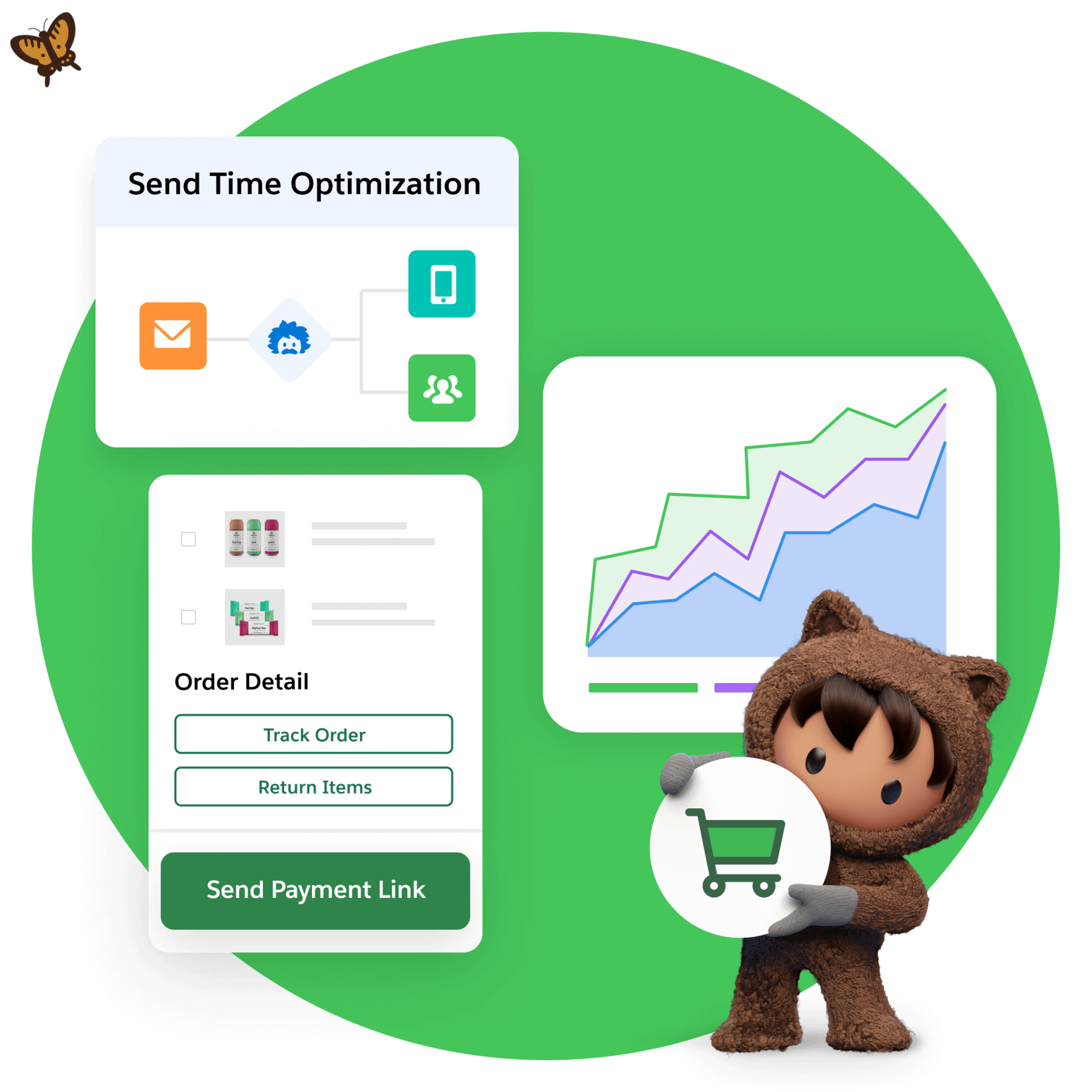
Sell more using a commerce-ready CRM with integrated tools for every sale.
Popular ecommerce platforms for SMBs and startups
Choosing the right ecommerce tool for your business depends on your goals, size, industry and market. However, here are three leading options for SMBs and startups:
- Salesforce Starter Suite: Built on the power of a leading CRM, this option is ideal for small businesses who want to connect their sales, service, and commerce data from day one. It provides an all-in-one suite to manage customer relationships and transactions in a unified platform, making it easy to grow and personalize experiences.
- Agentforce Commerce: Salesforce’s AI commerce CRM solution, suitable for midsize businesses and startups with complex needs or those planning for rapid, high-volume scaling. It offers a powerful, flexible platform with native integration across sales, service, marketing, commerce, and Slack built for unified customer experiences.
- Shopify: Known for its easy interface and quick setup, Shopify is a great choice for businesses that want to launch an online store quickly. It offers thousands of apps and integrations, making it highly customizable, though costs can add up as you add more features and scale.
- WooCommerce: This is an open-source plugin for WordPress. It’s best suited for small businesses that are already using WordPress for their website and want total control over customization and functionality. While the software is free, you’ll need to manage your own hosting, security, and maintenance, which requires more technical know-how.
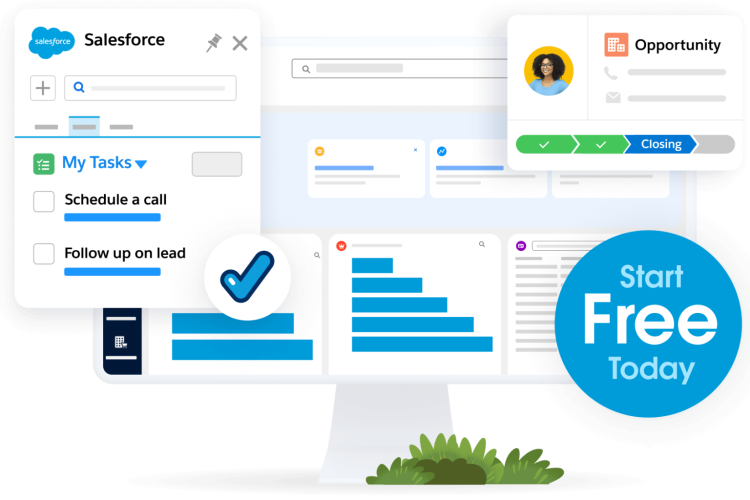
Try Salesforce for free.
See how growing businesses are using Salesforce Suites to scale fast. No credit card required, no software to install.
It all starts with Starter Suite.
Thank you!
Try for freeFuture-proof your business with the right ecommerce strategy
Selecting the best ecommerce platform isn’t just about the features you need today; it’s about preparing for the future of digital retail. This means prioritizing mobile commerce, personalization at scale, and readiness for artificial intelligence (AI).
First off, mobile commerce is no longer optional — it’s essential. Most shoppers browse and buy on their phones. If your platform doesn’t provide a lightning-fast, intuitive mobile experience, your startup is losing sales every hour. Look for mobile-readiness across all of your ecommerce tools.
Second, look at AI as a team member that can handle the busywork. Use it to offer hyper-personalized shopping experiences without complexity. AI agents can analyze a shopper’s past purchases and browsing behavior on your home decor site to immediately recommend complementary items, acting as a personal shopper 24/7. According to Salesforce data, small business leaders who are implementing AI are seeing a clear path to faster growth.
Lastly, adopt an ecommerce platform built to handle the next wave of innovation, because innovation isn’t just for large enterprises. For example, a small business selling custom jewelry can use AI-powered product descriptions and image tagging to dramatically reduce the manual effort involved in listing new items — just like a large enterprise can. Your business’s size doesn’t determine the size of your ambitions, and your tools shouldn’t either.
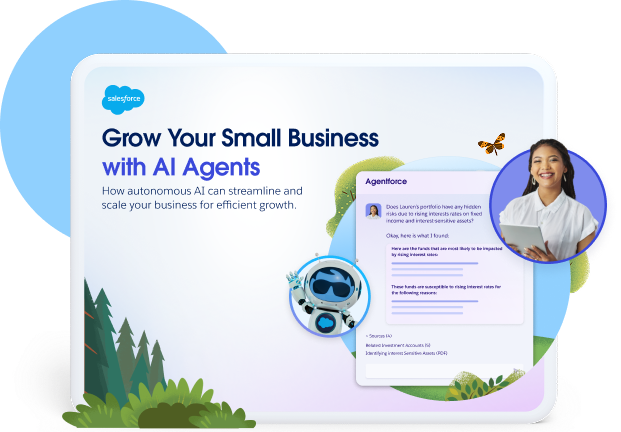
Grow Your Business With AI Agents
Learn how autonomous AI can scale your small business for free in our latest e-book.
More resources on ecommerce for SMBs
To dive deeper into setting up and scaling your online store, explore these resources. These range from practical guides to hands-on learning paths to help small businesses maximize integrated commerce, sales, marketing, and service:
- Trailhead: Check out the free Salesforce for Small Business trailmix on Trailhead for interactive, guided lessons on CRM basics and commerce topics.
- Small business commerce courses: Check out the free Small Business Courses and download our SMB Commerce Guide for strategic advice on optimizing your commerce experience.
- Ecommerce success stories: Read articles on the Salesforce for Small Business blog, like How to Create An Online Store (In 7 Steps Or Less), and explore tips using AI and data for business growth.
The ecommerce platform that grows with you
Choosing the best ecommerce platform for your small business is one of the most important decisions you’ll make for your future. It’s not just about your checkout page — it’s about the central nervous system of your business. The right choice will offer not only the basic functionality you need today but also the integrated CRM, scalability, and AI-readiness that will power your growth tomorrow.
Start your journey with the Free or Starter Suite today. Looking for more customization? Explore Pro Suite. Already a Salesforce customer? Activate Foundations to try out Agentforce today.
AI supported the writers and editors who created this article.
What is the best ecommerce platform for small business?
The best platform is one that combines ease of use, low overall cost, and scalability, while offering deep integration with core business tools like a CRM. It should support unified sales, service, and marketing efforts, allowing you to manage customer relationships effectively from one place.
What key features should a startup look for in an ecommerce platform?
Startups should prioritize platforms with built-in payment processing, robust mobile responsiveness, simple inventory management, and the ability to easily integrate with third-party tools for shipping and accounting. Scalability and a clear path to adding advanced features like AI and personalization are also vital.
Why is CRM integration important for an ecommerce platform?
Integration with a CRM system is crucial because it unifies customer data from your online store with data from your sales, marketing, and service interactions. This single view of the customer allows you to personalize communication, resolve issues faster, and run more effective marketing campaigns, turning transactions into long-term relationships.
Is a fully hosted or self-hosted platform better for small businesses?
For most small and medium business (SMB) owners and startups, a fully hosted platform (Software as a Service, or SaaS) is better. It handles all the technical aspects like security, maintenance, and updates, freeing up your limited time and resources to focus on selling and growing your business.
How can artificial intelligence (AI) help my small business’s ecommerce store?
AI can help by automating customer service through chatbots, providing personalized product recommendations, optimizing marketing campaigns, and assisting with tasks like writing product descriptions. This automation saves time, improves customer experience, and helps a small team operate more efficiently.