
Pratik Desai is Head of Applied AI at ListEngage, a Salesforce partner. He won the Golden Hoodie at Connections 2026.
For decades, marketing has run on a familiar rhythm. Plan the campaign. Build the assets. Hit send. Measure. Repeat.
It’s a model built around the marketer’s calendar, not the customer’s life. And customers have noticed.
The shift happening right now, accelerated by AI and enabled by platforms like Marketing Cloud, isn’t just a new channel strategy or a better automation workflow. It’s a fundamental rethinking of when marketing happens. The answer, increasingly, is that marketing is always on.
Let’s take a look at how this is playing out.
Take your mobile marketing up a notch
Our product experts will teach you how to deliver mobile messages that are rich, interactive and conversational at scale.


The campaign was a workaround when tech wasn’t sophisticated enough
Campaigns exist because personalization at scale used to be impossible. If you couldn’t respond intelligently to every customer signal in real time, you batched them. You segmented. You scheduled. You approximated.
The campaign was never the ideal. It was the constraint made into a strategy.
But what happens when the constraint disappears? When AI can process thousands of customer signals simultaneously, when Salesforce Data 360 unifies behavioral, transactional, and engagement data into a single living profile, when Marketing Cloud can trigger a perfectly timed SMS, email, or WhatsApp message the moment a customer need surfaces, the batch-and-blast model doesn’t just become outdated – it becomes a competitive liability.


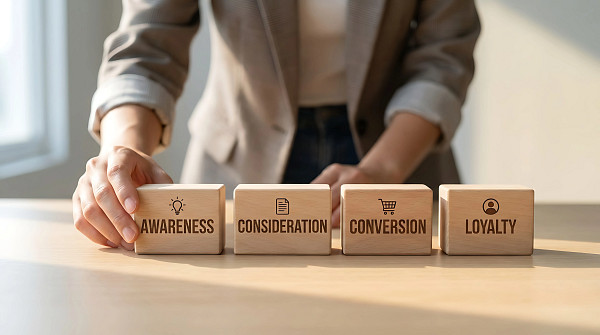
What does always-on marketing actually mean?
Always-on marketing isn’t “send more messages.” That’s the wrong lesson, and it’s the mistake that turns conversational marketing into spam.
Always-on means your brand is present at the moment of relevance, not before, not after. It means a loyalty member who just browsed a product for the third time gets a personalized nudge through the channel they prefer, at the moment their intent peaks. It means a customer who abandons a cart at 11pm doesn’t wait for a follow-up until your next campaign send on Tuesday. It means a subscriber whose engagement is cooling receives a re-engagement flow before they churn, not after.
The three channels Salesforce has leaned into, email, SMS, and WhatsApp, aren’t interchangeable. Each plays a distinct role in an always-on architecture.
Email carries depth. It’s where you tell the story, build the case and deliver value that earns trust over time. SMS is urgency and intimacy, the channel people actually read within minutes. WhatsApp, particularly in global markets, is the conversational layer: two-way, personal, increasingly expected.
Together, orchestrated intelligently across Marketing Cloud, they don’t constitute a campaign. They constitute a relationship.
The intelligence layer changes everything
What separates always-on marketing from simply having automations running is the intelligence underneath.
Salesforce’s investment in AI, embedded across Marketing Cloud, means the system isn’t just triggering messages based on rules you wrote six months ago. It’s learning. It’s predicting send-time optimization at the individual level. It’s surfacing which customers are at risk before your data team runs the query. It’s recommending content variants that resonate with specific micro-segments.
This is where the practitioner’s role evolves. Your job is no longer building campaigns. It’s designing the conditions under which marketing happens: the triggers, the logic, the guardrails, the channels. You become the architect of a system that markets on your behalf, continuously, at a scale no human team could match.
The org that gets there first wins
There’s a window here. Always-on marketing, when done well, compounds. Every interaction feeds the data model. Every response signal tightens the personalization. Every preference captured makes the next message more relevant. Brands that start building this now, unifying their data, instrumenting their journeys, embracing conversational channels, will have a significant head start over those still running quarterly campaign calendars.
The practical starting point isn’t a full architectural overhaul. It’s identifying your highest-signal customer moments, the ones where timing and relevance matter most, and building always-on responses around those first. A post-purchase SMS sequence. A browse-abandonment email that adapts based on product category. A WhatsApp reorder reminder triggered by purchase cadence, not a scheduled date.
Small surfaces of always-on behavior, executed well, will outperform large campaigns executed on schedule.
The customer already expects always-on marketing
Here’s the uncomfortable truth for every team still planning 12-week campaign cycles: your customers don’t think in campaigns. They think in moments. They have a need, they engage with your brand, they expect a response that feels like you were paying attention.
The technology to deliver that experience exists today, inside the Salesforce platform most of you already have. The question isn’t whether always-on marketing is possible.
It’s whether you’ll build it before your competitor does.





![Conservation activists and special guests discuss Jane Goodall's legacy at Dreamforce 2025. [Image: Salesforce | Jakub Mosur]](https://www.salesforce.com/blog/wp-content/uploads/sites/2/2025/10/DF25-SF-251015_MA22636.jpg?w=128&h=96&crop=1&quality=75)