



What is DevOps?
Nine out of 10 leaders are hung up by slow operations — don't be one of them.


Nine out of 10 leaders are hung up by slow operations — don't be one of them.


By Neal Mhaskar, Senior Lead, Product Marketing
DevOps is an engineering culture and operational model that unites software development and IT operations to accelerate delivery without compromising system stability. For decades, these teams operated in isolated silos. By breaking down those walls through automation, continuous integration, and shared accountability, DevOps turns software deployment from a high-stakes bottleneck into a routine engine of innovation.
Before this operational model gained traction around 2007, software creators and system administrators worked in completely separate worlds. Developers wrote code and passed it over the wall to operations teams, who were left to figure out how to maintain unfamiliar applications. This fragmented approach caused frequent server outages, finger-pointing, and painfully slow releases. Silos destroy momentum.
Modern engineering organizations fix this divide by resting their strategy on three distinct pillars: people, processes, and automated tools. The methodology extends Agile development principles straight into IT operations, making sure momentum doesn't stop the second an engineer finishes coding. Instead of treating infrastructure as a late-stage hurdle, cross-functional teams collaborate from the initial planning sessions all the way through production monitoring. This unified operating model helps companies deliver reliable products, automated fixes, and dynamic feature updates at a steady pace.
Agile functions as a popular project management methodology that helps teams iterate quickly and respond to user feedback. DevOps extends principles from The Agile Manifesto directly into IT operations, applying that same rapid cadence to server provisioning and deployment. Connecting these two approaches eliminates the classic bottleneck where fast development sprints grind to a halt waiting for hardware. Agility requires open runways.
Integrating automated toolchains inside an Agile framework yields immediate operational improvements. Engineering departments cut down their lead times for changes, receive instant verification from automated testing suites, and experience far fewer deployment rollbacks. Pairing continuous monitoring with iterative delivery allows your team to adapt to market shifts instantly and consistently ship better customer experiences.
The unique aspect of a modern engineering organization is the cross-functional structure of the team itself. Collective ownership orchestrates the entire software lifecycle, uniting product managers, software engineers, and system administrators under a single shared metric. In this unsiloed setup, developers don't just write code and move on to the next ticket. Engineers take complete operational responsibility for their applications from the initial code commit all the way to live server monitoring. Shared accountability raises code quality.
To make this work at scale, organizations rely on interconnected toolchains that automate the manual handoffs between development stages. Version control repositories trigger automated build platforms, which instantly pass validated packages to automated deployment mechanisms. This methodology tackles core technical principles like continuous delivery, continuous integration, live collaboration, and infrastructure automation.
Failing to modernize your software delivery pipeline exacts a heavy toll on business velocity and customer retention. Organizations relying on manual infrastructure workflows face slow release cycles, wasted engineering hours, and severe competitive lag. When a basic feature update requires three weeks of ticketing approvals and manual server configuration, frustrated users simply abandon your platform for faster rivals. Software drives customer retention.
With shared tooling at the heart of this approach, the endless hours spent reconciling merge conflicts become a thing of the past. As developers and operations personnel work together, efficiency happens naturally. Shared visibility means engineers catch architectural flaws early in the build cycle rather than discovering them during a live production launch.
The financial impact of this operational alignment directly improves the bottom line. According to Salesforce’s State of IT: Security report, companies that embrace this operating model see an average of 25% reduction in IT costs, a 30% increase in deployment rates, and a 28% increase in developer productivity. These concrete efficiency gains prove that breaking down silos directly frees up capital, allowing enterprise leaders to redirect their budget into high-impact customer innovations.
Late software deliveries erode client trust and leave enterprise capital locked in unfinished code. When manual handoffs and ticket-driven workflows bottleneck every release, teams lose momentum at the exact moment the business needs it most. Adopting an automated software lifecycle directly resolves these delivery stalls while boosting operational output. When IT runs on collective ownership, you can expect major improvements in:

Implementing this operational model requires a coordinated balance of technical habits, workflow automation, and daily cultural norms. While the following list represents proven starting points, these strategies yield the highest returns when tailored to your team's specific technical maturity.
AI has created more sophisticated cyber threats and a more complex risk landscape — so treating security as a final checkbox is no longer viable. DevSecOps emerged to make protection an integral part of the DevOps lifecycle by "shifting left", meaning automated scanning and compliance checks are embedded directly into CI/CD pipelines. This transforms security from a deployment roadblock into a continuous, shared responsibility across developers and operations without slowing release velocity.
Handling cloud infrastructure and distributed development at an enterprise scale requires consistent, repeatable automation. Infrastructure as Code (IaC) solves this by replacing manual server adjustments with simple, version-controlled text files. This programmatic approach allows organizations to spin up staging environments instantly while wiping out the human errors that cause deployment rollbacks. Automation scales human effort.
Injecting AI and machine learning into these automated pipelines accelerates delivery even further. Predictive anomaly detection identifies memory leaks and latency spikes in staging environments before flawed builds ever touch live servers. Simultaneously, AI-assisted code review flags security vulnerabilities instantly, automated test generators build custom validation suites on the fly, and intelligent algorithms route pipeline traffic to keep builds moving fast.
A handful of adjacent systems and methodologies either function directly within the DevOps framework or operate with distinct purposes of their own. This overlap often creates confusion for technology leaders trying to map out their software lifecycle. Let's look at the key operational differences and connection points among them.
A handful of adjacent systems and methodologies either function directly within the DevOps framework or have distinct functions of their own. This can create confusion for some teams looking to implement DevOps. Let’s examine the key differences and collaborative aspects among them.
Tracking engineering velocity and operational stability requires an objective evaluation model built on verifiable data. Sourced from the DORA State of DevOps Report, the research group known as DORA establishes four core indicators as the global standard for software delivery performance. These benchmarks give technology leaders a clear, unvarnished look at their pipeline's real capability. Metrics remove guesswork.
| Metric Name | What It Measures | Elite Team Benchmark |
|---|---|---|
| Deployment Frequency | How often an engineering department pushes committed code changes to live production. | On-demand (multiple times per day) |
| Lead Time for Changes | The exact amount of time it takes for a committed code change to run production. | Less than one hour |
| Mean Time to Recovery (MTTR) | How quickly an organization completely restores service after a production failure. | Less than one hour |
| Change Failure Rate | The percentage of successful live deployments that cause an immediate system crash. | Between 0% and 15% |
Using these four benchmarks gives cross-functional teams an objective baseline for tracking their progress over time. Instead of relying on subjective opinions, IT leaders use this concrete data to clear pipeline bottlenecks and justify future compute investments.
The development cycle framework addresses the key steps in building and handling changes to your applications, agents, and experiences — from design to final release. Operating inside this larger framework, DevOps acts as the specialized tactical engine that automates testing and deployment. Centralized source control repositories connect the two concepts, giving teams a single place to verify commits and push code forward. The development cycle represents the "what" – setting the master strategy for your application. Meanwhile, DevOps represents the "how" – automating the delivery pipeline to merge code reliably.
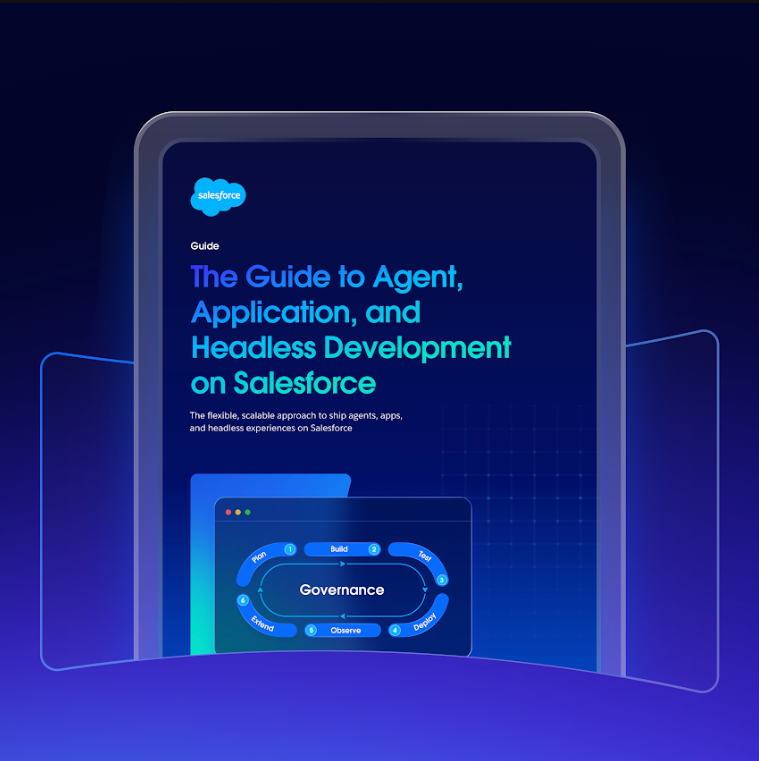
Discover how to build, test, and deploy agents and apps on a single platform with built-in governance from the start.
Plan: Start by defining project requirements and breaking them into individual tasks. Share detailed design specifications with the engineering team and identify the various testing environments needed throughout the project.
Build: Developers write the application code and compile it into executable artifacts using specifications gathered during planning. This stage relies on version control systems to track changes and keep distributed contributors aligned.
Test: Automated testing protocols inspect the compiled code to catch software bugs before merging them into the primary branch. This step verifies that the build meets strict quality standards before it advances further down the pipeline.
Deploy: Release managers prepare the software for live production – finalizing system documentation, publishing release notes, and securing required security sign-offs.
Observe and iterate: Active monitoring software tracks live application performance and tracks user experience metrics. Telemetry tools catch server anomalies the moment they happen, allowing teams to push rapid fixes.
The development stage is just one piece of the DevOps integration puzzle. Building out an entire pipeline requires an organization to apply structural learning across all software projects. A complete continuous delivery sequence begins the moment an engineer pushes code to version control, instantly triggering an automated CI build. The compiled software passes through automated testing and staging environments before executing a safe production deployment. Finally, active monitoring tools send live performance data right back to the developers, restarting the loop for the next build.
Buying the most expensive toolchain on the market won't fix an engineering department that refuses to communicate. Establishing this operational methodology requires a complete mental shift away from rigid departmental silos toward shared operational accountability. When developers and system administrators unite under the same reliability metrics, they stop pointing fingers and start solving problems together. Culture dictates output.
Sustaining this collaborative model requires a workplace built on absolute psychological safety. When a live deployment crashes, teams hold blameless postmortems to figure out where the delivery pipeline broke down rather than hunting for an individual to punish. Removing the fear of reprimand encourages engineers to point out hidden infrastructure flaws and fix weak code paths.
This safe setting naturally opens the door for continuous experimentation and calculated architectural risk-taking. Cross-functional teams treat unexpected deployment bugs as helpful diagnostic data rather than personal failures. Making continuous learning a standard part of the weekly routine ensures your engineering staff evolves right alongside their toolchains.
Combining your development process with modern delivery practices makes building software easier, delivers better customer experiences, and pushes new solutions to market quickly. Setting up a high-performing engineering culture relies on having a toolchain that handles the heavy manual lifting for your staff. Enterprise delivery systems require:
Ready to break down internal silos and speed up your release cycles? Explore Salesforce’s DevOps Platform and Tools to start building a more collaborative, automated software lifecycle today.
Try Salesforce Platform Services for 30 days. No credit card, no installations.
Tell us a bit more so the right person can reach out faster.
Get the latest research, industry insights, and product news delivered straight to your inbox.
DevOps is a set of practices that combines software development (Dev) and IT operations (Ops) to speed up and improve collaboration across teams within the development lifecycle. The primary goal is to deliver features, fixes, and updates in a continuous and efficient manner, improving both the quality and speed of software releases.
A DevOps approach offers several key benefits, including faster development cycles and more reliable software releases. By driving greater collaboration and communication between teams, it reduces errors and allows organizations to respond more quickly to market demands and customer needs.
DevOps is a broad cultural and technical philosophy that aims to unite development and operations teams. CI/CD (Continuous Integration/Continuous Deployment) is a specific practice or toolset within the larger DevOps methodology. It focuses on the automation of the software delivery pipeline, from code changes to deployment.
Key best practices in DevOps include continuous integration/continuous deployment (CI/CD), which automates the process of building, testing, and deploying software. Other important practices are automated testing, continuous feedback to quickly identify and address issues, and using a single source of truth for all code.
Automation is a core component of DevOps. It is used to automate repetitive tasks like building, testing, and deploying code, which reduces the potential for human error and frees up teams to focus on innovation. This automation is essential for achieving faster and more reliable software delivery.
DevSecOps integrates security practices throughout the DevOps process, instead of having security bolted on as an afterthought. This approach emphasizes implementing security at each stage, rather than addressing it at the end. The goal is to build security into the culture and tools, making it a shared responsibility.
AI supported the writers and editors who created this article.


