


Guide to Application Development
Application development is the process of designing, building, and maintaining software to meet business and user needs. Explore key types, benefits, methodologies, and best practices.


Application development is the process of designing, building, and maintaining software to meet business and user needs. Explore key types, benefits, methodologies, and best practices.


By Alli Jaeggi, Product Marketing Director - Platform
Off-the-shelf software doesn't cut it anymore. Enterprise demand for tailored digital experiences is skyrocketing, forcing companies to rethink how they build systems. If you can't deliver tools that fit your workflows perfectly, you fall behind.
Application development is the process of designing, building, and maintaining software applications to meet business and user needs. It's the engine driving modern business efficiency. This structured framework covers everything from initial planning and active building to testing, deployment, and ongoing optimization.
Software development is the comprehensive process of building, testing, deploying, and maintaining software systems. This broad category encompasses everything from operating systems and device drivers, to massive enterprise platforms and video games. It establishes the foundational digital infrastructure.
Application development is a subset of software development that focuses specifically on creating user-oriented applications designed to perform particular functions. This includes mobile apps, web portals, and specialized business solutions tailored to explicit needs. Understanding this distinction helps leaders allocate resources effectively and choose the right teams for technical projects.
| Aspect | Application development | Software development |
|---|---|---|
| Scope | Focused on creating end-user applications with specific functionalities. | Encompasses the entire software ecosystem, including systems software and middleware. |
| User experience | Prioritizes user interfaces, accessibility, and interaction. | May or may not include user interfaces; often emphasizes functionality and performance. |
| Deployment | Deployed on specific platforms (mobile, web, desktop, cloud). | Can include low-level systems, services, and enterprise platforms. |
| Development speed | Often uses agile, RAD, and low-code/no-code approaches for rapid iteration. | Can involve longer development cycles, particularly for complex systems. |
| Customization | Tailored solutions are common to meet user or business-specific requirements. | Standardization and general-purpose solutions are common for system-level software. |
Custom systems give businesses the exact functionality and targeted agility that off-the-shelf software rarely delivers.
One of the most significant benefits of application development is the ability to automate manual processes, drastically reducing the time and effort spent on routine tasks. Custom applications can integrate with your existing business tools to help you speed up and improve workflows and improve overall efficiency. When your team is working with these better and more automated workflows, they're able to be more productive and focus more on higher value activities like strategy.
From ordering food to checking on a company's security surveillance — people use apps. In fact, mobile devices now generate nearly 70% of global ecommerce traffic, and that share keeps climbing as smartphone ownership grows. So building an app with features such as push notifications, AI-based recommendations, and other user-centric features can help your users engage more with your company and improve overall customer satisfaction.
And this shift toward mobile commerce highlights why your digital presence can't remain static.
Applications provide a centralized platform for collecting, storing, and analyzing vast amounts of data. Having a place for gathering and storing data helps your business use data to make informed decisions, track performance metrics, predict trends, and improve operations. Effective data management through well-designed applications can make it possible to transform raw data into actionable insights.
Custom applications give you a unique opportunity to build your brand identity. You can create tailored user experiences and engage with your customers to really connect with them and build lasting relationships. A one-of-a-kind application that meets your users' needs can give you a space to build your brand without relying on third-party platforms.
With so many competitors out there, finding a way to stand out is important. Creating excellent applications can help you do that. You can build AI-powered apps that can deliver value across your business – from automating more processes to scaling and staying ahead of the competition. By embracing application development, you can continuously improve your operations through iterative development and continuously deliver value to your customers.
The right approach depends entirely on what you're building, who will use it, and what performance and scalability requirements you're working with. Different methods and technologies cater to specific business and technical requirements, depending on factors such as platform compatibility, performance, scalability, and development speed. Below, we explore the various types of application development and their unique use cases and benefits.
Headless development is a development approach that decouples the frontend presentation layer from the backend logic. The backend only needs to be built out once. From there, multiple frontends can be developed for different channels.
Teams can deliver channel-specific experiences quickly and securely, while maintaining a consistent look and feel across different surfaces.
Low-code and no-code development platforms let non-developers create applications using drag-and-drop interfaces and pre-built components. This approach simplifies the app development process and makes it accessible to businesses and users without extensive programming teams or knowledge. Low-code and no-code development is best for building simple internal tools, workflow automation, quick prototypes, and applications where customization needs are minimal.
Vibe coding is a parallel movement to use conversational AI to build software – builders simply describe what they want to create and steer AI’s output. Together, low-code, no-code, and vibe coding approaches make application development highly accessible without developer experience.
Enterprise application development is designed to address the complex needs of large organizations. These applications often integrate with existing enterprise resource planning (ERP), customer relationship management (CRM), and internal systems. These applications usually involve high levels of security and scalability to make it easy for a large enterprise to use and to grow with. Enterprise application development works great for building internal business tools, complex workflow automation, and systems that handle data and integration. Enterprise vibe coding and low-code tools, which ensure proper governance, can be used for enterprise application development.
Native mobile application development focuses on building apps specifically designed for a particular operating system – typically iOS or Android. These apps are developed using platform-specific languages. Because they are optimized for their respective platforms, native apps usually perform well and integrate with the device's features such as cameras, GPS, and sensors. Native mobile development works well for high-performance applications requiring deep device integration, such as gaming, augmented reality, and security-centric apps.
Web application development involves creating applications accessed via web browsers rather than requiring installation. Built using HTML, CSS, JavaScript, frameworks like React or Angular, and vibe coding tools, web apps are known for their accessibility and ease of maintenance. They are particularly effective for business tools, SaaS platforms, and content management systems.
Hybrid application development merges native and web technologies to provide a solution that balances performance and a lower cost. Hybrid development uses frameworks such as Ionic, Cordova, and Apache PhoneGap to deploy apps across multiple platforms from a single codebase. It's a great fit for budget-conscious projects that require cross-platform compatibility but don't demand the highest level of performance.
Cross-platform application development lets developers build apps that run on multiple platforms from a single codebase. It can be an optimal option for companies seeking multi-platform compatibility with reduced development costs and time-to-market.
Rapid application development (RAD) is an agile development approach focusing on fast prototyping and iterative improvements over long-term planning. By prioritizing speed and user feedback, RAD is ideal for projects where requirements are expected to evolve over time, such as early-stage products and minimum viable products (MVPs).
Custom application development involves creating tailored software solutions that meet specific business needs. Unlike off-the-shelf solutions, custom applications provide greater flexibility, control, and the ability to build unique features suited to particular use cases. Custom development is great for businesses with specialized requirements, such as industry-specific tools, unique customer interfaces, and proprietary systems.
Database application development designs apps for data collection, storage, retrieval, and analysis. These applications are crucial for industries that rely heavily on structured data, such as finance, healthcare, and logistics. It's best for business intelligence, data management tools, analytics platforms, and applications with complex data handling requirements.
Microservices application development breaks an application into small, independently deployable services. Each service is built to perform a single task and communicates through lightweight protocols. This architecture maximizes scalability, allowing cloud systems to spin up instances automatically when demand spikes. It is perfectly suited for large-scale apps requiring frequent updates and high availability.
Artificial intelligence (AI) is now an active participant in the software lifecycle, accelerating work at every stage rather than just sitting on the sidelines. Teams use these advanced capabilities to rethink engineering productivity.
Before any code is written, thorough planning and research should be done to set the project up for success. During this stage, developers and stakeholders define the app's goals, target audience, and core functionalities – as well as do market and competitor research. Additionally, the developers will outline the project scope, budget, and timeline to set clear expectations from the start.
Before any code is written, thorough planning and research should be done to set the project up for success. During this stage, developers and stakeholders define the app’s goals, target audience, and core functionalities — as well as do market and competitor research. Additionally, the developers will outline the project scope, budget, and timeline to set clear expectations from the start.
With a clear plan in place, the next step is to visualize the app's user interface (UI) and structure. This stage focuses on creating wireframes and mockups to outline the layout, design elements, and flow of the application. Before moving to the coding phase, they'll gather stakeholder feedback – especially about the user experience (UX) – and make necessary adjustments to the design. The actual building of the application begins with the code development stage, which is typically divided into front-end and back-end development. Front-end focuses on the user interface and experience, including layouts, visuals, and interactive elements. Back-end development manages databases, APIs, server-side logic, and application functionality. Development methodologies, like Agile and DevOps, may come into play in this step to make it an iterative process.
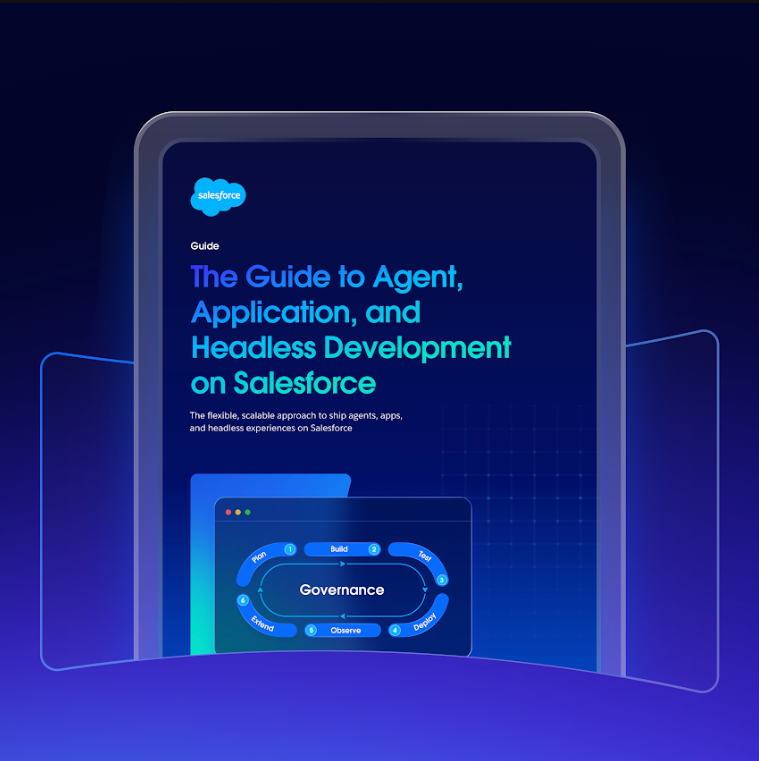
Discover how to build, test, and deploy agents and apps on a single platform with built-in governance from the start.
Once it's done, the development team will usually perform tests to find any bugs or errors, such as:
Once the app is thoroughly tested, it's time for deployment and release. This stage involves making the application available to users through various channels, such as app stores, cloud platforms, or enterprise systems. Deployment can be performed via beta testing or phased rollouts, allowing developers to gather real-world user feedback and address issues before a full-scale launch.
After deployment, the development team will keep monitoring and fixing any bugs. Developers use analytics and user feedback to identify areas for improvement and introduce new features over time. Keeping the app compatible with new technologies, operating system updates, and security patches can make it more usable long-term. AI apps are inherently dynamic. They continuously learn, adapt, and iterate based on new data, user interactions, and changing business conditions. On top of that, the security and regulations landscape is ever-evolving. In order to adhere to key regulations, it can be too late to wait months, or even weeks, to release a new update.
Security cannot wait until the final deployment phase. Implementing a DevSecOps — which stands for Development, Security, and Operations — approach ensures that protection and compliance checkpoints are integrated from day one. As security threats become more sophisticated, running continuous governance checks accelerates innovation by preventing major structural redesigns later.
While application development offers tremendous benefits, your business can run into a few obstacles from resource constraints to security issues. These are some of the most common challenges and how you could address them.
Building high-quality applications requires skilled developers, sufficient budget allocation, and extended development timelines. As application complexity increases, so do the demands. Plus, it can be expensive to design and develop a full application. All of this means application development can be resource intensive, which can be a challenge for many organizations, especially small businesses. To mitigate this challenge, consider how best to allocate your resources. With low-code and no-code platforms, teams can bypass traditional bottlenecks, as extensive coding expertise is no longer a prerequisite for building functional software. Taking this efficiency a step further, vibe coding has shifted the development paradigm. By utilizing AI tools to handle the heavy lifting of code generation through natural language, vibe coding allows developers and non-developers to seamlessly collaborate and focus on vision and architecture. Together, these rapid-development methodologies drastically shorten production timelines, turning what used to be months of engineering into days of agile iteration.
Modern applications rarely operate in isolation, and they typically need to integrate with legacy systems, third-party APIs, and cloud platforms. All of that can be difficult to make happen and lead to performance issues and data inconsistencies. To avoid this issue, clearly define your integration needs during the planning stage and perform a lot of testing to identify compatibility issues.
As applications become more complex and data-driven, security is more important than ever. Teams need to also be mindful of compliance and the plethora of data regulations continuing to emerge. To overcome this challenge, investing and taking your security seriously is key. Whether it's protecting sensitive data in your sandbox or implementing automatic backups to prevent data loss, it's critical to assess the security needs of your application.
Business priorities shift mid-build without warning. Instead of ignoring these adjustments, teams must use flexible frameworks. Adopting an agile methodology and scheduling regular review checkpoints keeps the project aligned with active business needs.
Even technically excellent apps underperform if users don't adopt them. Poor UX design, insufficient training, or natural resistance to change reduce overall project ROI. Involving end users in design and prototyping early builds essential buy-in before launch.
Apps built for today's workload can easily buckle under tomorrow's demand. Scalability must inform your architecture from day one. Headless development helps scale consistent, secure experiences across apps and surfaces, protecting performance during traffic spikes.
Budget overruns and missed deadlines are among the most common risk factors in software projects. Clear scoping, firm governance, and regular milestone reviews keep technical projects on track. An incremental delivery cycle provides frequent recalibration checkpoints to manage finances.
The model you choose determines how your team communicates, responds to changes, and handles delivery deadlines. Finding the right framework depends entirely on your project scope, the rate of changing requirements, your team structure, and timeline constraints.
The Waterfall methodology is a structured, sequential development model where each phase is completed before moving on to the next. This linear approach includes stages such as planning, design, implementation, testing, deployment, and maintenance. Waterfall is best suited for projects with clearly defined requirements and minimal expected changes throughout the development process. This methodology is commonly used in regulated industries like finance, healthcare, and government software, where you need extensive documentation.
The Agile methodology is an iterative development approach that prioritizes flexibility, customer feedback, and continuous improvement. Unlike Waterfall, Agile breaks down development into smaller, manageable units called sprints – short development cycles typically lasting two to four weeks. This approach allows teams to quickly deliver functional software, gather feedback, and make adjustments as needed. Agile is ideal for startups, evolving projects, and fast-moving business environments where requirements can change.
Scrum is a popular framework within Agile that uses time-boxed sprints (usually two to four weeks) to develop specific features or functionalities. Scrum has clearly defined roles, including: Scrum Master: Facilitates the process, removes obstacles, and ensures the team adheres to Scrum practices. Product Owner: Defines the project vision, prioritizes tasks, and communicates with stakeholders. Development Team: Executes tasks and delivers functional software during each sprint. Scrum is particularly effective for teams that need structure, consistent progress tracking, and high levels of collaboration.
The Kanban methodology is a visual workflow management approach that uses a color-coded board to help the team visualize the process and focus on continuous delivery. Using a Kanban board, development teams can visualize work items, monitor progress, and identify bottlenecks. Unlike Scrum, Kanban does not use time-boxed sprints but rather allows tasks to flow continuously through the development process. This makes it a good fit for ongoing projects or maintenance tasks.
The Lean methodology is all about reducing waste, improving efficiency, and delivering only what is essential. Inspired by manufacturing principles, Lean encourages teams to optimize resources and minimize unnecessary features, which can help you make cost effective applications. It's especially useful for companies aiming to keep costs low and speed up their delivery times.
DevOps is a modern approach that combines software development (Dev) and IT operations (Ops) to improve collaboration and automate workflows. DevOps focuses heavily on automation, continuous integration (CI), and continuous delivery (CD) for faster and more reliable releases. This methodology is ideal for projects requiring frequent updates, scalable infrastructures, and a deployment pipeline. DevSecOps has emerged to directly counter sophisticated digital security threats. This framework injects automated protection guardrails directly into the delivery pipeline rather than waiting for a post-build audit. As a result, engineering groups maintain high velocity without sacrificing data integrity.
High-performing teams succeed because they prioritize strict architectural alignment, active stakeholder input, and proactive operational boundaries from day one.
Start by making sure that all of your applications match your business goals and operational needs. Ideally, an application should fit within your company objectives, key performance indicators (KPIs), and expected outcomes before development begins. To do this, you'll typically need collaboration between IT and business teams to make sure you're creating a tool that will deliver real value.
Low-code and no-code platforms can significantly speed up the development process while reducing the dependency on highly skilled developers. These platforms can make it easier to involve more people in your development process and help your developers work faster. When you can add these to your development process, you can help speed up delivery and collaboration.

Even technically excellent applications fail when they're hard to use. Intuitive navigation, accessible design, and responsive layouts should be built in from the start – not added at the end. Involving end users in early-stage prototyping surfaces friction points before they're baked into architecture and generates buy-in that accelerates adoption after launch.
Testing should be an ongoing process throughout the development lifecycle, rather than a final step before deployment. Early and continuous testing helps you catch bugs and security issues before they become a larger issue. Add unit testing, penetration testing, integration testing, and other tests like that to make sure your applications work well.
Security and IT oversight should be proactive efforts, not afterthoughts. By implementing security best practices from the beginning – such as DevSecOps, secure coding, and data encryption – you significantly reduce the risk of breaches and vulnerabilities. Pairing these proactive measures with strong IT governance ensures your applications remain compliant with strict regulations like GDPR and HIPAA. Ultimately, adhering to security policies and conducting regular audits will help you lock down your data, minimize legal issues, and avoid major security risks.
Consistency in naming conventions and comprehensive documentation can make it easier to collaborate and scale when needed. Without clear guidelines, developers may struggle to understand the application's structure – which could lead to wasted time and potential errors.
Some of the documentation you might want to have in place includes:
Deployment opens a feedback loop, not a finish line. Monitor performance metrics, gather user input, and release iterative improvements to keep the app relevant and reliable. CI/CD practices enable frequent, low-risk updates that extend the application's useful life.
Successfully delivering modern software requires a clear alignment of methodology, structured lifecycles, and proactive governance frameworks. Balancing speed with security is non-negotiable for enterprise survival. If your tools don't talk to each other, your development architecture fractures.
Salesforce Platform supports your entire application development lifecycle by unifying low-code, no-code, and AI-driven vibe coding tools with enterprise governance. It provides built-in compliance guardrails that protect data integrity automatically. Transitioning from planning to active launch becomes a unified workflow. Start building smart systems that accelerate business results and scale your custom application development strategies safely into the future.
Try Salesforce Platform Services for 30 days. No credit card, no installations.
Tell us a bit more so the right person can reach out faster.
Get the latest research, industry insights, and product news delivered straight to your inbox.
Custom applications are built to address the unique needs of your business, while off-the-shelf software is prebuilt for general use. Custom apps provide flexibility, but they often take more time and resources to build compared to ready-made solutions.
The right approach depends on your goals, budget, and technical needs. For example, native mobile development is best for high-performance apps, while low-code platforms work well for fast internal tools.
Nearly all industries leverage app development – from healthcare using data-driven applications to finance building secure transaction systems, and retail creating engaging customer apps. The specific use case often determines the methodology.
Timelines vary widely depending on complexity, methodology, and team resources. A simple low-code app might take weeks, while a fully customized enterprise solution could take months or more.
Traditional app development requires coding expertise (Java, Python, JavaScript, etc.), design skills for UI/UX, and knowledge of testing and security. With no-code or low-code platforms, you need fewer technical skills. However, you still have to use the same strategic planning for both.
Costs range from a few thousand dollars for simple apps to hundreds of thousands for large-scale, enterprise-grade applications. Factors include the size of the development team, complexity of features, and integrations required.
AI supported the writers and editors who created this article.


