


What is Ecommerce?
Ecommerce, or online shopping, is the act of buying or selling products or services online. When you purchase something on a website, it’s considered ecommerce. You can also use ecommerce to transfer money or send information.


Ecommerce, or online shopping, is the act of buying or selling products or services online. When you purchase something on a website, it’s considered ecommerce. You can also use ecommerce to transfer money or send information.
In 1994, a college student made history by selling a Sting CD online for $12.48. Today, that purchase is widely believed to be the first-ever ecommerce transaction. What started with a music album has now exploded into a trillion-dollar industry where online stores sell everything from software subscriptions to space flights.
Ecommerce has come a long way since its humble beginnings nearly three decades ago. Digital commerce gave way to mobile and social commerce, and now we're entering the new era of agentic commerce. Here’s a deep look at the rise of ecommerce and how businesses find success amidst all the change.
Ecommerce or electronic commerce is the process of buying and selling products or services using the internet and electronic networks. It covers a wide range of business activities, including online shopping, mobile commerce, electronic payments, and digital marketing.
As an ecommerce business, you can conduct transactions and interact with customers digitally, without the need for brick-and-mortar shops. This is particularly beneficial for small and medium businesses (SMBs), as they can reach a wider audience without upfront costs for physical stores and staff. According to the State of Commerce Report, at least 53% of customers prefer to engage digitally. So, if you’re not selling online, you’re likely missing out on a huge opportunity.
Each ecommerce model is built for different types of businesses and consumers. Let’s look at a few of the most common:
Whether you’re setting up your online store or changing your ecommerce platform, these are the building blocks of an ecommerce business that will set you up for success.
Ecommerce channels are digital platforms where customers can shop and make a purchase. Use these channels effectively to reach your customers wherever they're online.
An ecommerce website is your brand's online store where customers can browse and buy your products anytime. Customize your landing page and About Us page to clearly show how your business provides value. The best ecommerce sites offer simple navigation, products with detailed descriptions, and quick, hassle-free checkout — whether on a desktop or a mobile device.
Mobile commerce is about shopping through a smartphone or tablet. The best mobile experiences are simple, fast, and intuitive, allowing your customers to easily browse, add products to cart, and checkout. Brands that prioritize their mobile apps usually see higher engagement and conversion rates.
Social commerce brings the entire shopping experience — from browsing to checkout — to social media. Customers can discover products as they scroll through their social feeds, browse your brand’s social posts for products that match their needs, then make a purchase directly on a social platform. For customers, social commerce is a convenient, easy way to find and purchase products. For businesses, it’s a great way to quickly expand your reach and your customer base.
Ecommerce offers convenience and efficiency for businesses of all sizes. Whether you're fully digital or supplementing physical stores, here are the major advantages:
Like all good things, even ecommerce comes with its own set of challenges. Let’s look at a few and their solutions:
Challenge: Ecommerce personalization relies heavily on data, but businesses often struggle with data accessibility. When insights are buried and scattered across tools that don’t always work together, the result is missed opportunities, unrealized revenue, and inconsistent, inaccurate personalization.
Solution: Your personalization efforts are only as good as your data. To identify areas of improvement, start by mapping key data sources (for example, your CRM, product catalog, order management system, marketing platforms, customer service platform). Then, define critical data points for personalization, like purchase history, browsing behavior, customer profile information, and more. Once you map data and critical points for personalization, the single most important thing you can do is unify customer profiles across sessions and devices. This makes it possible to see the entire customer journey in context, so you can tailor experiences for different audiences and segments at scale.
Challenge: Maintaining a consistent brand voice, product information, and customer service across all channels is difficult — especially as you scale. Inconsistency can confuse customers and weaken a brand's identity.
Solution: Customers want cohesive experiences with your brand, no matter where they engage, browse, or shop. To do this, you need tools that enable omni-channel and unified experiences. This makes it possible to bring online, in-store, mobile, and customer service data into a single, integrated system. These tools ensure that data (like inventory, customer profiles, order history, and preferences) flow seamlessly across channels in real time, allowing you to deliver consistent, personalized experiences regardless of how or where a customer interacts.
Challenge: Customers expect personalized experiences while expressing privacy concerns, creating a trust paradox. In fact, 49% of consumers don’t trust businesses with their data and AI policies.
Solution: Be transparent about your data collection and usage policies. Always follow ethical AI guidelines and declare them on your website so shoppers have a clear understanding of how you're implementing AI to enhance their experience — and what data powers it.

Source: State of Commerce Report
Challenge: The ecommerce market is highly competitive, with new players constantly emerging and established brands fighting for market share. Standing out and retaining customers is a significant hurdle, especially as AI search tools change the traditional playbook for how customers find products online.
Solution: Focus on your unique selling proposition and what your brand does best. The key is to move beyond generic content and targeting to make each customer feel seen. It’s crucial to offer the right message, product, or promotion at the right time, consistently across all touchpoints. This includes dynamically personalized product recommendations, emails based on browsing or purchase behavior, and website content that adapts to user preferences or location.
Challenge: Expanding into global markets requires navigating complex international laws, tax regulations, customs duties, and currency conversions. This can be overwhelming and expensive.
Solution: Partner with platforms and payment gateways that are equipped with out-of-the-box tools and features for international commerce. Your platform should be able to easily handle multiple currencies, tax calculations, and languages.
Challenge: Slow loading times and other technical issues can directly lead to lost sales and poor user experience (UX). In fact, 36% of businesses report experiencing site outages in the last year. Technical glitches can be particularly damaging during peak shopping seasons.
Solution: The key to preventing website downtime is to set aggressive goals around your maximum possible traffic and prepare your storefront to handle it. Ensure your third-party integrations are optimized, perform load testing often, and regularly assess your checkout and payments systems. It's also crucial to choose an ecommerce platform you can trust.
There are many ways to approach ecommerce and bring in revenue. Here are a few of the most common ecommerce revenue models:
There’s an art and a science to successful ecommerce. So, what makes an ecommerce store shine? Here are a few successful examples:
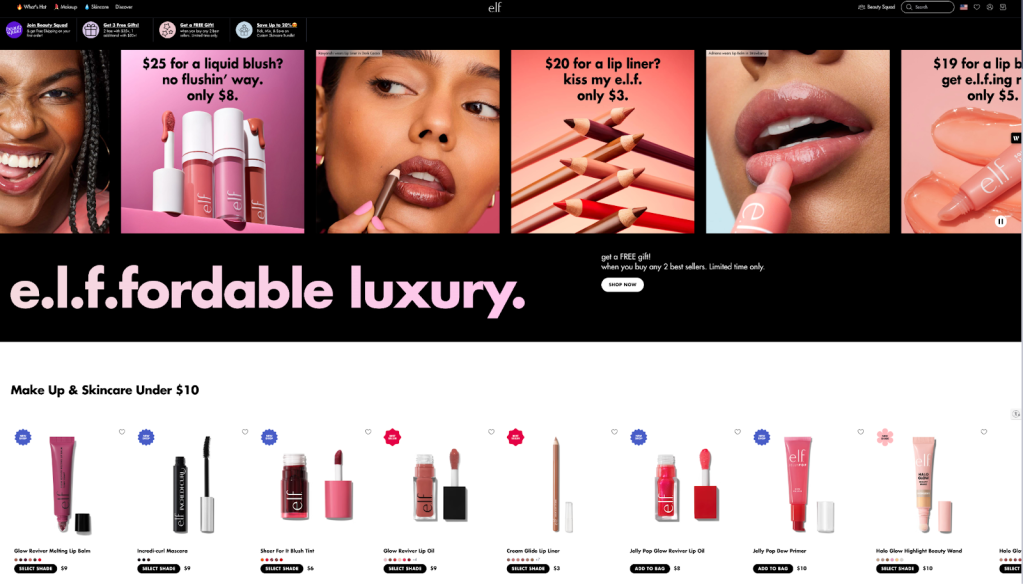
E.l.f. Beauty's website is a great example of an ecommerce site because it's simple, well-organized, and reflects the brand's core values. It’s easy to navigate, with products neatly categorized and displayed. The website provides a wealth of helpful, consumer-focused content beyond just selling products. This includes a beauty blog with tutorials and guides, a "virtual makeover lab" for customers to digitally try on products, and a loyalty program that rewards members for purchases and engagement.
YETI makes tough, long-lasting outdoor gear built for all kinds of adventures. Their ecommerce page sells lifestyle — not just products. Their immersive storytelling includes high-quality videos and photos of their gear in action and creates an emotional connection with customers. The site's customer-centric design and intuitive navigation make it easy for shoppers to find what they need and purchase.

Showcasing wireless audio devices can be complex, but Sonos makes it fun. They make high-end audio accessible through a clean, visually-driven design that reflects their products’ simplicity. The website guides customers with educational content, focusing on building a complete sound ecosystem, rather than just selling single items. Plus, customer-centric checkout process provides a reassuring and transparent experience for high-value purchases.

Excited to launch your ecommerce store? These 10 steps can act as your guiding points:
Study your target audience and conduct market research to understand how well your products can solve customer problems or elevate their lives. Google Trends and competitor analysis can help you learn if there’s a genuine demand for your products or services.
And then outline your business plan, including your goals, target market, and financial projections. Make things official by choosing a business structure — an LLC, corporation, or sole proprietorship. Register your business name, and obtain the necessary licenses and tax identification numbers. This roadmap will guide your decisions and help secure funding if needed.
This is the best (and fun!) part. To get products ready for ecommerce, the first step is to create high-quality content. This includes writing detailed product descriptions, capturing professional photos from multiple angles, and creating informative videos.
Next, organize your product data with consistent information, including SKUs, prices, and inventory levels. Finally, you need to decide on a system for inventory management and fulfillment — whether you'll handle it yourself or use a drop shipping or logistics partner.
This is a critical decision that impacts your business's growth and operations. The ideal platform should align with your budget, tech stack, and long-term goals. Evaluate your business needs and ask yourself these questions before finalizing a platform:
Commerce AI comes with diverse AI features to make your ecommerce journey more successful. It’s offers deeper insights into your business performance and helps you create product descriptions and content to help acquire customers.
It’s also packed with intelligent, autonomous AI agents called Agentforce. From personal shopping assistance to delivering 24/7 customer support, Agentforce can handle mundane tasks like a pro. And, you’ll get to work on more strategic tasks.
Your storefront is your customer’s first handshake with your business. So, make sure it’s designed with clear navigation and professional product photos. Optimize it for various devices and screen sizes, and follow your brand identity throughout.
Integrate secure payment gateways like PayPal or Stripe, and configure shipping rates and delivery options. Consider if you’ll partner with fulfillment providers or handle logistics in-house.
Once your store is ready, you need to market it effectively. Focus on SEO to get organic traffic from Google, and use email marketing and social media to build a community and engage with customers. Paid advertising on platforms like Google Ads can help you reach new audiences and boost sales.
Check all functionality including checkout process, payment systems, mobile responsiveness, and loading speed. Soft launch your store to friends and family before a full public launch. Monitor performance closely during the initial weeks and gather feedback. Fix any bugs or issues before going live.
When you create memorable experiences, and focus on experiences that go beyond transactions, you win customers for life. Respond personally to customer feedback, surprise loyal customers with perks, and consistently deliver on your brand promises. This is the key to earning brand loyalty from a user’s first purchase with you. Such strong relationships turn one-time buyers into repeat customers who actively recommend your business. Plus, this reduces your customer acquisition costs and creates sustainable growth.
Think of how far we’ve come as consumers and ecommerce business owners. But also think of how far you’ll go with Commerce Cloud. It unifies all aspects of ecommerce, including online storefronts, order management, and marketing. It helps you deeply understand your customers, and built-in AI features guide you every step of the way. The goal? To deliver consistent brand experiences across multiple channels and meet rising consumer expectations. What a win.
Ecommerce is a proven business model that helps drive revenue growth for some of the world’s largest brands. By getting started with ecommerce, you’ll reach more customers online and significantly increase your business revenue.
Ready to embark on your ecommerce journey? Start here:
Explore flexible tools to help you reduce costs, increase sales, and adapt quickly. To grow your revenue online, check out all Commerce Cloud has to offer.


The most common types of ecommerce are business-to-consumer (B2C), where companies sell directly to individuals; business-to-business (B2B), where companies sell to other businesses; consumer-to-consumer (C2C), where individuals sell to each other through online marketplaces; and consumer-to-business (C2B), where consumers offer products or services to businesses.
Ecommerce operates through an online storefront where customers browse and select products, a payment gateway to process secure transactions, an inventory management system to track stock, and shipping and logistics services to deliver orders. Customer service is also provided through various digital channels.
Ecommerce offers convenience with 24/7 availability to a global audience. It reduces overhead costs compared to physical stores and provides valuable data and analytics. This allows for easier scalability of operations and inventory.
The outlook for ecommerce is positive, with projections showing continued growth due to increasing internet and mobile usage. Technological advancements like AI, AR, and VR will enhance the shopping experience. Also, there’s a growing trend toward sustainability and omni-channel retailing.